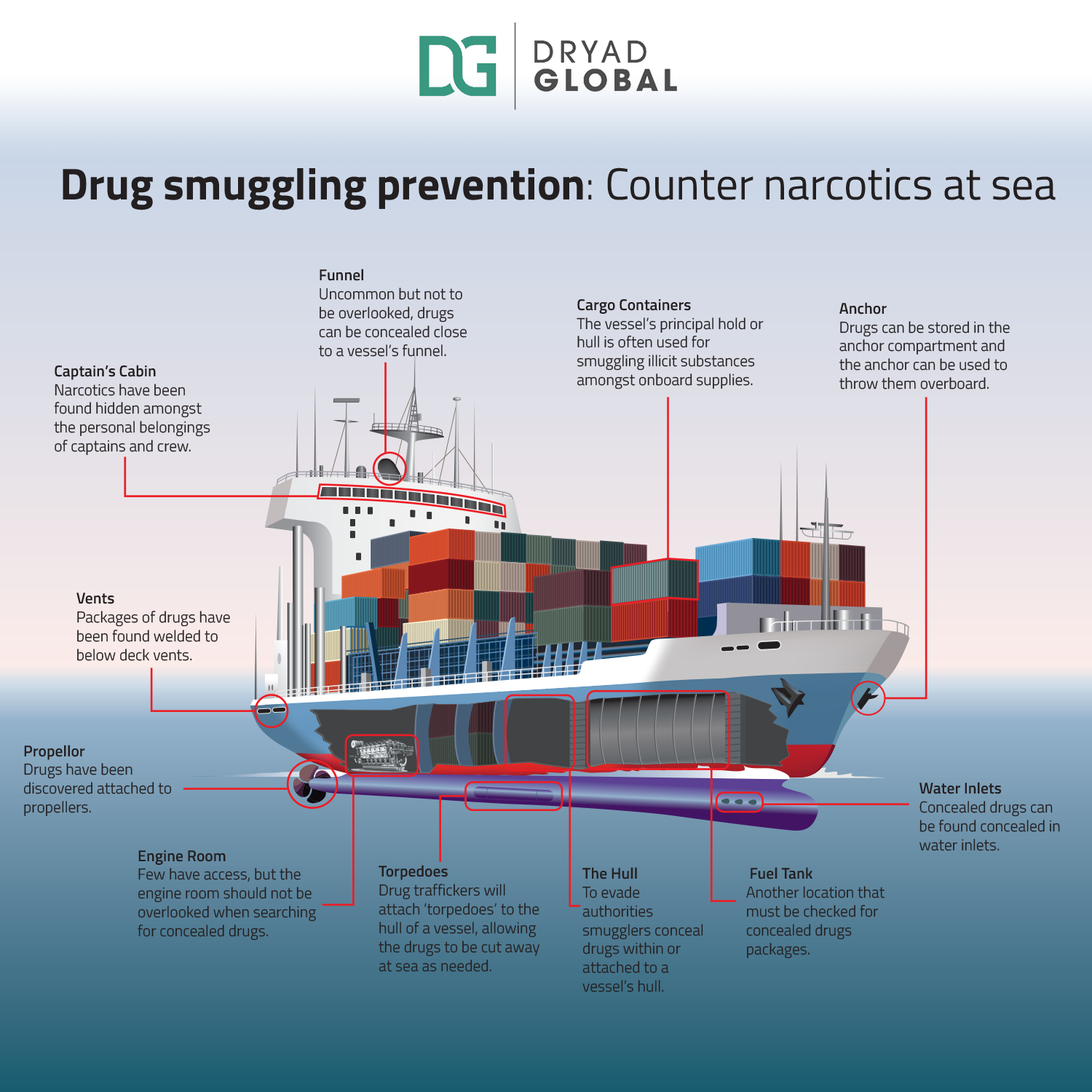
Transnational illicit supply chains operate on continuous cost-minimization principles, adapting cargo vectors precisely as regulatory bodies close traditional channels. When Indonesian enforcement agencies intercepted the Tanzanian-flagged vessel MV Ocean Porter in the Riau Islands, seizing 2.6 metric tons of liquid methamphetamine hidden within water tanks and storage drums, the operation exposed a fundamental shift in regional drug trafficking methodologies. Understanding this interdiction requires moving past basic arrest metrics to analyze the structural vulnerabilities of maritime transit corridors, the physical chemistry of liquid narcotics conveyance, and the market mechanics driving cartels toward consumer lifestyle vectors like electronic nicotine delivery systems.
The Maritime Logistics Vector
The operational architecture of large-scale drug smuggling relies on exploiting jurisdictional gaps and high-density shipping lanes. The Malacca Strait and surrounding Riau waters represent an optimal transit corridor due to heavy commercial traffic volume, which routinely masks suspicious vessel telemetry.
Syndicates originating operations from bases such as Sarawak, Malaysia, utilize specific structural tactics to bypass coastal monitoring:
- Flag of Convenience Arbitrage: Utilizing registries like Tanzania minimizes immediate state-level regulatory scrutiny and complicates real-time diplomatic coordination for vessel boarding.
- Identity Spoofing: The MV Ocean Porter previously operated under alternative designations, such as the MV Rain Maker, cycling through identity changes to defeat Automated Identification System tracking continuity.
- Concealment Engineering: Storing 2.6 metric tons of chemical compounds inside structural water tanks and reinforced 200-liter drums integrated onto shipping containers directly exploits standard maritime inspection blind spots.
This maritime strategy reduces the frequency of interdictions by blending illicit capital assets directly into the background noise of legitimate international maritime trade.
The Chemistry and Economics of Liquid Conversion
The transition from crystalline methamphetamine to liquid suspension is not merely an operational convenience for transport; it represents an advanced chemical processing step designed to evade conventional port screening and alter distribution unit economics. Solid crystal narcotics require distinct packaging, are easily identified by field test kits or physical inspection, and present high volumetric visibility. Conversely, liquid meth suspended in aqueous or chemical solutions neutralizes standard canine detection profiles and alters signature density profiles on basic X-ray equipment.
The National Narcotics Agency of Indonesia evaluated the economic and societal scaling factor of the 2.6 metric ton seizure at approximately Rp8.5 trillion, projecting an output of roughly 2.8 million vape cartridges. By converting raw chemical volume into micro-doses suitable for electronic cigarette devices, syndicates achieve three distinct economic advantages:
- Denaturant Masking: The distinct chemical odors and visual markers of methamphetamine are obscured within flavored humectants, propylene glycol, and vegetable glycerin bases used in vaping hardware.
- Exponential Distribution Yields: Targeting consumer electronics shifts the retail unit from bulk street-level sales to high-frequency, low-profile transactions among younger demographic cohorts.
- Margin Expansion: The retail valuation per milliliter inside a modified consumer cartridge vastly outpaces the raw wholesale cost of crystalline precursors, increasing the profitability per linear foot of smuggled volume.
The Structural Bottlenecks of Enforcement
Law enforcement agencies confronting transnational syndicates face asymmetric operational constraints. While criminal organizations optimize for adaptability, state apparatuses are bound by jurisdictional boundaries, bureaucratic inter-agency friction, and resource allocation limits.
The successful interception involving the National Narcotics Agency, regional police, and customs divisions demonstrates the necessity of intelligence-led interdiction models that begin months prior to physical boarding. Surveillance data initiated months in advance traced vessel anomalies across multiple territorial waters, including Taiwan, the Philippines, and Malaysia. However, reliance on reactive maritime patrols alone remains inefficient given the expanse of regional coastlines.
Furthermore, the simultaneous discovery of 1.57 million unstamped commercial cigarettes from China alongside the narcotics cargo highlights a diversified smuggling model. Syndicates frequently bundle high-margin contraband with lower-risk illicit goods to optimize the voyage's financial return, ensuring that even if secondary compartments are compromised, partial revenue streams may occasionally offset operational losses.
Deploy targeted marine surveillance architectures utilizing automated anomaly detection on vessel movement patterns across the Malacca Strait, while tightening import controls on chemical precursors capable of maintaining methamphetamine in liquid suspension prior to consumer packaging.
Watch the news report on the BNN liquid meth seizure
This video provides visual context on the joint law enforcement operation and the physical evidence recovered from the vessel.