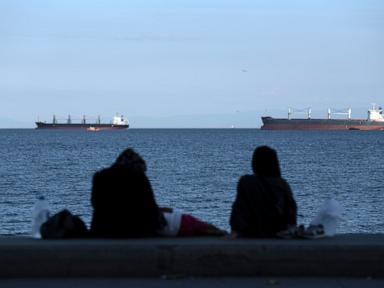
The sinking of the cargo vessel Tugberk Imamoglu within an 11-minute window after colliding with the tanker Alsu in the Marmara Sea highlights a critical breakdown in high-density navigational corridors. When a 90-meter dry cargo ship carrying 4,200 tonnes of rolled sheet metal and rebar drops to the bottom of a 900-meter-deep channel with zero survivors from a 10-person crew, the event transcends a simple localized accident. It exposes the structural vulnerabilities inherent in modern choke-point shipping lanes where high traffic volume collides with human fatigue and systemic oversight gaps.
Deconstructing the event requires analyzing the operational variables that transformed a routine pre-dawn transit into a catastrophic hull failure. The incident occurred at approximately 3:15 AM, a peak window for circadian trough-related cognitive fatigue in maritime watchkeeping. Two vessels operating on intersecting trajectories in a heavily monitored marine highway failed to maintain effective situational awareness.
The primary mechanics of the disaster involve three distinct analytical pillars: hydrodynamic load displacement during impact, cargo density shift coefficients, and watchkeeping failure vectors.
The Hydrodynamic and Structural Failure Vector
The physics of a collision between a bulk carrier and a tanker in open or semi-enclosed seas depend entirely on kinetic energy transfer and localized hull integrity. The Tugberk Imamoglu was built in 1990, placing its structural design footprint in an older generation of coastal freighters. When struck by the Alsu, the point of impact compromised the watertight compartmentalization of the cargo hold.
A cargo profile consisting of 4,200 tonnes of rolled steel and rebar introduces a specific vulnerability. Dense metal cargo has a high specific gravity compared to grain or general break-bulk goods. When seawater breaches the hull, the high-density cargo reduces the vessel's reserve buoyancy instantaneously. Unlike a ship carrying timber or empty containers, which maintains flotation characteristics even when flooded, a heavy steel carrier experiences rapid downflooding.
The transport minister's confirmation that the ship sank in 11 minutes matches the mathematical model of catastrophic downflooding combined with free-surface effect. As water entered the lower compartments, the shifting of heavy steel coils or rebar bundles under an initial list would create an uncorrectable heel moment. The vessel essentially lost its transverse stability faster than the crew could execute emergency ballast control or counter-flooding measures, assuming any operational crew members were conscious to attempt them.
The Cost Function of Navigation in the Turkish Straits
The Marmara Sea functions as an aquatic bottleneck linking the Black Sea to the Mediterranean via the Bosphorus and Dardanelles straits. This corridor handles tens of thousands of commercial transits annually. The economic pressure to maintain tight logistics schedules creates an operational cost function where speed is prioritized over conservative spacing.
Commercial vessels operating in these restricted waters navigate under intense regulatory scrutiny from Vessel Traffic Services (VTS), yet accidents continue to recur. The operational parameters of the Alsu and the Tugberk Imamoglu map directly onto the classic multi-vessel encounter problem at night.
- The Sensor Reliance Trap: Modern crews frequently over-rely on Automatic Identification System (AIS) and radar collision-avoidance alarms, reducing visual lookout efficacy during early morning hours.
- The Communications Vacuum: Maritime authorities noted that the Tugberk Imamoglu failed to respond to radio hails and crew mobile phones went unanswered post-collision. This indicates that the bridge team may have been incapacitated or entirely absent from the active watch station prior to impact.
- The Inertia Disparity: Tankers and older cargo ships possess high mass and slow stopping distances. Once an intersection course is locked past the point of tactical evasion, reversing engines cannot arrest momentum in time.
The shipping company operating the Tugberk Imamoglu asserted that its captain had contacted the Alsu prior to the crash to warn that the tanker was entering the cargo ship's lane. If verified by voyage data recorder (VDR) extractions, this shifts the analytical focus from a mutual oversight failure to a right-of-way disregard under traffic separation scheme (TSS) rules. Navigational disputes in high-density lanes often devolve into assumptions that the other vessel will yield, a cognitive bias known as procedural normalization of risk.
Systemic Risks and Regulatory Limitations
The sinking off Silivri follows closely behind other major regional transit disasters, including the fatal passenger ferry sinking off Northern Cyprus. These clustered incidents point to systemic fatigue across Turkish domestic and coastal maritime sectors.
Regulatory compliance frameworks enforce mandatory rest periods for seafarers under the International Convention on Standards of Training, Certification and Watchkeeping for Seafarers (STCW). However, enforcement on regional feeder routes and older dry-bulk carriers often suffers from lax auditing. Minimum safe manning documents frequently result in lean crews where two-person bridge watches are standard. When one watchkeeper suffers acute fatigue or distraction, the safety barrier collapses entirely.
Furthermore, the rapid response time of the Turkish Coast Guard—deploying 12 search-and-rescue vessels and two helicopters within an hour of the distress call—demonstrates operational readiness at the rescue tier, but highlights a reactive posture. Search and rescue assets recover floating lifeboats and debris; they cannot reverse the hydrodynamic failure of a compromised steel hull sinking into 900 meters of water.
Mitigating future disasters in the Marmara Sea requires a structural shift from post-incident rescue optimization to proactive collision avoidance enforcement. Port state control authorities must implement mandatory electronic monitoring of bridge team alertness, utilizing automated eye-tracking and active alertness verification systems on commercial vessels transiting high-risk corridors. Furthermore, speed restrictions and mandatory separation lanes for older bulk carriers must be re-evaluated to account for the compromised maneuverability of aged steel hulls.
Resource allocation must pivot toward real-time VTS intervention, where operators actively vector vessels away from convergence vectors rather than passively recording track lines. Until the cost of navigational non-compliance exceeds the financial incentive of maintaining strict transit schedules, high-density maritime corridors will continue to experience catastrophic convergence failures.