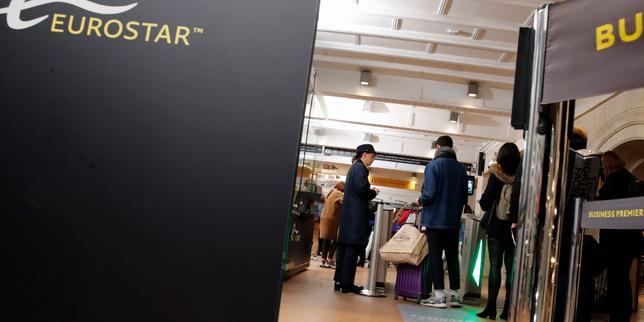
The operational crisis unfolding at London St Pancras International is a structural manifestation of a fundamental engineering and regulatory mismatch. When Eurostar sounds the alarm over station saturation, it is not issuing a temporary complaint about peak-season crowds. It is identifying an immutable threshold where fixed physical infrastructure collides with escalating regulatory processing times. The international terminal at St Pancras has reached a point of systemic friction where the economic model of high-speed cross-Channel rail is constrained not by track capacity or fleet size, but by the square meterage of floor space dedicated to border control.
To understand the mechanics of this failure mode requires decoupling terminal throughput from traditional railway metrics. In standard domestic rail operations, capacity is a function of rolling stock availability, signaling intervals, and platform occupancy times. In international high-speed rail operating outside the Schengen Area, terminal capacity is dictated almost exclusively by processing velocity at the frontier. St Pancras now functions as a closed thermodynamic system: when input velocity matches or exceeds processing velocity, the queue expands exponentially, threatening operational collapse and forcing the artificial suppression of passenger volumes.
The Triad of Terminal Throughput Economics
Evaluating the terminal constraint requires analyzing the three interdependent variables that govern passenger flow dynamics: physical processing footprint, processing velocity per passenger, and the surge factor of arriving cohorts.
The physical footprint defines the maximum number of human bodies that can occupy a defined area before safety regulations mandate a halt to further entries. Processing velocity is the time required for a single passenger to clear security, French border control (PAF), and UK border control (Border Force). The surge factor is the concentration of passenger arrivals over time, heavily skewed by the high capacity of modern train sets.
A standard Eurostar e320 train carries up to 900 passengers. When multiple departures are scheduled within a tight window—for instance, three trains departing within 45 minutes—the terminal must ingest up to 2,700 individuals. The operational challenge is governed by Little’s Law from queuing theory, which dictates that the long-term average number of items in a stationary system is equal to the long-term average effective arrival rate multiplied by the average time that an item spends in the system.
If the average processing time per passenger increases by even thirty seconds due to heightened regulatory scrutiny, the total time spent in the system expands dramatically. The physical consequence is a rapidly lengthening queue that breaches the designated international departure lounge, spilling back into the public concourses of the heritage station building. To prevent this spatial overflow, Eurostar is forced to artificially cap sales on its trains, running services with empty seats despite robust market demand. This represents a direct destruction of asset productivity and margin potential.
The Biometric Shockwave and Processing Velocity
The most immediate catalyst for the current saturation crisis is the implementation of new regulatory frameworks, specifically the European Union’s Entry/Exit System (EES). The structural transformation from legacy visual passport inspections to comprehensive biometric registration alters the time-per-passenger calculus fundamentally.
Under the historic open-border or simplified check regimes, a border official could process a passport in a matter of seconds. The EES requires third-country nationals—which now includes British citizens—to undergo facial biometric capture and four-fingerprint scanning upon their first entry. Operational simulations indicate that the initial registration process can extend check-in times from under a minute to several minutes per passenger.
The mathematical compounding of this delay is catastrophic for a terminal designed in the early 2000s. Consider a baseline scenario where a single border lane processes 60 passengers per hour based on a one-minute average check time. If the registration requirement pushes that average check time to two minutes, the capacity of that lane is halved to 30 passengers per hour. To maintain the original throughput of the terminal, the border authority must double the number of physical processing lanes.
St Pancras, however, is structurally incapable of scaling its physical infrastructure linearly to meet this requirement. The international check-in area is hemmed in by the historic architectural fabric of the Victorian station, bounded by massive structural pillars supporting the upper-level train shed and the adjacent St Pancras Renaissance Hotel. The physical footprint is fixed; the regulatory processing demand is expanding. The result is a permanent reduction in the maximum attainable throughput of the station.
Spatial Geometry Contraints of a Heritage Asset
The architectural layout of St Pancras International imposes hard limits on engineering interventions. Unlike a modern airport terminal built on a greenfield site with modular, expansible spaces, the international rail terminal is retrofitted into the undercroft of a Grade I listed structure.
The structural elements constraining optimization include:
- Low ceiling heights that limit vertical spatial expansion or the installation of elevated queuing walkways.
- Heavy load-bearing brick columns that cannot be removed or repositioned without compromising the integrity of the platforms above.
- Rigid entry and exit channels that create natural chokepoints where passenger streams intersect.
These constraints dictate that layout optimization yields diminishing returns. Moving a baggage scanner or rearranging the configuration of e-gates may free up a few square meters, but it does not alter the macro-geometry of the space. The space between the security screening zone and the French border desks is a fixed volume. When a queue stalls at the border desks, it immediately backs up into the security lane, forcing the shutdown of baggage scanners because there is no physical space for cleared passengers to stand.
This interdependence means that a slowdown at the final stage of the frontier check cascades backward through the entire system instantaneously. The terminal lacks buffer capacity. In industrial engineering terms, the system operates with zero inventory slack; any variance in processing time at the bottleneck immediately stops production at upstream stations.
The Fiscal Cost Function of Capacity Suppression
The commercial strategy of capping train capacity to match terminal throughput introduces a highly inefficient cost function into Eurostar's operations. High-speed rail is a capital-intensive business characterized by high fixed costs and low variable costs. The financial viability of the model relies on maximizing the load factor—the percentage of available seats sold—across expensive rolling stock assets.
When capacity is capped at, for example, 700 out of 900 seats to prevent terminal overcrowding in London, the marginal revenue of those 200 unsold seats is lost entirely, while the fixed operating costs remain unchanged. The track access charges levied by Getlink for the Channel Tunnel crossing, the energy costs required to propel the train, the staff costs for the train crew, and the capital depreciation of the fleet are identical whether the train is full or partially empty.
The economic damage is amplified because the suppressed capacity invariably comes from the highest-yielding ticket buckets. In airline and high-speed rail revenue management, the final seats sold on a departure are priced at a premium to capture late-booking corporate business or less price-sensitive leisure travelers. By capping sales early to manage station flow, the operator eliminates its most profitable revenue stream.
The alternative countermeasure—spreading departures more widely across the day to avoid peak-period surges—creates its own set of operational inefficiencies. High-speed rail competes directly with short-haul aviation on the London-Paris and London-Brussels axes. The core value proposition of rail over air is central-station-to-central-station convenience combined with a high frequency of service during business hours. Forcing departures into less desirable mid-day or late-night slots reduces the utility of the service for premium business travelers, degrading the average yield per passenger and shifting demand back toward air travel.
Regional Connectivity Deprivation
The saturation of St Pancras has systemic repercussions that extend well beyond the borders of London, creating a secondary crisis of regional connectivity. The most visible casualty of the terminal's spatial limits is the ongoing closure of intermediate international stations in the United Kingdom, specifically Ashford International and Ebbsfleet International.
Historically, these stations provided critical park-and-rail access for travelers across Kent and the south-east of England, bypassing the need to travel into central London to catch an outward-bound train. However, operating international stops at Ashford and Ebbsfleet requires maintaining dedicated border control infrastructure and staff at those locations, alongside managing the scheduling complexity of stopping trains on a high-speed line.
Under conditions of acute terminal constraint at St Pancras, the operational logic shifts. To maximize the efficiency of the limited border capacity available in London, Eurostar must concentrate its resources. Stopping a train at Ebbsfleet to pick up 150 passengers means those passengers must either be processed at Ebbsfleet—requiring a duplicating set of border officials—or their inclusion reduces the available capacity allocation for passengers boarding at St Pancras.
Furthermore, from a rolling stock utilization perspective, adding intermediate stops increases the total journey time between London and Paris. On a tightly optimized timetable, a ten-minute delay for an intermediate stop can disrupt the turnaround cycle of the train set at the destination, reducing the total number of round trips an individual train can perform in a single day. Until the structural processing bottleneck at the primary terminal is resolved, the reactivation of regional international hubs remains commercially unviable.
Strategic Mitigations and the Failure of Silver Bullets
Resolving the St Pancras saturation dilemma requires discarding the illusion of simple digital or infrastructural fixes. A common proposal is the total digitization of the border through remote processing and pre-travel authorization. While systems like the UK Electronic Travel Authorisation (ETA) and the EU EES collect data ahead of travel, they do not eliminate the legal requirement for physical identity verification and biometric capture at the point of exit or entry. Digital systems streamline data cross-referencing but do not compress the physical time required for an individual to stand at a kiosk and have their irises or fingerprints scanned.
Another hypothetical intervention is the expansion of the terminal footprint by reclaiming space currently utilized for domestic rail services or commercial retail within St Pancras. This strategy faces profound regulatory and contractual hurdles. The domestic platforms at St Pancras are vital arteries for the UK rail network, handling high-density commuter traffic from the Thameslink network and high-speed domestic services from Kent. Reallocating this infrastructure would require a wholesale restructuring of the UK’s domestic transport strategy and would face fierce political and legal resistance from domestic operators and regional authorities.
The solution must therefore be sought through a highly precise combination of hardware optimization, localized civil engineering, and bilateral regulatory diplomacy.
First, the physical architecture of the border lanes must transition to a high-density, multi-stage processing configuration. In standard configurations, a passenger performs security screening and border checks sequentially in a single linear path. A more efficient model decouples biometric registration from the actual border guard interview. By installing a large bank of self-service biometric enrollment kiosks prior to the border gates, the time spent in front of the frontier official is minimized. The official becomes a secondary validation point rather than the primary data collection agent.
Second, targeted structural modification of the undercroft must be executed to maximize horizontal floor space. This involves the removal of non-structural internal walls, the relocation of administrative offices out of the station core, and the consolidation of retail units to expand the queuing reservoir. Every square meter reclaimed from a commercial storefront and converted into passenger holding space increases the terminal's surge buffer, reducing the frequency with which queues cascade backward into the public concourse.
Third, a diplomatic and operational agreement must be reached between the UK and French governments to establish flexible, dynamic staffing models for the juxtaposed border controls. The physical presence of French PAF officers at St Pancras is the ultimate throttle on throughput. If desks remain unstaffed during peak departure waves, the terminal's built capacity is wasted. A binding service-level agreement that guarantees staff availability matched precisely to the train timetable is essential to ensure that the physical infrastructure operates at its theoretical maximum efficiency.
The Operational Path Forward
The long-term equilibrium for international rail travel through the Channel Tunnel depends on treating terminal throughput as a dynamic scheduling variable. The historical practice of planning train timetables based purely on track paths and fleet availability is obsolete. Moving forward, the train timetable must be generated algorithmically using processing capacity at St Pancras as the foundational constraint.
This operational paradigm shift requires integrating real-time passenger data—including nationality mixes, which dictate processing times due to varying visa and biometric requirements—directly into the ticketing and scheduling engines. If data indicates a high volume of third-country nationals booked on a cluster of morning departures, the scheduling algorithm must automatically space those services further apart, or trigger an increase in frontier staffing levels ahead of the surge.
Ultimately, if the physical limits of St Pancras cannot be expanded, the cross-Channel rail model will be forced to transition from a high-volume, mass-transit system toward a premium, yield-optimized service. If the terminal can only process a fixed number of passengers per hour, the operator must maximize the revenue extracted from each individual passenger. This implies a structural shift toward higher-class seating configurations, expanded business lounges, and premium pricing strategies—a outcome that would conflict with broader public policy goals regarding low-carbon international connectivity, but one that is rendered logical by the unyielding geometry of the station.