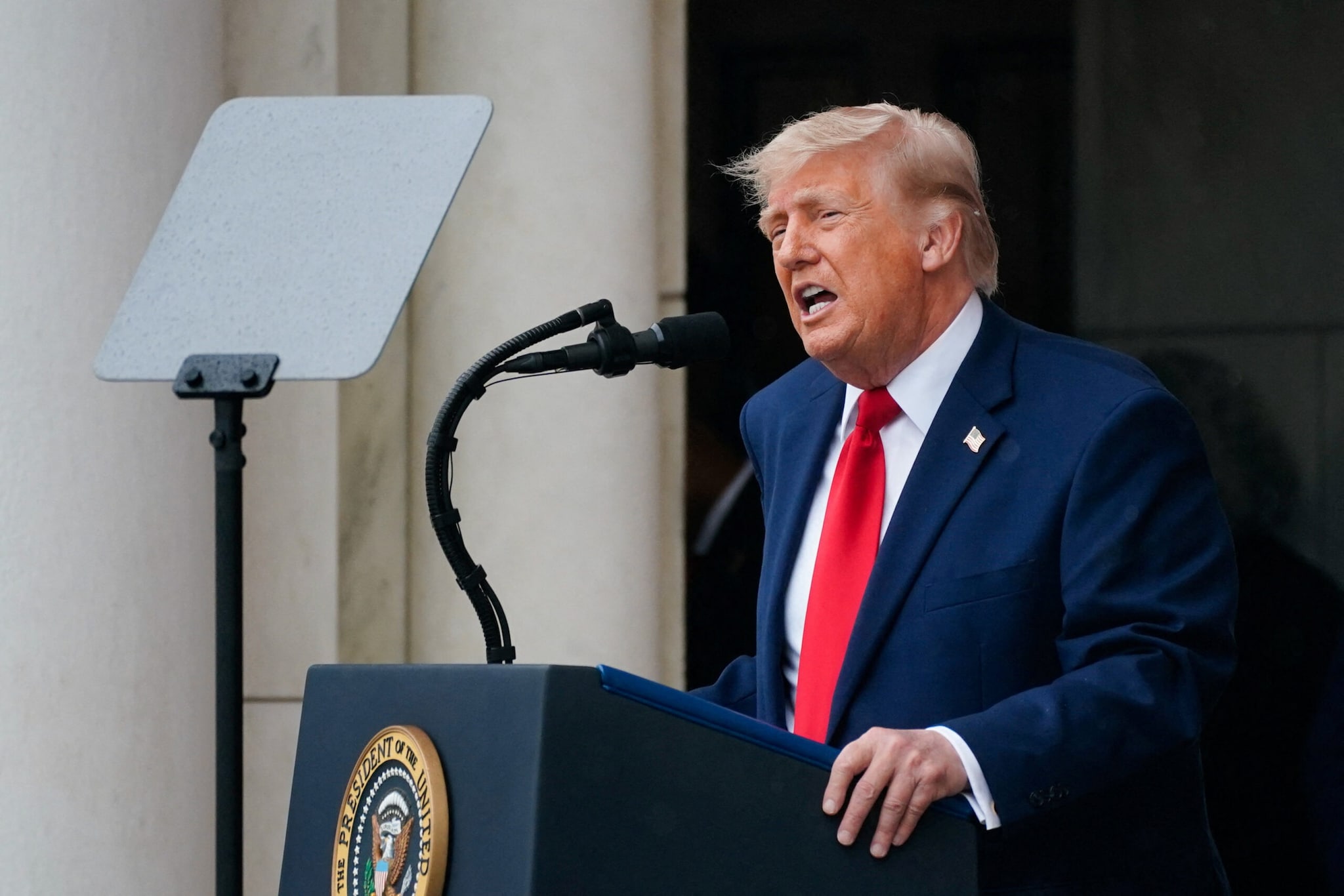
The appointment of Federal Housing Finance Agency (FHFA) Director Bill Pulte as the acting Director of National Intelligence (DNI) presents an unprecedented structural shift in the governance of the United States intelligence community. This transition introduces a dual-hatted leadership model, combining the oversight of $10 trillion in housing market assets with the coordination of 18 disparate spy agencies during an active military conflict with Iran.
The traditional architecture of the Office of the Director of National Intelligence (ODNI) relies on a clear segregation of duties between macroeconomic management and geostrategic threat analysis. By superimposing a real-estate private equity practitioner onto the apex of the national security apparatus, the executive branch is testing a high-stakes hypothesis: that corporate optimization, capital allocation principles, and absolute executive alignment can substitute for deep institutional domain expertise. Discover more on a related topic: this related article.
To analyze the strategic implications of this transition, we must strip away partisan rhetoric and dissect the move through three cold structural frameworks: administrative law boundaries, the weaponization cost function of executive agencies, and the operational friction generated by zero-base domain experience at the command level.
The 210-Day Statutory Sandbox
The legal framework governing this transition dictates both the lifespan and the limits of the new leadership's authority. Under the Federal Vacancies Reform Act of 1998, an acting cabinet-level official can occupy a vacant seat for a strict maximum of 210 days. For this specific tenure, the countdown concludes on January 26, 2027. Further analysis by TIME delves into similar views on the subject.
This hard temporal constraint fundamentally shapes the executive incentive structure. Because an acting official operates under a sunset clause, long-term structural reforms within the intelligence agencies are functionally impossible. Instead, the mandate shifts from strategic evolution to transactional execution.
The Intelligence Reform and Terrorism Prevention Act of 2004 explicitly mandates that the permanent nominee for DNI possess "extensive national security expertise." The current appointment bypasses this statutory threshold by exploiting the temporary vacancy loophole. This creates a distinct bifurcated operating reality:
- The Legislative Bottleneck: The Senate Select Committee on Intelligence retains ultimate veto power over a permanent nomination. Because the administration has chosen an acting vehicle, it avoids an immediate confirmation battle but introduces acute friction with key legislative oversight figures, including Senate Majority Leader John Thune and Senate Intelligence Committee Chairman Tom Cotton.
- The Authority Matrix: The new director simultaneously maintains his role as the head of the FHFA and chairman of Fannie Mae and Freddie Mac. This concentration of authority establishes a direct channel between the liquidity mechanisms of the US housing market and the classified budget allocations of the National Intelligence Program.
The Cost Function of Institutional Weaponization
A primary asset brought to this role is an explicit willingness to deploy regulatory and administrative machinery to audit and investigate political counter-parties. During the tenure at the FHFA, this manifested as a series of high-profile criminal referrals concerning alleged mortgage fraud directed at prominent critics of the executive branch, including Federal Reserve Governor Lisa Cook, New York Attorney General Letitia James, and Senator Adam Schiff.
From a strategic perspective, transferring this operational playbook to the ODNI alters the agency's cost function. The core output of the intelligence community is independent, empirical, objective risk assessment. When an agency leader possesses a track record of weaponizing administrative tools for political leverage, the internal data loop changes through a predictable cause-and-effect chain:
[Political Retribution Track Record]
                │
                ▼
[Analytical Self-Censorship / Echo Chambers]
                │
                ▼
[Degradation of Raw Intelligence Fidelity]
                │
                ▼
[Systemic Strategic Miscalculation]
The first limitation of this model is that intelligence agencies, unlike the FHFA, do not operate via public referrals or open-court litigation. Their leverage is applied through the classification, withholding, or targeted declassification of sensitive data. For example, the pending release of highly sensitive assessments regarding Anomalous Health Incidents (Havana Syndrome)—previously scheduled under the former director—now enters a non-transparent vetting process where political utility may compete with raw analytical output.
Operational Friction and the Domain Expertise Deficit
The modern intelligence apparatus is not merely a managerial hierarchy; it is a highly specialized data processing engine. It ingests petabytes of signals intelligence (SIGINT), human intelligence (HUMINT), and geospatial data (GEOINT) to deliver real-time predictive modeling to the commander-in-chief.
A background in private equity, private homebuilding (via PulteGroup board experience), and the monetization of distressed urban real estate through non-profits provides zero baseline fluency in these technical collection disciplines. This domain deficit introduces distinct operational bottlenecks at a time when the nation faces high-velocity external threats:
The Asymmetric Warfare Blind Spot
The ongoing conflict with Iran requires highly nuanced, non-linear escalation management. An executive trained in commercial negotiation or market stabilization tends to view conflict through the lens of zero-sum financial transactions or leverage points. Asymmetric warfare operates on ideological, proxy-driven, and cyber-kinetic variables that do not conform to corporate cost-benefit models.
The Military AI Integration Bottleneck
The current geopolitical landscape is defined by the race to deploy artificial intelligence at the tactical edge. Managing the procurement, ethical constraints, and deployment of algorithmic warfare tools requires deep technical literacy in defense acquisition systems. A leadership team focused on legacy real-estate products or speculative financial instruments (such as the abandoned 50-year mortgage proposal) lacks the technical shorthand required to audit multi-billion-dollar defense-tech pipelines.
The Clearances and Credibility Gap
The intelligence community is intensely tribal. Trust is the currency of the realm within the 18 agencies. A leader without a verified, long-standing security clearance pedigree face immediate structural resistance from the career civil service and intelligence professionals who staff the daily briefings. This resistance does not manifest as open insubordination; instead, it takes the form of informational insulation—where sensitive or nuanced caveated data is withheld from the briefers, leaving the director with a sanitized, less actionable overview of global realities.
The Dual-Hatted Strategic Playbook
Operating simultaneously as the gatekeeper of America’s secondary mortgage market and the head of its global espionage network is an inherently unstable configuration. To navigate the 210-day window without triggering a systemic systemic failure across either domain, a precise operational triage must be executed.
First, the dual-hatted executive must establish a rigid firewalled delegation protocol. Day-to-day administrative management of the ODNI must be entirely decentralized to the Deputy Director, Aaron Lukas, and career enterprise managers. The acting director's focus must narrow exclusively to high-level resource allocation and executive alignment, leaving the technical analysis untouched.
Second, the administration must acknowledge that treating the ODNI as an auditing shop for domestic political adversaries carries an unacceptably high external penalty. While criminal referrals at the FHFA caused localized political friction, a similar politicization of the National Intelligence Estimates will break the intelligence-sharing agreements currently holding together Western coalitions against Russian aggression and Iranian regional expansion.
The final strategic play requires an immediate, definitive choice by the executive branch: either utilize this 210-day window to quietly vet and prepare a legally compliant, highly qualified national security practitioner for formal Senate nomination, or accept that the deliberate degradation of the DNI's objective authority will leave the executive branch making critical wartime decisions inside an insulated, self-referential echo chamber.