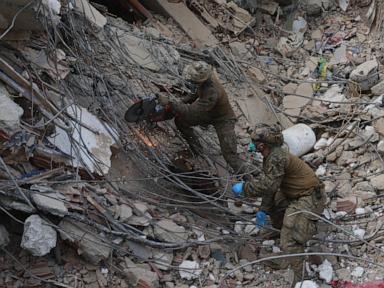
The failure of an urban search and rescue (USAR) operation during the initial 72-hour golden window is rarely a function of insufficient raw capital. Instead, it is an optimization failure across three distinct vectors: structural degradation of the public sector, misallocation of specialized capital assets, and an incentive structure that prioritizes regime visibility over operational throughput. Following the twin 7.2 and 7.5 magnitude earthquakes that struck northern Venezuela, the response in La Guaira and Caracas exposes the mechanisms through which long-term institutional hollowing paralyzes critical emergency logistics.
To evaluate why a state with expansive security forces fails to execute basic life-saving operations, the crisis must be analyzed through structural frameworks rather than observational anecdotes. The bottleneck is not merely a lack of machinery; it is an acute distribution failure governed by institutional decay.
The Three Pillars of Emergency Logistics Failure
Urban disaster response relies on a highly synchronized supply chain where specialized tools, labor, and information intersect at high-velocity nodes. When any pillar fractures, the entire operational capacity collapses.
1. The Human Capital Depletion Function
The efficacy of a public sector workforce depends on compensation-driven retention and technical specialization. Years of hyperinflation and nominal wage compression in Venezuela have triggered a mass migration of skilled personnel out of civil service. The remaining public sector payroll includes thousands of ghost employees who do not report to work, alongside an undertrained, undercompensated skeleton crew.
When a catastrophic seismic event occurs, this creates an immediate talent deficit. The state cannot deploy specialized incident commanders. Consequently, the personnel sent to high-impact zones—primarily police officers, intelligence agents, and military recruits—lack training in structural collapse engineering or triage protocols. Their operational utility is reduced to low-skill tasks such as traffic direction, leaving a dangerous vacuum where technical rescue expertise is required.
2. Specialized Capital Misallocation
Heavy machinery, including telescopic cranes, excavators, and concrete cutters, represents the core capital asset in a post-seismic environment. In a functional USAR framework, these assets are dispatched based on structural density, high-probability survival indices, and time-sensitive heat mapping.
In a degraded institutional environment, asset distribution is dictated by political proximity and private capital extraction rather than technical triage. High-capacity telescopic cranes are diverted to residential structures based on the political rank or financial leverage of the inhabitants. This creates an asymmetric distribution of equipment:
- High-Proximity Nodes: Sites containing high-ranking military officials or affluent individuals see a surplus of heavy machinery and labor, operating at low marginal utility per asset.
- Low-Proximity Nodes: Public housing units and low-income coastal structures experience zero asset allocation, leaving civilians to manually clear reinforced concrete slabs.
3. The Sovereign Security Disconnect
A profound misalignment exists between the core competencies of a security-first state apparatus and the logistical requirements of a humanitarian emergency. A regime focused on internal security optimizes its personnel for crowd control, surveillance, and territorial containment. These forces possess "spotless uniforms" because their operational mandates do not involve manual labor or physical intervention in debris fields.
When deployed to a disaster zone without clear humanitarian command structures, these units act as passive observers or focus on protecting state property and managing optics. This creates severe friction with the affected population, occasionally boiling over into civil unrest where civilians actively disrupt the movement of state equipment to prevent its withdrawal from critical sites.
The Economics of Post-Disaster Asset Distribution
The United Nations Development Programme (UNDP) estimates direct physical damage from the earthquakes at approximately $6.7 billion, representing roughly 6% of Venezuela's gross domestic product. This macroeconomic shock compounds an already fragile microeconomic environment, turning heavy equipment access into a predatory market.
+-----------------------------------------------------------------------+
|                       POST-SEISMIC ASSET ALLOCATION                   |
+-----------------------------------------------------------------------+
| OPTIMAL USAR PROTOCOL               | DEGRADED MARKET EXTRACTION      |
|                                     |                                 |
| [Seismic Incident]                  | [Seismic Incident]              |
|        |                            |        |                        |
| [Technical Triage Map]              | [Political / Financial Triage]  |
|        |                            |        |                        |
| [High-Survival Nodes Targeted]      | [Private Rental / Rank Priority]|
|        |                            |        |                        |
| [Maximized Lives Saved]             | [Asset Stagnation / Idle Cranes]|
+-----------------------------------------------------------------------+
When public supply chains break down, a parallel grey market emerges for critical survival infrastructure. The allocation of a telescopic crane shifts from a public good to a private luxury asset. Families with access to foreign currency or institutional leverage can rent private machinery, while low-income communities are subjected to prolonged supply delays. Because the state lacks an authoritative, transparent registry to requisition and deploy private construction equipment for public safety, machinery sits idle or underutilized at elite residential entrances while high-density ruins remain untouched.
This logistical paralysis directly impacts the survival rate. The probability of extracting live victims from collapsed structures decays exponentially after 72 hours due to dehydration, crush syndrome, and asphyxiation. By substituting political and financial filtering for logistical optimization, the state structurally guarantees a higher mortality rate in low-income sectors.
External Interventions and Infrastructural Bottlenecks
Because domestic institutions are bottlenecked by personnel deficits and broken supply lines, the operational burden shifts heavily onto international urban search and rescue teams and foreign aid. Over 2,000 rescue specialists from 27 nations have deployed to the region. However, the introduction of external capital and labor cannot bypass the physical constraints of a degraded national infrastructure.
The delivery of foreign aid is severely restricted by two primary infrastructure failures:
- Port and Maritime Delays: The port of La Guaira, a primary maritime artery, suffered critical structural damage during the initial tremors. The arrival of heavy transport ships carrying water purification equipment, medical supplies, and mobile infrastructure requires immediate technical engineering interventions. Specialized foreign military units, such as US Marine engineering teams, have been forced to prioritize repairing port berths and clearing shipping lanes before distribution can scale.
- Aviation Control Collapse: The destruction of the control tower at Simón Bolívar International Airport in Caracas fractured the regional airspace management system. This disruption restricts the frequency of incoming C-17 and civilian cargo flights, creating an artificial constraint on the velocity of incoming specialized search dogs, thermal cameras, and acoustic listening devices.
Even when foreign teams bypass these entry ports, they run into local distribution bottlenecks. Ambulances and supply trucks encounter miles-long traffic gridlocks caused by uncoordinated local security checkpoints and uncleared debris. Local hospitals, suffering from systemic understaffing and chronic medicine shortages prior to the disaster, lack the operational baseline to absorb the sudden influx of trauma patients.
The Strategic Trajectory of State Substitution
The current crisis indicates a permanent shift in how municipal logistics operate within the territory. The state has effectively ceded the technical core of disaster management to international entities and autonomous civilian networks.
While the administrative apparatus retains control over high-visibility public relations—such as the distribution of basic hygiene kits from military tents and the promotion of isolated rescue videos via state media—the actual execution of complex technical rescues relies entirely on foreign USAR teams and localized mutual aid.
The state's primary operational focus is regime preservation and message containment. This is achieved by maintaining visible security forces to suppress looting, keeping state media narratives fixed on individual stories of resilience, and avoiding systemic reporting on building code failures or infrastructure negligence. This strategy stabilizes the political hierarchy in the short term but ensures that the physical reconstruction phase will be highly fragmented, inefficient, and heavily dependent on external capital injections.