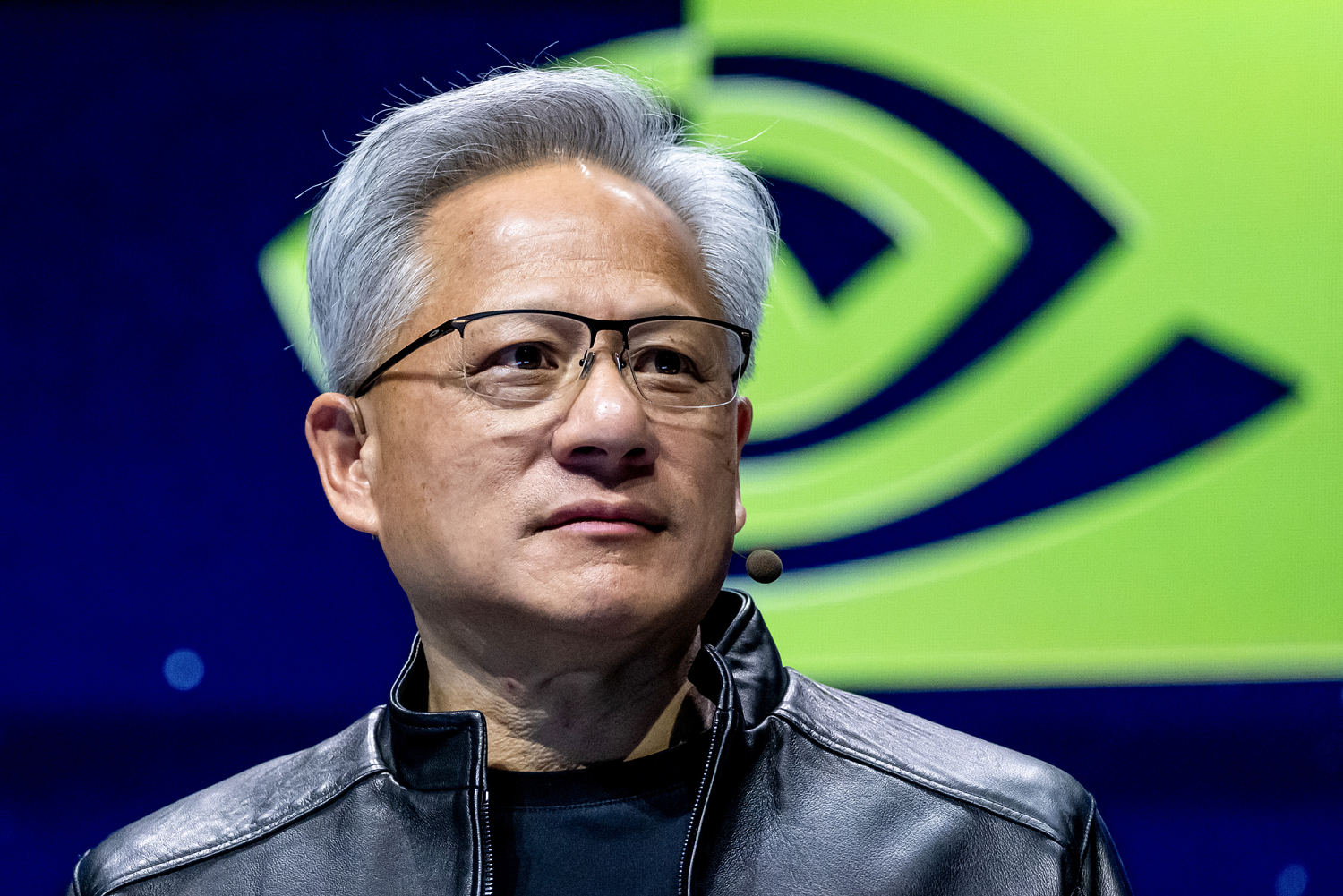
Jensen Huang has not resigned from Nvidia, nor is he embroiled in an espionage scandal involving a suspected Chinese spy. The viral headline claiming otherwise is a fabricated piece of disinformation designed to exploit geopolitical anxiety, trigger automated trading algorithms, and hijack search traffic.
It is pure fiction.
Yet the speed at which this specific lie traveled across financial message boards and social feeds exposes a massive vulnerability in modern markets. When a single company sits at the center of a multi-trillion-dollar artificial intelligence buildout and a Cold War-style semiconductor standoff, even an unsourced, unverified rumor with a broken URL can rattle retail investors and dominate news cycles before fact-checkers finish their morning coffee.
Why This Specific Rumor Caught Fire
Disinformation rarely succeeds in a vacuum. To stick, a lie needs to attach itself to real, existing anxieties. Whoever engineered the headline about Nvidia's chief executive stepping down over a compromise with Chinese intelligence understood the exact pressure points of the current market.
First, there is key-man risk. Few modern corporations are as tightly bound to a single founder as Nvidia is to Jensen Huang. Since co-founding the company in 1993, Huang has steered it from a niche graphics card maker for PC gamers into the indispensable engine room of global artificial intelligence. Institutional investors routinely price in the "Huang premium"—the belief that his technical foresight, relentless execution, and iron grip over supply chains cannot be easily replicated by a successor. Suggesting he is suddenly gone is the fastest way to induce panic among shareholders.
Second, the rumor taps directly into the escalating US-China tech conflict. Washington has spent years tightening export controls on advanced semiconductors, attempting to prevent Beijing from acquiring the high-end GPUs needed to train frontier AI models and modernize its military. Nvidia has been caught squarely in the middle, forced to design watered-down chips for the Chinese market while watching regulators close loopholes almost as fast as engineers can design around them.
By pairing a sudden resignation with a classic honey-trap espionage trope, the hoaxers created a narrative that felt plausible to anyone casually following the news. We have seen corporate executives ousted over personal misconduct. We have seen aggressive state-sponsored espionage targeting Silicon Valley intellectual property. Smashing those two realities together produced a story engineered for maximum virality.
The Mechanics of Corporate Disinformation
If you have spent enough time covering Wall Street and Silicon Valley, you start recognizing the fingerprints of a coordinated or opportunistic hoax. Look closely at the anatomy of this claim, and the seams begin to show immediately.
Legitimate market-moving scoops of this magnitude do not break on obscure websites with missing metadata or undefined URLs. A sudden resignation by the leader of one of the world's most valuable public companies triggers strict Securities and Exchange Commission (SEC) disclosure rules. Under Form 8-K guidelines, a publicly traded corporation must formally notify regulators and the public within four business days of a principal officer's departure—and in practice, a company of Nvidia's scale issues a press release and files with the SEC within minutes to prevent disorderly trading and regulatory scrutiny.
Furthermore, a scandal involving foreign intelligence and a major defense-adjacent technology supplier would involve the Federal Bureau of Investigation (FBI), the Department of Justice, and likely emergency briefings for the Committee on Foreign Investment in the United States (CFIUS). Stories of that gravity leave an enormous institutional footprint. Major financial newsrooms—Bloomberg, Reuters, The Wall Street Journal—maintain deep sourcing across both federal law enforcement and corporate boards. They do not get scooped by anonymous web pages on a story that would reshape global equity markets.
How Hoaxers Monetize the Panic
Why go through the trouble of fabricating a career-ending scandal about a tech CEO? The incentives generally fall into three distinct buckets:
- Ad-Revenue Arbitrage: Click-farms and content mills thrive on high-CPM financial and tech keywords. By combining "Nvidia," "Jensen Huang," and "Chinese spy," a low-quality site can briefly capture thousands of search queries from panicked investors, serving programmatic ads before search engines de-index the page.
- Short-Term Market Manipulation: In an era of zero-commission options trading and high-frequency sentiment scraping, a sudden spike in negative headlines can cause brief algorithmic dips. Bad actors sometimes buy short-dated put options, seed a catastrophic rumor across social platforms, and sell into the initial wave of automated selling before human traders verify the facts.
- Geopolitical Information Operations: State-affiliated actors routinely amplify narratives that sow distrust in American corporate leadership or make US tech giants appear compromised and unstable. They do not always need to invent the lie; they simply use bot networks to push an existing piece of garbage into mainstream feeds.
The Real Stakes Behind the Noise
Focusing on a fake scandal distracts from the very real, documented pressures facing Nvidia and its leadership. You do not need to invent a spy thriller to find high-stakes drama in Santa Clara.
The actual tension between Nvidia and Washington is entirely out in the open. For the past several years, US export restrictions have systematically chipped away at Nvidia's access to mainland China, a region that historically accounted for roughly a fifth to a quarter of its data center revenue. Every time the Bureau of Industry and Security (BIS) updates its semiconductor rules, Nvidia's engineering teams have to scramble to modify chip interconnects and compute thresholds to remain compliant.
At the same time, Beijing has been aggressively pushing domestic tech giants to abandon foreign silicon in favor of homegrown alternatives from companies like Huawei. Nvidia is fighting a two-front battle—trying to satisfy American national security hawks while preventing Chinese customers from permanently migrating to rival architectures.
There is also the matter of corporate governance and succession, a topic institutional investors take seriously without any tabloid embellishments. Huang is in his sixties and shows no signs of slowing down, routinely working grueling schedules and maintaining a flat organizational structure where dozens of executives report directly to him. That flat hierarchy works brilliantly while he is at the helm, because it eliminates middle-management bloat and keeps decision-making fast. However, corporate governance analysts frequently point out that such a structure leaves no obvious heir apparent. If Huang were ever to step down for genuine reasons, the transition would be one of the most delicate handoffs in corporate history.
How to Spot a Market-Moving Fake Before You React
In a media environment flooded with synthetic text, cloned domains, and automated news aggregators, treating every alarming headline at face value is a fast way to lose money and credibility. Whether you are managing a portfolio or simply trying to stay informed about the tech sector, a strict verification checklist is mandatory.
- Check the Primary Wire Services First: If a Fortune 500 CEO resigns, it will hit the Reuters, Bloomberg, and Associated Press terminals within seconds. If a story has been circulating on social media for more than fifteen minutes without a single confirmation from a tier-one wire service, treat it as false.
- Verify SEC Filings Directly: Skip the commentary and go straight to the source. The SEC's EDGAR database is free, public, and updated in real time. Any legitimate executive departure at a US-listed company will have a corresponding Form 8-K filing.
- Inspect the Domain and Byline: Disinformation merchants rely on visual mimicry. They register domains that look almost identical to reputable outlets or leave URL structures broken and unindexed. Check whether the named reporter actually exists and has a track record of covering the beat.
- Watch the Options and Equity Tape: The bond and equity markets are ruthless lie detectors. If a massive rumor is circulating online, look at the actual stock price and trading volume. Institutional desks employ analysts whose entire job is to call investor relations and verify rumors within seconds. If the stock is barely moving on normal volume, Wall Street has already checked the story and thrown it in the trash.
The Cost of Constant Signal Interference
The Jensen Huang resignation hoax is a textbook case of modern information warfare meeting retail market hysteria. The story had zero factual foundation, zero corroborating evidence, and zero official footprint, yet it still managed to generate enough search volume to warrant debunking.
As artificial intelligence continues to drive the global economy, the companies building the underlying hardware will remain prime targets for rumor-mongers, short-sellers, and geopolitical agitators. The noise will only get louder, the fake headlines will get sharper, and the turnaround time between fabrication and viral spread will shrink to seconds.
Verify the filing before you believe the headline.