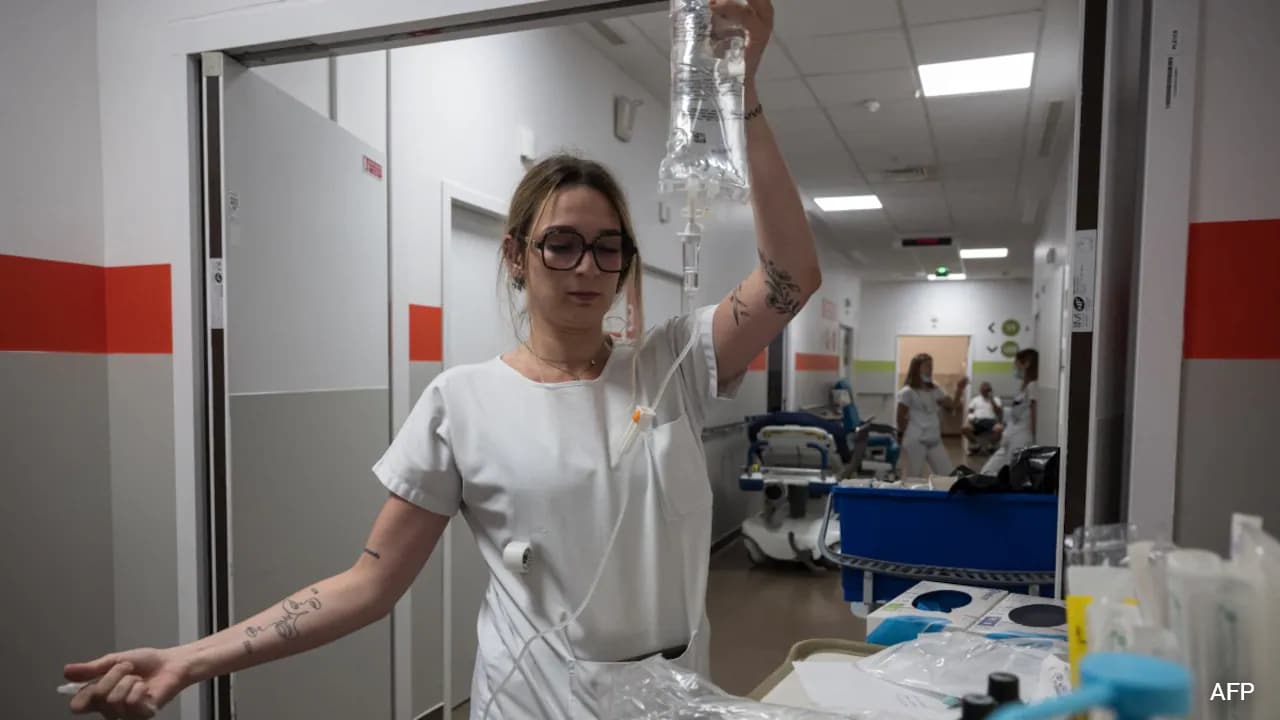
When ambient outdoor temperatures exceed historical baseline averages by 3 to 10 degrees Celsius across continental Europe, the resulting crisis is frequently mischaracterized as a surge in volume. This is an operational error. The challenge facing European healthcare networks is not merely a quantitative increase in patient admissions; it is a structural collision between an obsolete, non-climate-resilient capital estate and a highly predictable physiological cascading mechanism.
The immediate activate of emergency protocols—such as France initiating the maximum level of its Orsan health plan or various National Health Service (NHS) trusts in England declaring critical incidents—exposes a deeper system vulnerability. Western European healthcare infrastructure was designed around an economic and climatic assumption of cold-weather defense. It operates on a thermal equilibrium optimized to trap heat during winter, not dissipate it during an extreme summer anomaly. When external environments remain elevated over consecutive days and fail to cool sufficiently at night, the healthcare system experiences concurrent failures across three distinct vectors: physiological demand shock, electro-mechanical infrastructure collapse, and severe operational capacity bottlenecks.
The Tri-Particle Physiological Demand Function
Extreme heat does not act as a random pathogen; it operates as a systematic amplifier of pre-existing cardiorespiratory and metabolic vulnerabilities. The human body manages extreme thermal stress via two primary homeostatic mechanisms: vasodilation (widening blood vessels to divert thermal energy to the skin) and diaphoresis (sweating). Under sustained thermal stress, these responses generate distinct clinical pathologies that hit emergency departments in predictable waves.
1. Cardiovascular Volatility and Decompensation
The metabolic cost of sustained vasodilation requires a massive increase in cardiac output. To cool the core, the heart must beat faster and pump harder, significantly increasing myocardial oxygen demand. In vulnerable patient demographics—specifically individuals over the age of 65 or those with pre-existing ischemic heart disease—this increased demand triggers acute myocardial infarctions or congestive heart failure. Data from urban centers during acute heat spikes indicate acute cardiovascular emergencies can more than double. In Paris, for example, emergency medical services recorded a jump from a historical baseline of fewer than 10 cardiac arrests per day to 25 within a 24-hour peak period.
2. Renal Volume Depletion and Electrolyte Shifting
Sustained sweating without rapid, proportional fluid and electrolyte replacement leads to massive insensible volume loss. This volume depletion induces acute postural hypotension, creating a direct causal pathway to mechanical falls and subsequent orthopedic trauma in geriatric populations. Concurrently, the reduction in circulating blood volume decreases renal perfusion, precipitating widespread pre-renal acute kidney injury (AKI). This mechanism is exacerbated by common maintenance medications such as ACE inhibitors, angiotensin receptor blockers, and diuretics, which impair the kidneys' autoregulatory capacity when patients do not receive proactive clinical guidance to titrate dosages during thermal events.
3. Neurological Decompensation
When ambient environments reach extreme thresholds, particularly above 35 degrees Celsius paired with high relative humidity, the efficiency of evaporative cooling drops toward zero. Once core body temperatures exceed 40 degrees Celsius, cellular protein denaturation begins, triggering an acute systemic inflammatory response that culminates in heatstroke. Clinically, this presents as altered mental status, profound confusion, and neurological emergencies, including seizures, which require resource-intensive, one-on-one critical care resuscitation.
The Cascade of Capital Asset Degradation
The primary operational constraint during an intense thermal event is rarely a deficit in medical expertise; it is the physical failure of the clinical environment itself. Modern healthcare delivery is entirely dependent on complex electronic, digital, and mechanical infrastructure. This infrastructure possesses hard thermal limits that, when breached, halt clinical operations entirely.
[Ambient Heat Overload]
       │
       ├─► [HVAC System Capacity Exceeded] ──► [Internal Core Temp >35°C] ──► [Server/IT Overheat & Disruption]
       │
       └─► [Cooling Fluid Saturation] ───────► [Diagnostic/Therapeutic] ────► [MRI/LinAc Automated Shutdown]
                                               Equipment Failure
The operational disruption follows a predictable cascade when high ambient heat overpowers a facility's HVAC systems:
- Diagnostic and Therapeutic Equipment Outages: High-field Magnetic Resonance Imaging (MRI) scanners and linear accelerators used for cancer radiotherapy rely on closed-loop liquid helium or water cooling units to maintain internal operating temperatures. When external temperatures overwhelm these secondary heat exchangers, the machines execute automated safety shutdowns to prevent catastrophic hardware damage. This instantly halts diagnostic pathways and forces the immediate cancellation of scheduled oncology treatments.
- Data Tier and Digital System Stalling: Hospital network architecture is heavily reliant on localized server infrastructure and electronic health record (EHR) databases. When building cooling systems fail, server rooms experience rapid thermal accumulation. Overheating servers trigger automatic throttling or complete outages, blinding clinicians by cutting off access to digital imaging, laboratory tracking, and central communications.
- Internal Ambient Air Contamination: The vast majority of older European hospital estates rely on passive ventilation or outdated cooling mechanisms. In periods of extreme heat, internal ward temperatures have been documented reaching as high as 35 degrees Celsius. This environment accelerates the proliferation of nosocomial (hospital-acquired) pathogens while rendering standard airborne and contact infection control protocols nearly impossible to maintain due to profuse sweating among clinical staff.
Operational Bottlenecks and Space Degradation
As physical infrastructure fails and patient influx climbs, the delivery model degrades from structured clinical care into reactive crisis management. The primary manifestations of this degradation are structural inefficiencies inside the hospital walls.
The immediate reaction to capacity shortages is the deployment of "corridor care" or "reverse parking" protocols, where patients are held on gurneys in hallways for extended periods. This environment creates immediate systemic liabilities. Physical spacing between patients drops below safe epidemiological thresholds, increasing cross-contamination risks. Furthermore, conducting critical clinical assessments, establishing intravenous access, or executing cardiopulmonary resuscitation in crowded corridors introduces massive margin-for-error increases.
To cope with infrastructure strain and staff exhaustion, hospitals are forced to cancel non-elective surgeries and outpatient appointments. The Royal College of Physicians and independent research models estimate that even a brief four-day extreme thermal window can force the cancellation of thousands of scheduled operations across a national network. This is driven not only by a lack of physical beds but by dangerous working conditions within uncooled operating theaters, where surgeons wearing heavy, sterile personal protective equipment face rapid cognitive fatigue due to heat stress.
The strain on physical space is compounded by a delayed discharge bottleneck. Patients who are clinically stable cannot be safely discharged if their home environments are high-risk "heat-trap" apartments lacking mechanical cooling. Discharging a vulnerable patient back into a 38-degree residential setting guarantees a rapid secondary readmission for dehydration or cardiovascular decompensation. Consequently, hospitals must hold patients long past their acute recovery phase, paralyzing patient flow through the entire facility.
Structural Strategy for Long-Term Resiliency
Muddling through heat crises via short-term emergency measures—such as deploying superficial fans, sourcing emergency ice packs, or postponing elective surgeries—is an unsustainable strategy for a continent warming at roughly twice the global average rate. Healthcare systems must pivot toward deep structural and capital redesign.
The first priority is a capital expenditure transition focused on decoupling critical medical electronics from centralized, vulnerable HVAC systems. Facilities require dedicated, localized, redundant cooling arrays for server rooms, laboratory diagnostic spaces, and advanced imaging suites. These backup cooling components must be rated for ambient operating conditions up to 45 degrees Celsius and powered by localized solar microgrids to guarantee uptime during heat-induced municipal power grid strains.
The second requirement is an architectural retrofit program targeting older, historic medical estates. This includes the application of reflective solar films to exterior windows, the installation of external automated shading mechanisms, and the phased deployment of high-efficiency heat pumps capable of dual-mode climate control. New healthcare facilities must prioritize passive cooling architecture, utilizing high-thermal-mass building materials and green roofs to blunt the urban heat island effect.
The third strategy involves an overhaul of clinical pharmaceutical management and predictive public health protocols. General practitioners and specialty clinics must integrate formal "thermal titration" strategies into their standard workflows. Patients prescribed high-risk cardiovascular, renal, or psychiatric medications must receive pre-emptively structured care plans that dictate exactly how to adjust fluid intake and drug dosages when thermal thresholds are breached.
                      [Thermal Crisis Management]
                                   │
         ┌─────────────────────────┴─────────────────────────┐
         ▼                                                   ▼
[Reactive Emergency Measures]                     [Proactive Capital Redesign]
(Fans, Ice Packs, Cancellations)                  (Redundant Micro-Cooling, Solar Microgrids)
         │                                                   │
         ▼                                                   ▼
[Operational Degradation]                         [Sustained Structural Resiliency]
Implementing these structural changes requires significant up-front capital allocation and will inevitably face execution delays across sprawling public health networks. However, treating extreme thermal anomalies as unexpected, transient emergencies is no longer a defensible operational stance. The failure of hospital infrastructure under thermal stress is a predictable material outcome of a changing climate, and it demands an immediate, capital-backed engineering solution.
For a closer look at the immediate impact of these rising ambient temperatures on healthcare delivery and emergency response strategies across European cities, see this recap of Europe's severe thermal strain and emergency medical updates. This broadcast outlines the direct operational adjustments municipal leaders and health ministers are deploying on the ground during peak heat intervals.