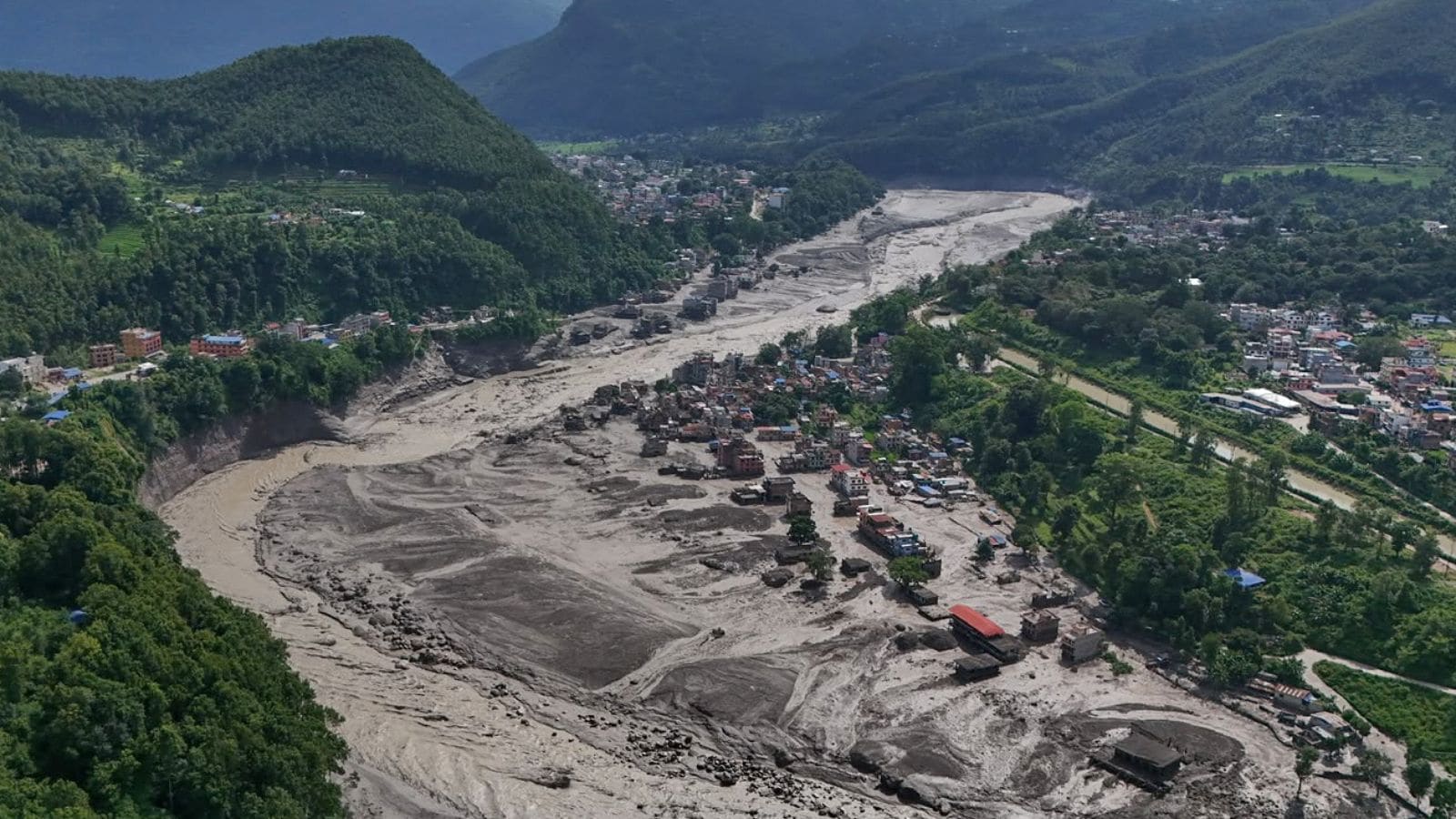
Catastrophic environmental events are rarely sudden anomalies; they are the terminal phase of compounding systemic vulnerabilities. When a glacier collapses into a moraine-dammed lake, triggering a Glacial Lake Outburst Flood (GLOF), public narratives routinely default to sensationalist descriptors. Headlines focus on shock, suddenness, and elemental fury. This framing obscures the deterministic physical processes governing the disaster. A rigorous analysis requires shifting away from narrative drama and moving toward a quantitative stress-test of the hydrological and geological variables at play.
Understanding the mechanics of high-altitude hydrological disasters demands a framework capable of mapping pre-conditioning factors against immediate triggering mechanisms. High mountain Asia is experiencing accelerated cryospheric degradation driven by rising atmospheric temperatures. This warming alters the baseline stability of glacial systems. To decode how a localized ice mass displacement translates into downstream devastation, one must evaluate the structural integrity of terminal moraines, the volume-to-surface-area ratios of expanding glacial lakes, and the hydrodynamic pressure exerted during a displacement wave.
The Thermodynamic and Structural Pre-Conditions
The hazard potential of a glacial lake is a function of static capacity and dynamic vulnerability. Before any physical trigger occurs, the system exists in a state of precarious equilibrium. Glacial retreat leaves behind massive ridges of unconsolidated rock, debris, and ice known as terminal moraines. These natural dams hold back millions of cubic meters of meltwater.
[Atmospheric Warming] -> [Accelerated Ice Melt] -> [Lake Expansion]
                                                         |
[Moraine Degradation] <- [Hydrostatic Pressure Increase] <-+
As temperatures rise, two parallel processes compromise these natural barriers. First, internal ice cores within the moraine melt, leaving behind voids and structural weaknesses in what was once a solid retaining wall. Second, the continuous input of meltwater increases hydrostatic pressure against the interior face of the dam.
The structural threshold of a moraine-dammed lake is defined by its geometry and material composition. Unconsolidated debris lacks the cohesive tensile strength of engineered concrete dams. When the sheer weight of the retained water exceeds the shear strength of the internal matrix, structural failure becomes a question of timing rather than probability. Analysts measuring regional risk look at the ratio of freeboard height to total lake volume, identifying systems where minimal displacement can breach the containment threshold.
The Kinematics of the Trigger Event
A GLOF sequence is initiated by a displacement event. Avalanches of ice or rock plunging from surrounding slopes into the water body act as dynamic pistons. The kinetic energy of the falling mass is transferred directly to the water, generating displacement waves capable of overtopping the terminal moraine.
When an ice mass detaches from a retreating glacier and impacts a high-altitude lake, the resulting wave height is proportional to the mass, velocity, and entry angle of the avalanche. Upon reaching the moraine crest, this surge breaches the freeboard margin. Water begins to spill over the unpaved, erodible crest of the dam.
This overflow initiates a destructive feedback loop known as headward erosion. As water rushes over the loose debris of the moraine, it scours the channel deeper and wider at an exponential rate. The outflow rate shifts from a controlled discharge to a catastrophic breach. The cross-sectional area of the breach expands rapidly, draining a significant percentage of the total lake volume in a matter of hours. This sudden release of potential energy transforms into kinetic energy, accelerating down steep mountain valleys as a hyper-concentrated debris flow.
Downstream Propagation and Fluid Dynamics
Once the dam fails, the resultant surge behaves differently than a standard river flood. It is a debris flow, a dense slurry of water, boulders, ice, and organic material with a volumetric sediment concentration often exceeding fifty percent.
The destructive capacity of this wave is governed by rheology and channel morphology. In narrow mountain gorges, the flow maintains its velocity and depth, exerting immense dynamic pressure against infrastructure. The force of the impact is a product of fluid density multiplied by velocity squared. As the slurry entodes more material from the riverbed and banks, its mass increases, amplifying its destructive momentum downstream.
Energy dissipation occurs only when the valley floor widens significantly, allowing the flow to spread across a broader alluvial fan. In these deposition zones, velocity drops precipitously. The heavy sediment load drops out of suspension, burying infrastructure, agricultural land, and riverine ecosystems under meters of mud and rock. Communities situated along these historical flood corridors face extreme exposure precisely because flat alluvial fans are the preferred locations for human settlement and agriculture in mountainous terrain.
Mitigation, Monitoring, and Institutional Response
Mitigating cryospheric hazards requires transitioning from reactive emergency management to predictive engineering interventions. Traditional civil engineering solutions, such as lowering lake levels through artificial drainage channels or siphon systems, reduce the hydrostatic head on vulnerable moraines. However, these interventions are resource-intensive, difficult to maintain in remote high-altitude environments, and subject to ongoing environmental changes.
Early warning systems represent the primary line of defense for downstream populations. Modern sensor networks deploy hydrostatic pressure transducers, seismic monitors, and downstream radar gauges to detect anomalous water level spikes or incoming debris flows in real time. The operational efficacy of these networks depends entirely on the latency between signal detection and community notification. If the travel time of the flood wave through a steep gorge is less than twenty minutes, automated sirens and direct satellite downlinks to local emergency centers are mandatory to ensure human evacuation before impact.
Residual risk remains an inescapable reality in high mountain regions. Complete elimination of GLOF hazards is physically impossible given the scale of ongoing climate shifts and glacial retreat. Regional planning frameworks must incorporate zoning laws that restrict permanent infrastructure development within mapped high-hazard flood plains. Risk quantification models must continuously update lake volume estimates using satellite altimetry and synthetic aperture radar, replacing outdated topographical assumptions with empirical, high-resolution spatial data.
Deploy capital toward automated acoustic flow monitors and siphon-based drainage installations at high-priority glacial lakes with compromised moraine freeboards, while simultaneously enforcing strict non-structural setback zones along downstream alluvial fans.