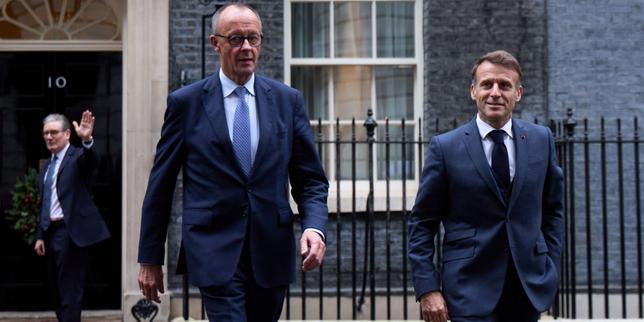
The European Union's structural shift toward nominating a formal peace envoy to open direct talks with Vladimir Putin is not an exercise in reconciliation; it is a calculated response to a changing geopolitical equilibrium. European foreign ministers, gathering recently in Cyprus, formally debated a centralized mechanism to interface with Moscow, marking a sharp departure from previous absolute non-engagement policies. This transition is driven by a stark reality: Europe faces a compounding strategic bottleneck as the United States shifts its primary financial and military focus away from the European theater. To analyze this pivot, one must strip away the rhetoric of diplomatic breakthrough and evaluate the raw structural variables governing the continent's new cost function.
The Three Pillars of the European Diplomatic Pivot
The sudden willingness of Brussels to structure a negotiation framework rests on three interrelated strategic vulnerabilities that have systematically degraded the viability of a pure attrition strategy. Discover more on a similar subject: this related article.
1. The Fiscal Extrapolation Gap
The European Council's recent approval of a 90-billion-euro loan package to Ukraine highlights the operational strain on European balance sheets. With the United States explicitly stating its intent to cease direct financial underwriting of the conflict, the burden of macro-financial stabilization has shifted entirely to Europe.
The core vulnerability is structural asymmetry. While the European Union attempts to fund long-term military guarantees through complex budget mechanisms and debt issuance, a significant portion of its member states—notably Hungary, Slovakia, and the Czech Republic—have declined to participate in these loan guarantees. The fiscal cost function is heavily skewed, creating a mathematical certainty that Europe cannot indefinitely match the industrial output of a fully mobilized Russian war economy without incurring destabilizing domestic inflation and political polarization. Additional journalism by USA Today delves into related views on this issue.
2. The Deterrence Asymmetry and Industrial Bottlenecks
For over four years, the conflict has exposed deep vulnerabilities within European military supply chains. The continent's defense industrial base remains fragmented, operating on peacetime regulatory frameworks that prevent rapid scaling of conventional ammunition and advanced hardware.
Conversely, the Russian Federation has successfully institutionalized a command economy framework. The Kremlin has sustained high-intensity operations through massive domestic production increases and deep supply integration with external actors, notably North Korea and Iran. This production disparity means that every month the conflict continues under current parameters, the net material balance tilts away from the European-backed forces, forcing European leaders to seek a diplomatic mechanism to freeze the theater before territorial erosion accelerates.
3. The Washington-Tehran Strategic Divergence
The primary catalyst for Europe’s diplomatic re-evaluation is the reallocation of American strategic assets. The White House has increasingly deprioritized Eastern European security architecture to focus on escalating operational demands in the Middle East, specifically regarding containment operations against Iran.
This shift has left European capitals structurally exposed. Ukraine’s recent, quiet pressure on Brussels to initiate direct diplomatic contacts with Moscow was not an admission of defeat, but a tactical message directed at Washington. Kyiv is attempting to use European institutional mechanisms to anchor Western involvement and force a multilateral framework before a unilateral, Washington-brokered deal can be imposed over their heads.
The Kremlin's Asymmetric Negotiation Trap
The tactical opening of communication channels presents an immediate systemic risk. The European Union cannot function as a neutral mediator because it is an explicit party to the conflict, having integrated Ukraine deeply into its financial, political, and prospective security architecture through impending accession talks.
+-------------------------------------------------------------+
|               The Kremlin's Strategic Dilemma               |
+-------------------------------------------------------------+
|                                                             |
|   [European Internal Divisions] ---> [Diplomatic Inertia]    |
|                 |                                           |
|                 v                                           |
|   [Fragmented Security Mandate] ---> [Leverage Eradication] |
|                                                             |
+-------------------------------------------------------------+
This structural reality allows Moscow to deploy a highly effective strategy of asymmetric negotiation. The Kremlin’s baseline tactical blueprint operates via a two-step cycle:
- Diplomatic Engagement as a Dilution Tool: By signaling openness to European envoys, Moscow exploits the internal fragmentation of the EU. The Kremlin naturally seeks to select its preferred interlocutors, driving a wedge between Western European states favoring rapid de-escalation and Baltic or Eastern European states who view any premature negotiation as a systemic security failure.
- Kinetic Escalation Alignment: Historically, and throughout recent diplomatic iterations in Geneva and the UAE, every formal peace proposal has been met with an immediate, measurable increase in Russian kinetic strikes against civil and energy infrastructure. This is a deliberate optimization strategy. Moscow uses battlefield pressure to systematically devalue Western counterproposals, ensuring that negotiations occur exclusively on terms favorable to Russian territorial and political demands.
Operational Limitations of the Envoy Strategy
The primary structural bottleneck preventing the appointment of a European envoy is the total absence of a unified mandate. A mediator without a cohesive sovereign backing possesses zero leverage.
The European Union's foreign policy apparatus, led by figures structuralizing a hawkish stance toward Moscow, operates under a severe institutional constraint: any official envoy would require unanimous consensus on core outcomes. Currently, no such consensus exists regarding the absolute boundaries of territorial concessions, the architectural nature of post-war security guarantees, or the long-term status of frozen Russian central bank assets.
Without a clear definition of what constitutes an acceptable end-state, appointing a representative merely invites Moscow to dictate the bilateral agenda, effectively turning the envoy into a transmission belt for Russian ultimatums rather than a vehicle for European strategic projection.
The Structural Path Forward
To prevent this diplomatic overture from degenerating into a managed capitulation, the European Union must anchor its diplomatic framework within a rigid, data-driven security equation.
First, European capitals must explicitly decouple the initiation of talks from the cessation of material military assistance. The cost of aggression must be artificially maintained at an intolerable level for Moscow through the immediate institutionalization of joint-venture defense production facilities inside western Ukraine, establishing a permanent industrial deterrent that survives shifting political cycles in Washington.
Second, any diplomatic engagement must be strictly conditional on a verified, verifiable freeze in kinetic operations. If Moscow refuses to halt infrastructure bombardment as a prerequisite for table talks, the European Union must automatically execute its planned 150-billion-euro sovereign defense borrowing mechanism to permanently shift the material balance of power. Diplomacy divorced from credible, scalable industrial force is not strategy; it is merely the formal management of strategic decline.