The air inside a professional locker room after a postseason loss doesn’t just feel heavy. It feels clinical. There is the sharp, medicinal sting of athletic rub, the rhythmic hiss of industrial ice machines, and the oppressive silence of men who have spent forty-eight minutes screaming with their bodies only to find the scoreboard unmoved.
In the wake of the latest collision between the Los Angeles Lakers and the Oklahoma City Thunder, the silence carries a specific frequency. It is the sound of a legacy grinding against the gears of evolution.
To look at the box score is to see a series of numbers that suggest a mathematical impossibility. The Thunder are younger. They are faster. They possess a terrifying, twitchy energy that makes it seem like they are playing with six men on the court instead of five. Shai Gilgeous-Alexander moves through the lane like water finding a crack in a dam, unpredictable and inevitable. Meanwhile, the Lakers represent the old guard, a collection of high-IQ veterans led by a man in his third decade of professional combat.
On paper, the Lakers should be looking for the exit. They are down in the series. The momentum has shifted from a breeze to a gale. Yet, if you sit close enough to the bench—close enough to see the steam rising off LeBron James’ shoulders—you realize that "quitting" is a word that doesn't translate into their native tongue.
They aren't staying because they are delusional. They are staying because they understand a fundamental truth about the playoffs: a series isn't a test of who is better over the long haul, but who can survive the next two hours of psychological warfare.
The Weight of the Jersey
There is a unique psychic tax paid by anyone who puts on the purple and gold. It isn't just a uniform; it is a costume worn by those expected to perform miracles. When you play for the Lakers, "competitive" is an insult. Only "championship" serves as a passing grade.
Consider the hypothetical rookie, perhaps a young guard sitting at the end of the bench, watching his idols stare into the middle distance. He sees Anthony Davis, a man whose defensive gravity can alter the trajectory of a game, adjusting the heavy wraps on his knees. To the rookie, the situation looks dire. To the veterans, this is simply the cost of doing business.
The Lakers’ insistence that they still see a path to victory isn't a PR stunt. It is a calculated belief in the volatility of human performance. They know that the Thunder, for all their brilliance, have never had to carry the weight of being the hunted for an entire month of May.
Youth is a superpower until the moment it becomes a liability. The Lakers are betting everything on that moment of transition. They are waiting for the exact second the Thunder players stop reacting and start thinking. Thinking is the enemy of the athlete. Once you start calculating the distance to the finish line, your legs get heavy.
The Mathematics of Hope
Strategy in the NBA is often described through complex geometric metaphors. We talk about spacing, verticality, and gravity. But in this series, the strategy has shifted toward something more primal: attrition.
The Lakers' path to winning doesn't involve outrunning Oklahoma City. That race is already lost. Instead, it involves turning every possession into a mud-crawling, jersey-tugging, bone-bruising affair. They want to turn the basketball court into a dark room where the only way out is to feel your way along the walls.
Mathematically, the margin for error is razor-thin. If the Lakers shoot 33 percent from the three-point line instead of 38, the game evaporates. If a single rotation is missed on a baseline drive, the Thunder’s lead swells to double digits in a heartbeat.
Precision.
That is the word echoing through the film sessions. It isn’t about trying harder—everyone is trying. It’s about the terrifying discipline required to do the boring things perfectly while your lungs are on fire. It’s about boxing out a twenty-two-year-old who has a 40-inch vertical leap when you haven't felt your toes since the first quarter.
The Invisible Stakes
Why do they keep going? Why not succumb to the narrative that the torch has already been passed?
For LeBron James, the stakes are historical, a constant wrestling match with the ghosts of the greats. But for the rest of the roster, the stakes are deeply human. Careers in this league are ephemeral. A championship window doesn't close like a door; it dissipates like mist. One day you’re a contender, and the next, you’re a cautionary tale about the passage of time.
There is a specific kind of pride that exists in the veteran who refuses to be ushered off the stage. It is a quiet, burning resentment toward the "path forward" being written by columnists and pundits.
The Lakers look at the Thunder and see a reflection of who they used to be—unburdened, fast, and convinced of their own immortality. The Thunder look at the Lakers and see a mountain that refuses to erode.
Every game in this series is a dialogue between those two perspectives. Every timeout is an opportunity to adjust the oxygen mask. The Lakers are banking on the idea that experience isn't just a buzzword; it’s a toolkit for when the lights get too bright and the crowd gets too loud.
The Anatomy of the Turnaround
To win, the Lakers must execute a series of psychological heists.
First, they have to steal a game on the road, silencing a crowd that treats every Gilgeous-Alexander bucket like a religious experience. Then, they have to hold serve at home, protecting their floor with a desperation that borders on the manic.
They talk about "one game at a time," but that is a lie told to keep the mind from fracturing. They are looking at the whole mountain. They are counting the steps.
The strategy is simple in theory, agonizing in practice: clog the paint, force the young shooters to prove they can hit shots when the pressure is a physical weight, and let Anthony Davis act as a one-man deterrent at the rim.
But tactics only take you so far. At some point, the game stops being about Xs and Os and starts being about who is willing to get their hands dirty. It’s about the loose ball that bounces between four sets of legs. It’s about the whistle that doesn't blow.
The Quiet Defiance
There is beauty in the refusal to quit.
We live in a culture obsessed with the "next big thing," always looking for the newest star, the freshest narrative, the cleanest break from the past. The Lakers are an affront to that desire for novelty. They are messy. They are bruised. They are old.
And they are still here.
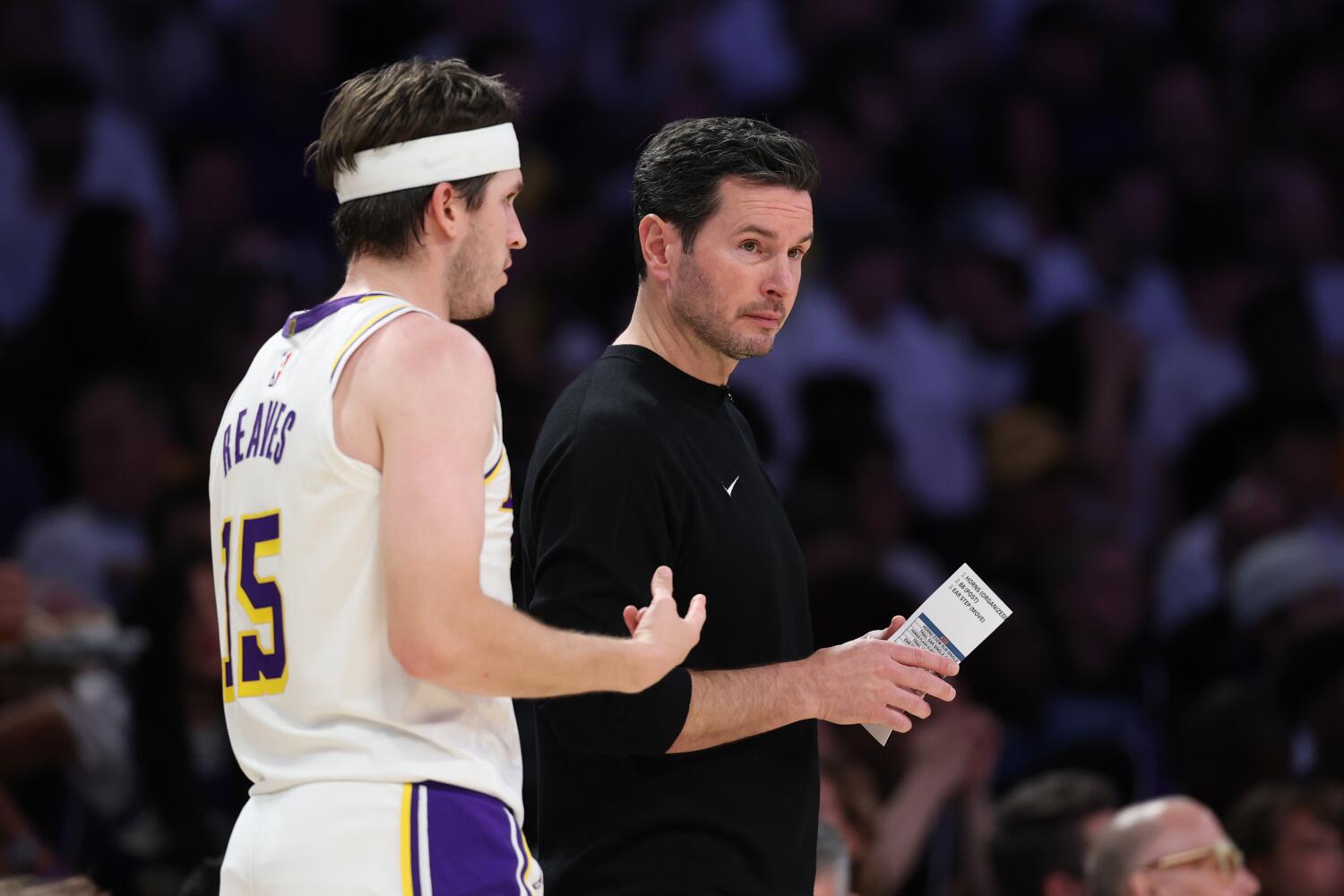
When Darvin Ham speaks to the press about "seeing a path," he isn't looking at a map. He is looking at the eyes of his players. He is looking for that specific glint of defiance that suggests they haven't started packing their bags yet.
The Thunder are the future, certainly. Their rise is one of the most compelling stories in modern sports. But the future has a way of arriving later than expected when the present refuses to leave the room.
As the series shifts back to the hardwood, the noise will return. The analysts will bring out their touchscreens and their advanced metrics, showing exactly why the Lakers’ probability of advancing has dipped into the single digits. They will point to the transition points and the turnover ratios.
They will be right, of course. The numbers don't lie.
But numbers don't have heartbeats. They don't have memories of championships won in the bubble or the scars of a thousand fourth-quarter battles. They don't know what it feels like to be written off and then stand in the center of the court as the confetti falls.
The Lakers are walking a tightrope over a canyon, and the wind is picking up. Most people would have closed their eyes by now. But this team is staring straight ahead, focused on the next inch of rope, convinced that as long as they are still standing, the story isn't over.
The light is dimming, fading into the purple of a California twilight, but it hasn't gone out. Not yet. The Lakers are still breathing, still plotting, and still waiting for the Thunder to realize that killing a king is much harder than simply outrunning him.