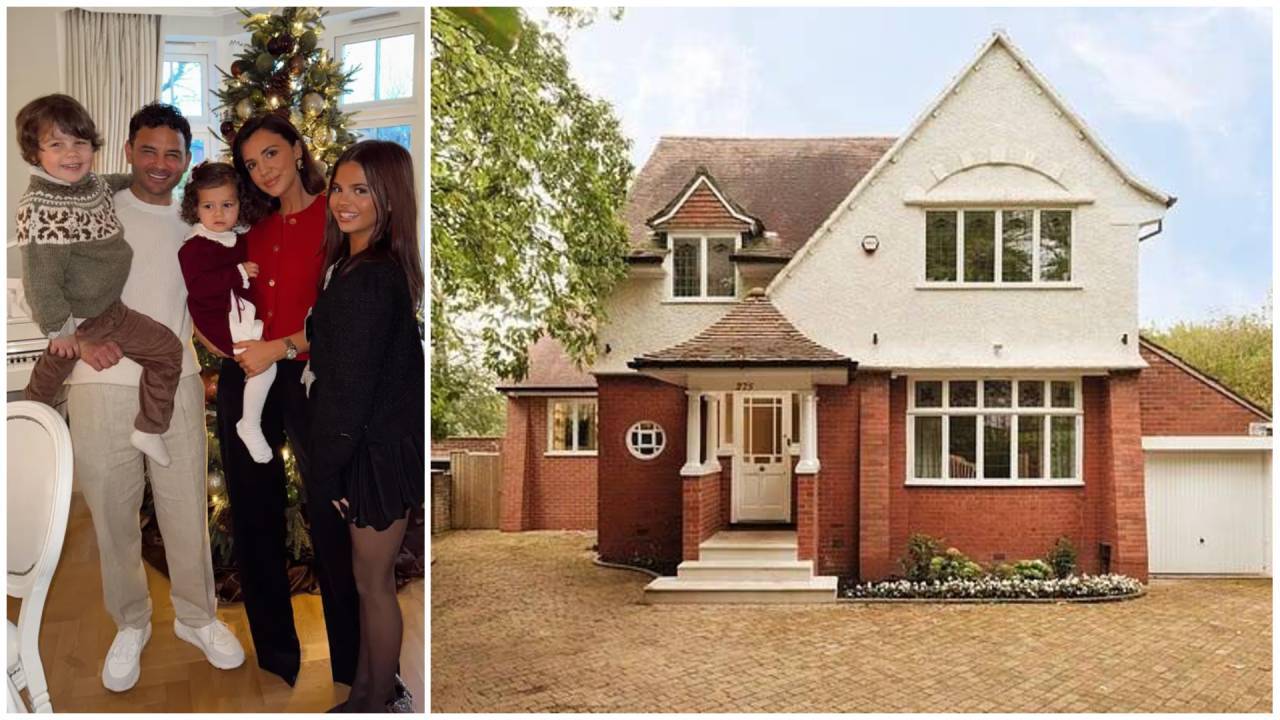
Ask anyone who has ever stood in a room they completely redesigned what lingers longest in the air once the drop cloths are gone. It is never the smell of fresh paint or the pristine sheen of the floorboards. It is the memory of the mess. It is the echo of heavy boots on subfloors, the sight of drywall dust settling on eyelashes, and the quiet, creeping realization that the house you loved was never quite big enough, grand enough, or polished enough for the life you eventually built inside it.
Lucy Mecklenburgh and Ryan Thomas know that feeling intimately.
Years ago, long before television cameras tracked their every public move and well before their family expanded into a bustling household of children, they acquired a slice of Cheshire. It was a modest property by the dizzying standards of modern celebrity real estate. A six-hundred-and-seventy-five-thousand-pound house nestled in a county famous for its footballers, actors, and sprawling country estates. To the casual observer, it was already a sanctuary. To them, it was a blank canvas waiting for an identity.
Then came the transformation.
We live in a culture obsessed with the glow-up. We watch entire neighborhoods mutate on our screens, cheering as cramped kitchens are blown out into vaulted sunrooms and dated bathrooms are stripped down to naked studs to make way for freestanding marble soaking tubs. But there is a profound psychological distance between watching a renovation unfold in a compressed forty-minute television slot and living through the physical, financial, and emotional weight of it.
When a property undergoes what the real estate world politely terms a lavish makeover, something fundamental shifts in the relationship between the owner and the walls around them. Every square foot absorbs the labor of contractors, the dust of ambition, and the sheer capital required to drag a mid-tier home into the upper echelons of luxury. Estimates suggest that by the time the dust finally settled on the Cheshire mansion, the financial footprint had ballooned toward the one-million-two-hundred-and-fifty-thousand-pound mark. Nearly half a million pounds injected into timber, glass, landscaping, and bespoke interior styling.
Consider what happens next.
You stand in the newly minted kitchen. The countertops are Carrara marble, cold and flawless. The lighting is layered, warm, meticulously calculated to cast every face in a flattering, golden glow. The garden has been manicured into a suburban paradise. And yet, the human heart is notoriously uncooperative when it comes to keeping pace with square footage. Families grow. Needs evolve. The nursery requires shifting, the playrooms spill over, and the very spaces designed to bring people together suddenly begin to feel like a stage play you have outgrown.
Putting a home like this on the market is never just a cold financial transaction. It is an act of public disclosure. When a celebrity couple lists a property for nearly double its original acquisition cost, they are inviting the entire internet into their photo album. Every prospective buyer who scrolls through the listing photographs is not merely assessing the plumbing or the acreage; they are looking for clues about how the famous live. They are peering into closets, judging tile choices, and wondering if the magic of the renovation will transfer to them once the keys change hands.
The Cheshire property market operates in a rare stratosphere. It is a place where rural charm collides with high-octane modern wealth. Drive down certain leafy lanes in the region, and you will find centuries-old brick cottages sitting comfortably beside ultra-modern glass-and-steel monoliths. In this ecosystem, a home is rarely just a shelter. It is a statement of arrival.
When Lucy and Ryan first staked their claim on the Cheshire property, their lives looked entirely different. Careers were forged in the daily grind of soap operas and reality television, a world of relentless travel, studio lights, and public scrutiny. Home had to be an antidote to that chaos. It had to be a fortress. Every upgrade they poured into those rooms—every structural adjustment, every custom fixture—was an attempt to engineer peace out of mortar and stone.
But peace, true peace, is notoriously difficult to renovate into existence.
As their family grew with the arrival of Roman and Lilah, the domestic math changed. A house that once felt expansive suddenly shrank under the pitter-patter of tiny feet and the chaotic accumulation of childhood. Toys migrate from designated bins into formal living spaces. Kitchen islands become command centers for school bags, laptops, and snack preparation. The pristine minimalist aesthetic championed by high-end interior designers inevitably clashes with the messy, beautiful reality of raising young children in the public eye.
This is the hidden tax of ambition. We spend years upgrading our environments, pouring our resources into making every corner Instagram-ready, only to discover that the process of perfecting a home often prepares us to leave it. The house becomes too valuable, too curated, too much of a finished masterpiece to comfortably contain the untidy business of daily living.
When the estate agent's sign goes up on the manicured lawn, the neighborhood takes notice. Passersby slow their vehicles, craning their necks to catch a glimpse of the transformation. Journalists dissect the profit margins, calculating the return on investment on a half-million-pound renovation as if real estate were merely a spreadsheet rather than a collection of memories.
Yet, numbers fail to capture the emotional ledger.
How do you price the late-night conversations held in the kitchen while waiting for a bottle to warm? How do you quantify the quiet Sunday mornings spent watching the light pour through newly installed floor-to-ceiling windows? You do not. Those moments evaporate into the woodwork, leaving behind empty rooms waiting for the next inhabitants to project their own dreams onto the walls.
The market will decide what the Cheshire mansion is truly worth. Bids will be made, negotiations will stall or accelerate, and eventually, new keys will turn in the front lock. For Lucy Mecklenburgh and Ryan Thomas, the house will become a chapter in a larger biography, a stepping stone in a domestic journey that continues to wind its way through the shifting landscape of modern celebrity culture.
Back in the empty hallways, long after the moving vans have departed and the final walkthrough has been completed, the silence returns. The marble stays cold. The garden waits for new footsteps. And somewhere nearby, another set of blueprints is likely being unrolled on a kitchen table, ready to begin the cycle all over again.