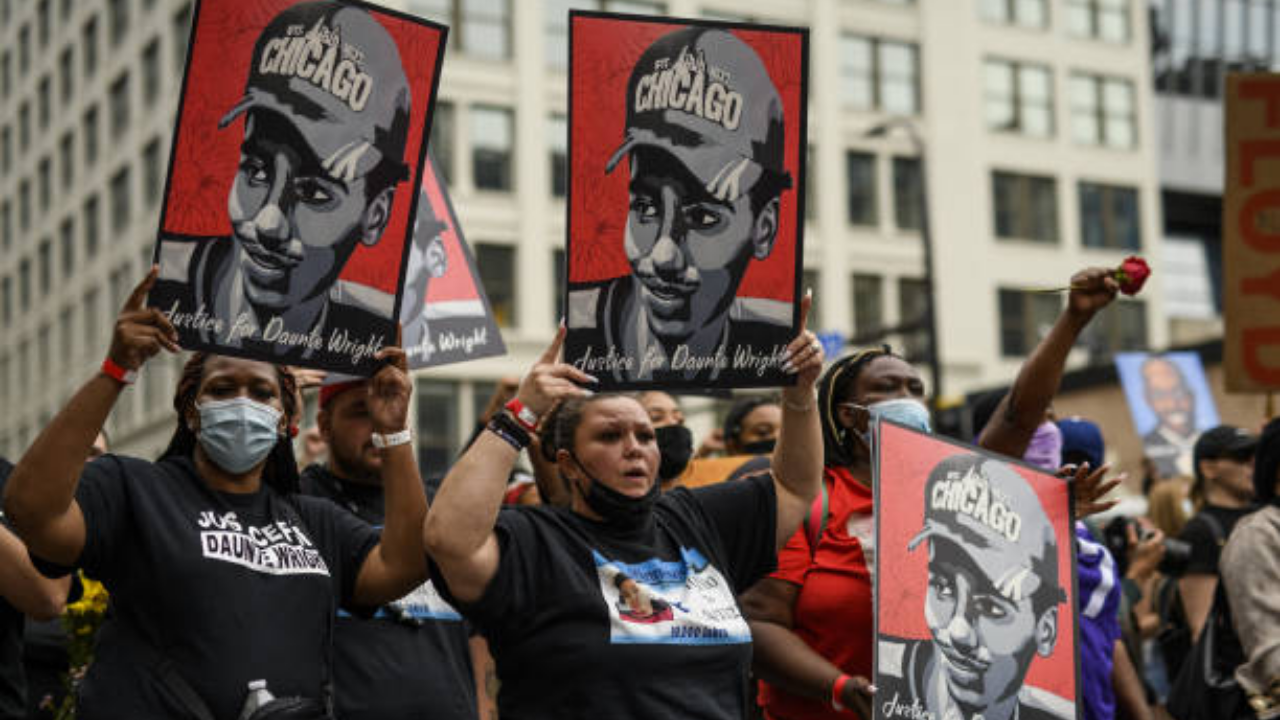
Mass casualty events and high-profile tragedies consistently trigger a predictable economic phenomenon: the rapid capitalization of public grief. When Daunte Wright was fatally shot by police in April 2021, the subsequent public outcry manifested not only in street protests and institutional scrutiny but also in an immediate digital capital influx. A single GoFundMe campaign, titled the Daunte Wright Sr. Memorial Fund, accumulated approximately $1.039 million through nearly 29,000 individual micro-transactions.
Yet, the management of this capital exposed a fundamental vulnerability in modern digital fundraising: the structural disconnect between donor intent, platform terms of service, and post-distribution legal accountability. A year after the capital was secured, a civil lawsuit filed by Chyna Whitaker—the mother of Wright's young child—named Wright's parents and high-profile civil rights attorney Ben Crump as defendants, alleging that the minor child had received none of the promised financial support. This dispute offers a case study in how unwritten social contracts collapse when subjected to seven-figure liquidity events without rigorous administrative scaffolding. For an alternative perspective, read: this related article.
The Mechanics of Public Capital Influx
Crowdfunding platforms function as decentralized collection engines, but they lack the fiduciary architecture of traditional financial trusts. To understand how a memorial fund descends into adversarial litigation, one must deconstruct the financial inflows and governance parameters established at inception.
The campaign terms explicitly stated that 100 percent of the funds would be transferred to an account designated by Wright's parents, granting them sole discretion and ownership rights over the distribution. Crucially, the platform layout and campaign descriptions created a dual narrative: Related reporting regarding this has been provided by Al Jazeera.
- The Public Appeal: Explicit references to supporting the surviving infant child and securing the family's future.
- The Legal Clause: Explicit disclaimers granting absolute discretionary control to the primary beneficiaries (the parents) without legally binding encumbrances or third-party oversight.
When capital is decentralized—sourced from tens of thousands of donors giving an average of roughly $35 to $62—no single contributor possesses the standing or the forensic accounting resources to enforce the implied terms of the gift. The capital becomes unbonded property upon receipt, subject entirely to the internal politics of the recipient family and their legal representatives.
The Agency Problem and Information Asymmetry
The involvement of high-profile legal representation introduces a distinct agency problem. In civil rights cases, legal teams often manage public relations, media strategy, and ancillary fundraising alongside active litigation. However, the intersection of legal advocacy and mass philanthropy creates an information asymmetry that obfuscates asset tracing.
In the Wright litigation, the core contention rested on alleged verbal or informal assurances—specifically, that half of the funds would be sequestered for the care of Daunte Wright Jr. When informal assurances collide with formal platform terms designating sole ownership to the parents, a legal vacuum emerges.
The structural failure points include:
- The Absence of a Fiduciary Intermediary: Funds were routed directly to family control rather than placed into a court-supervised or independent trust managed by a neutral third-party trustee.
- The Fallacy of Public Attribution: Donors conflate moral intent with legal restriction. Writing a note on a donation page expressing a desire to help a child creates an emotional contract, not a constructive trust.
- The Multi-Stream Confusion: High-profile cases often involve multiple capital streams—such as municipal civil settlements (e.g., the $3.25 million settlement with the City of Brooklyn Center, which underwent rigorous court oversight for the minor's share) and crowdfunding donations. Conflating the governance rules of formal tort settlements with unregulated digital crowdfunding guarantees friction.
Quantifying the Fiduciary Deficit
To evaluate the operational efficiency of modern crisis fundraising, analysts must look past the gross liquidity figure ($1.04 million) and examine the distribution friction coefficient.
When capital distribution relies on familial discretion rather than codified bylaws, the variance of allocation approaches total unpredictability. The cost function of this lack of structure is measured in legal fees, fractured personal relationships, and public relations degradation. In a standard corporate or non-profit environment, administrative overhead of 5 to 10 percent is accepted to maintain compliance, auditing, and transparent disbursement. In emotional, grief-driven crowdfunding, administrative overhead is often set to zero by organizers to maximize the headline collection figure—a tactical error that ultimately invites catastrophic governance failure.
Strategic Remedies for Digital Philanthropy
Mitigating the recurrence of post-collection litigation requires an overhaul of how crisis campaigns are structured before the first dollar is accepted.
Platform operators and campaign organizers must institutionalize mandatory structural safeguards for campaigns exceeding predefined liquidity thresholds, such as one hundred thousand dollars:
- Mandatory Trust Integration: Any campaign yielding over a specific capital threshold should be algorithmically or contractually bound to interface with an independent escrow agent or trust attorney, preventing direct, unencumbered lump-sum transfers to individuals.
- Explicit Allocation Transparency Upfront: If funds are intended to be split among multiple dependents or legal guardians, the percentage allocation must be verified via binding legal agreements uploaded to the platform compliance desk prior to fund release.
- Separation of Advocacy and Capital Management: Legal representation handling tort litigation against municipalities must maintain a strict firewall from the administration of public crowdfunding campaigns to avoid conflicts of interest and allegations of commingling or misrepresentation.
Transitioning crisis fundraising from an emotional free-for-all into a disciplined, auditable process protects both the donors' intent and the long-term stability of the beneficiaries.
Daunte Wright's Mother Sues Over GoFundMe Money
This video provides an overview of the civil lawsuit filed regarding the distribution of the memorial fund donations.