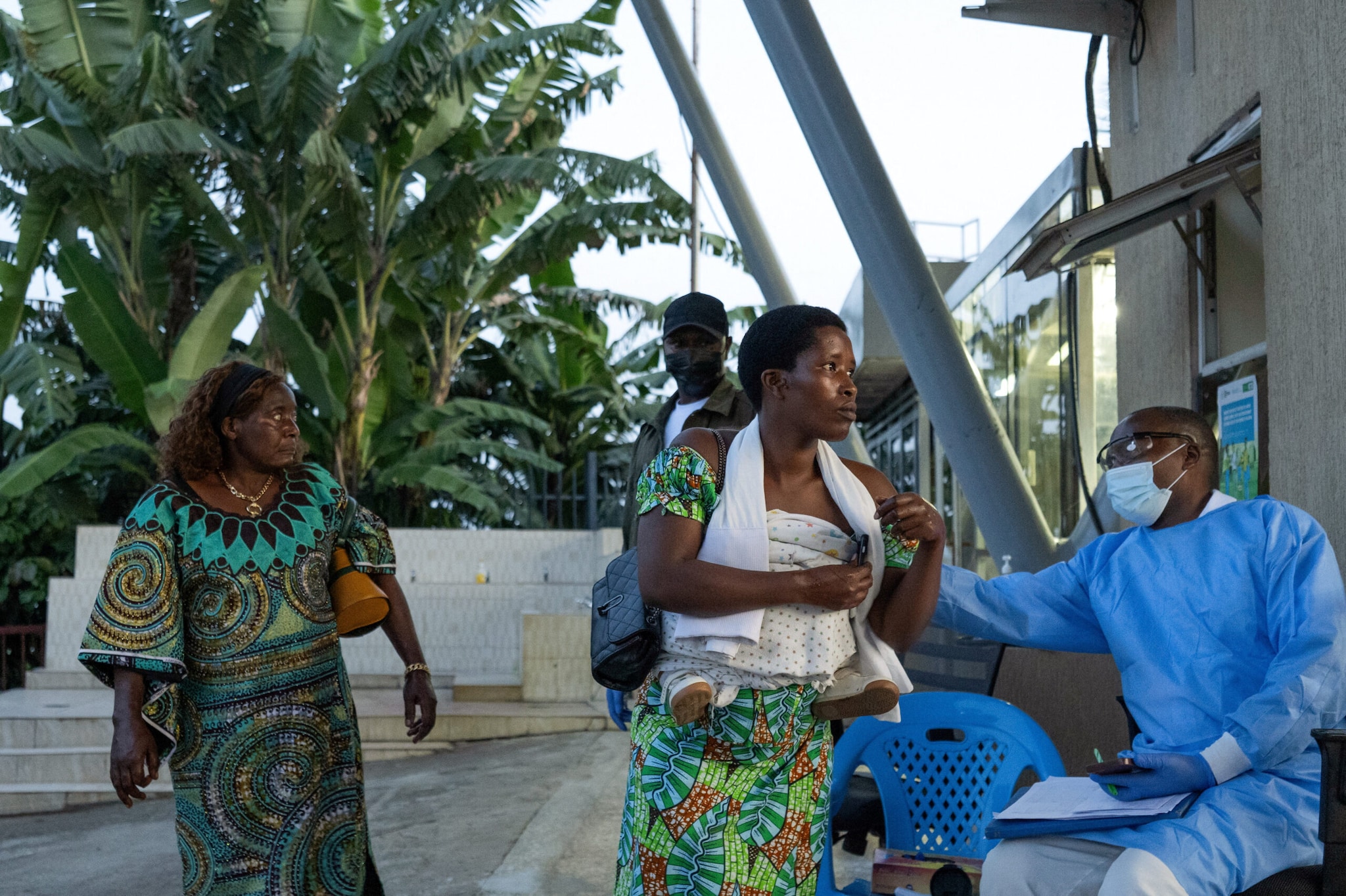
The declaration of a Public Health Emergency of International Concern (PHEIC) by the World Health Organization on May 17, 2026, highlights a critical vulnerability in global health security: the structural inability to contain a rare pathogen when it intersects with a complex humanitarian crisis. The current outbreak of Bundibugyo virus disease (BVD)—a distinct species of Orthoebolavirus—originating in the Ituri Province of the Democratic Republic of the Congo (DRC) and rapidly migrating to Kampala, Uganda, exposes deep systemic failures. The primary challenge is not merely the virulence of the pathogen, but a predictable cascade of diagnostic delays, structural gaps in medical countermeasure pipelines, and high regional population mobility that accelerates transmission across borders.
Traditional containment strategies rely on rapid detection, ring vaccination, and therapeutic intervention. Every element of this paradigm is currently compromised. By deconstructing the operational components of this outbreak, health systems can move beyond reactive alarmism and map the precise variables driving this epidemiological crisis.
The Diagnostic and Therapeutic Void
Epidemiological containment depends entirely on the speed of the diagnostic loop. In this outbreak, the timeline reveals an acute failure of early-stage surveillance. The earliest documented suspected case developed symptoms on April 24, 2026, yet formal alerts did not reach international health agencies until May 5, 2026. This delay allowed an undetected transmission window during which dozens of community deaths occurred.
The primary bottleneck stems from a diagnostic mismatch. Local triage protocols and rapid diagnostic tests in eastern DRC are heavily optimized for the Zaire strain of the Ebola virus, driven by the legacy of the massive 2018–2020 epidemic in North Kivu and Ituri. Because initial assays yielded negative results for the Zaire strain, clinical teams misclassified early BVD cases as non-Ebola febrile illnesses. It was not until the Institut National de Recherche Biomédicale (INRB) in Kinshasa performed genetic sequencing on sample clusters that the Bundibugyo virus was identified.
This diagnostic gap is exacerbated by an absolute countermeasure deficit:
- Zero Vaccine Availability: The Ervebo vaccine, highly effective against the Zaire ebolavirus, provides no cross-protection against the Bundibugyo species. There are currently no licensed vaccines or candidates in late-stage clinical trials for BVD.
- Absence of Targeted Therapeutics: Monoclonal antibody treatments such as Ebanga and Inmazeb are engineered specifically to bind to the glycoprotein of the Zaire strain. They are therapeutically inert against BVD.
Consequently, the clinical management framework is reduced entirely to supportive care—aggressive fluid resuscitation, electrolyte stabilization, and symptom management. While early supportive care can reduce the historical 30% to 50% case fatality rate of BVD, the lack of pharmaceutical interventions removes the primary tool used to break transmission chains rapidly.
Transmission Dynamics and Population Mobility
The geographic distribution of the current outbreak demonstrates how economic networks convert localized zoonotic spillover into regional crises. The outbreak originated in the Mongbwalu health zone of Ituri Province, a region characterized by intense, informal artisanal gold mining activities.
The transmission mechanics of BVD follow a distinct dual-phase vector model:
[Zoonotic Reservoir: Fruit Bats]
               │
               ▼ (Spillover Event)
   [Index Case: Mining Hub]
               │
               ├──────────────────────────────┐
               ▼ (Fluid-Borne Transmission)    ▼ (High Population Mobility)
     [Local Nosocomial Clusters]     [Regional Transit Corridors]
               │                               │
               ▼                               ▼
     [Healthcare Amplification]     [Urban Hubs: Goma & Kampala]
Mining hubs serve as high-density vector incubators. Workers are highly mobile, frequently traveling between remote extraction sites, provincial trading centers like Bunia, and major urban transport corridors. When symptomatic individuals seek medical care outside the remote mining zones, they move along defined commercial pathways. This explains the rapid appearance of laboratory-confirmed cases in Goma—a major transit hub on the Rwandan border—and the cross-border introduction into Kampala, Uganda, via long-distance travelers.
This mobility breaks traditional contact tracing models. In a stable population, tracing a single confirmed case requires mapping a finite, localized social network. In a highly mobile mining and trading demographic, the contact matrix expands exponentially, spanning multiple health zones and international borders before the index case is even isolated.
Operational Friction in Conflict Zones
Epidemiological models frequently treat containment environments as friction-free spaces where health workers can deploy unimpeded. In eastern DRC, the operational environment introduces severe non-linear disruption. The presence of armed actors, regional conflict, and deep-seated community mistrust introduces structural barriers that actively accelerate the reproduction number ($R_0$) of the virus.
The first barrier is healthcare-associated amplification. Early data indicates multiple deaths among healthcare workers across informal medical facilities. In areas with weak infection prevention and control infrastructure, a single undiagnosed BVD patient becomes a super-spreader within a clinic, transforming the very nodes meant for healing into vectors of transmission.
The second barrier is the weaponization and disruption of health infrastructure. Bureaucratic and kinetic disruptions are frequent:
- Physical Insecurity: Ongoing militia activity directly limits the movement of rapid response teams, preventing timely field investigations and contact tracing in rebel-controlled territories.
- Community Resistance to Surveillance: Safe and dignified burial protocols, critical for stopping transmission from highly infectious deceased bodies, often clash with local cultural practices. In this outbreak, the documented re-coffining of a victim in Bunia serves as a classic amplification event, exposing an entire funeral cohort to infectious bodily fluids.
- Infrastructure Attacks: The targeted disruption of health facilities by armed groups drives symptomatic individuals away from formal isolation centers and into hidden, informal care settings, sustaining silent community transmission.
Regional Border Closures and Economic Strains
The confirmation of a BVD case in Goma led directly to the closure of the border between Goma and Rwanda. While border closures are politically appealing as demonstrations of decisive action, economic and epidemiological history suggests they introduce severe counter-productive vectors.
Border closures do not stop human movement; they redirect it. Legitimate, monitored ports of entry equipped with thermal scanning and triage isolation are bypassed in favor of informal, unmonitored border crossings. This shifts population flow from measurable channels into blind spots, severely degrading regional surveillance data.
Furthermore, these closures restrict the supply chains necessary for containment. Halting the movement of goods and personnel across critical junctions like the Goma-Gisenyi border slows the deployment of mobile Biosafety Level 3 (BSL-3) laboratories, personal protective equipment (PPE), and specialized clinical personnel into the hotspot zones.
Strategic Resource Allocation
Containing the Bundibugyo outbreak requires shifting from a countermeasure-dependent strategy to a rigorous, operationally intensive containment model. Resources must be deployed based on logistical realities rather than generic pandemic response playbooks.
Decentralized Diagnostic Architecture
Rather than relying on central laboratories in Kinshasa or Goma, diagnostic capacity must be pushed to the perimeter. This requires the immediate deployment of mobile RT-PCR units capable of multiplex testing for both Zaire and Bundibugyo strains directly to transit nodes like Bunia, Mongbwalu, and Ugandan border entries. Minimizing the time from sample collection to result from days to hours is the single highest-leverage intervention available.
Focused Isolation and Syndromic Management
In the absence of therapeutics, the clinical objective must focus on lowering nosocomial transmission. This requires establishing strict, zero-flux isolation wards within existing facilities rather than waiting to construct elaborate treatment centers. Triage protocols in all eastern DRC and western Uganda clinics must immediately update their operational case definitions to isolate any individual presenting with acute febrile illness and gastrointestinal symptoms, regardless of negative Zaire-strain test results.
Cross-Border Data Integration
The appearance of unlinked cases in Kampala indicates that unilateral national responses are structurally insufficient. A unified, real-time contact data exchange between the DRC Ministry of Public Health and the Uganda Ministry of Health is required. Contact tracing lists must be treated as a single, cross-border database to track mobile populations moving along the northern and transnational transit corridors.
The trajectory of this outbreak will be determined entirely by the speed with which international and regional agencies can stabilize the diagnostic loop and secure operational access to the mining sectors of Ituri. If transmission continues to outpace tracking capacity in urban centers like Goma and Kampala, the crisis will evolve from a complex regional emergency into a prolonged, multi-country epidemiological bottleneck.