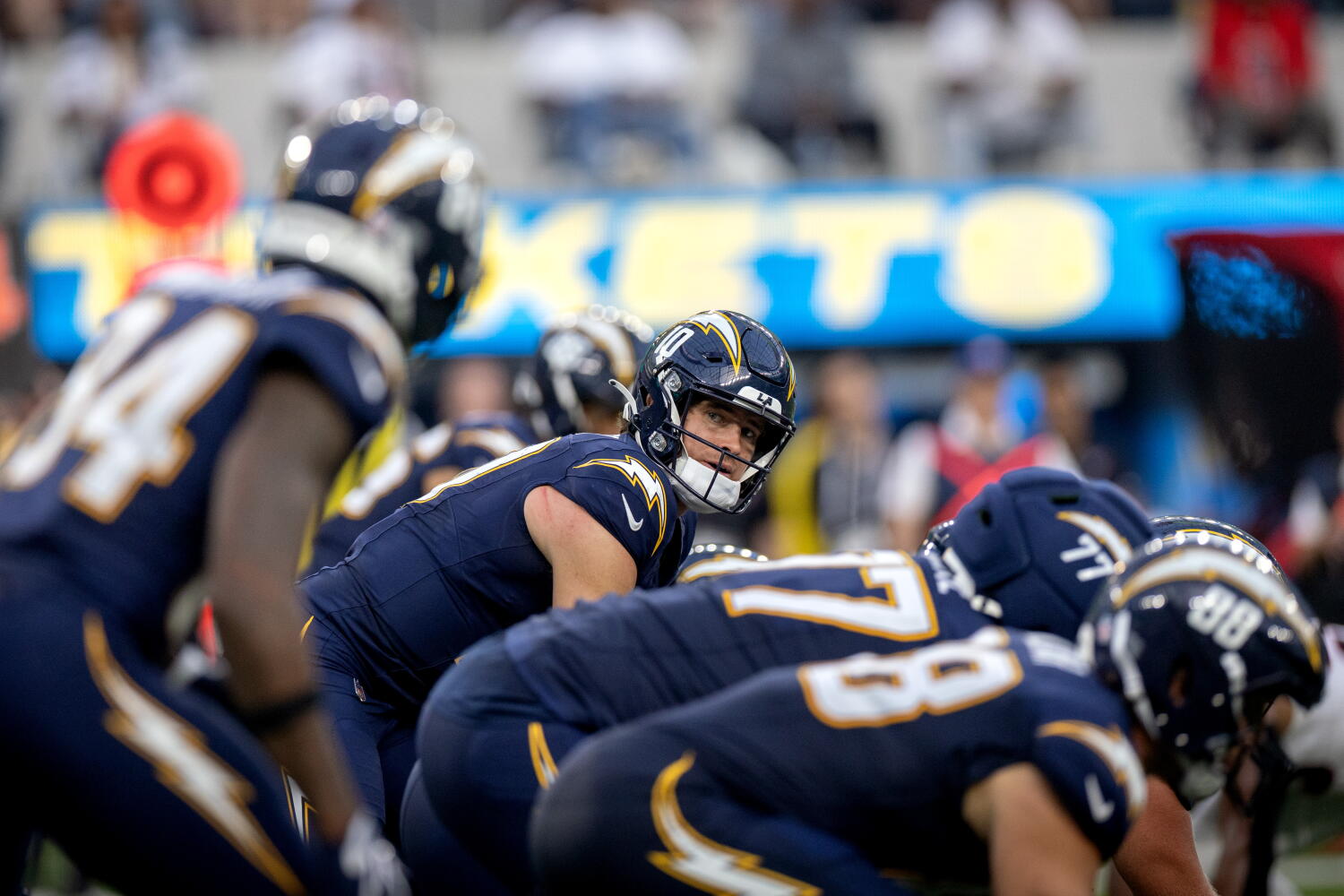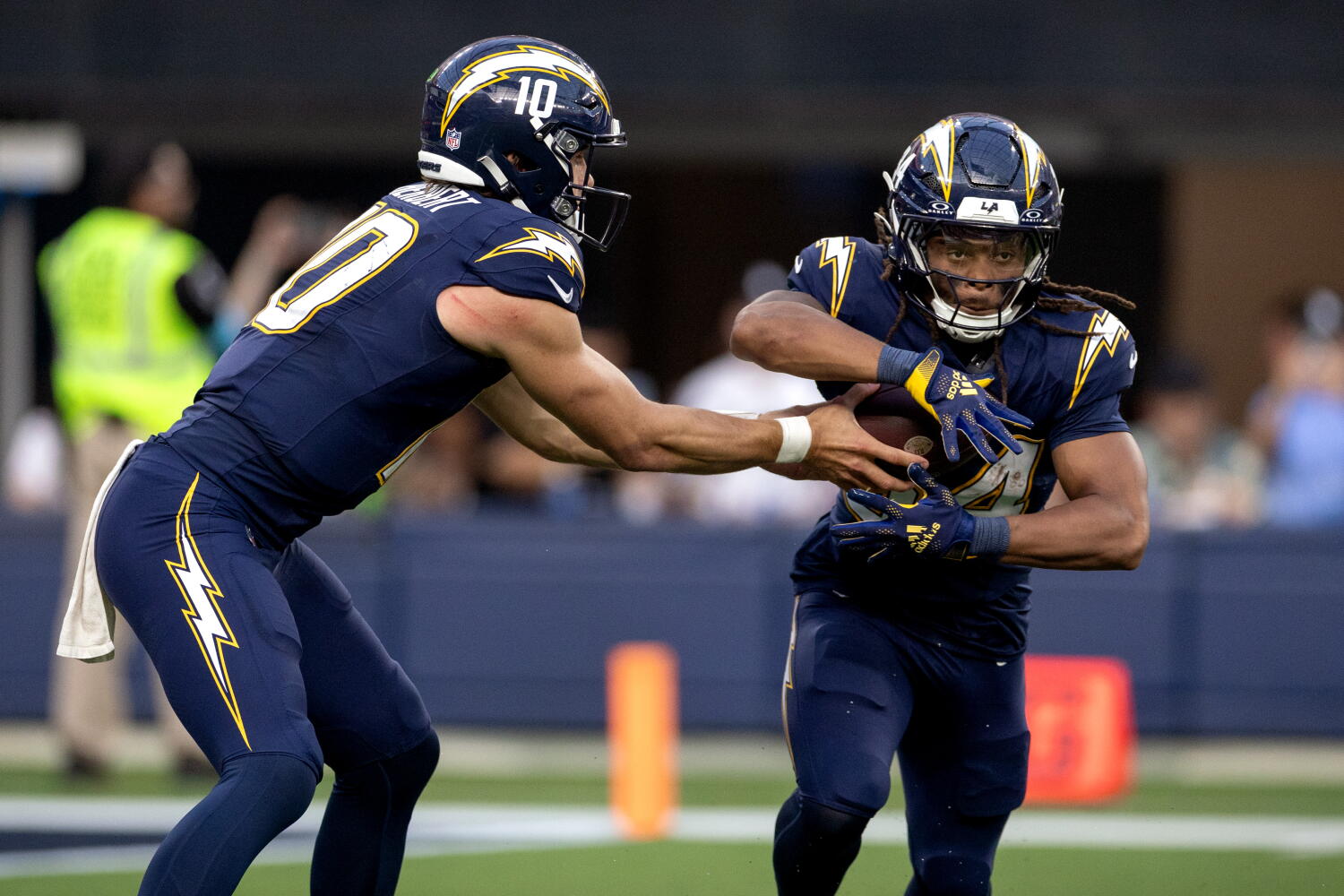
Standard sports previews treat an NFL matchup like a collection of disconnected trivia—kickoff times, television networks, and static point spreads divorced from the tactical systems producing them. Analyzing a collision between the Los Angeles Chargers and the Baltimore Ravens requires stripping away narrative noise and isolating the structural variables that dictate expected points added, clock control, and market pricing. Because no live schedule feed or real-time sportsbook sheet is attached to this brief, this analysis establishes the exact operational blueprint for evaluating broadcast logistics, schematic friction, and betting market efficiency whenever these two AFC franchises meet.
The Structural Blueprint of the Matchup
Every high-leverage NFL game operates across three distinct layers: logistical distribution, schematic efficiency, and market pricing. Standard previews dump these elements into separate, unexamined buckets. A rigorous evaluation treats them as an interconnected system. Broadcast windows dictate rest differentials and travel recovery; schematic matchups determine whether an offense stays ahead of the chains; betting lines reflect how public capital prices recent variance against underlying unit efficiency.
To evaluate a Chargers versus Ravens contest accurately, separate fixed structural realities from variable game-day execution:
- Distribution and Temporal Windows: National broadcast placement—whether a Sunday afternoon regional slate, Sunday Night Football, or Monday Night Football—alters preparation cycles, injury recovery timelines, and west-to-east circadian travel penalties for Los Angeles.
- Trench and Space Asymmetry: Baltimore traditionally builds offensive volume through heavy personnel groupings, horizontal run-pass conflict, and vertical seam stress. Los Angeles counters with split-safety defensive structures designed to cap explosive plays while testing offensive patience over twelve-play drives.
- Market Implied Probability: Point spreads and totals do not predict final scores; they represent the equilibrium point required to balance sharp syndicates against recreational betting volume.
Broadcast Logistics and Temporal Friction
Knowing where and when to watch an NFL game is not merely a viewer convenience—it is a proxy for competitive environment. NFL scheduling mechanics assign broadcast tiers based on projected audience draw, which directly correlates with rest differentials and travel stress.
West-to-East Circadian Penalties
When the Chargers travel from the Pacific Time Zone to M&T Bank Stadium in Baltimore, they absorb a three-hour biological shift. Historical NFL performance data demonstrates that West Coast teams playing in the 1:00 PM Eastern window suffer measurable declines in early-down offensive efficiency during the first quarter, as kickoff aligns with 10:00 AM biological time. If the NFL flexes or schedules the matchup into a primetime window—such as Sunday Night Football on NBC or Monday Night Football on ESPN—that circadian disadvantage neutralizes, shifting the environmental edge back toward roster health and coaching preparation.
Verification Protocol for Live Distribution
Because the NFL aggressively utilizes flexible scheduling between Weeks 5 and 17 to protect primetime broadcast ratings, static preseason schedules frequently mislead viewers. To verify exact broadcast carriage before kickoff:
- National Primetime Windows: Sunday night broadcasts reside exclusively on NBC and Peacock; Monday night broadcasts air on ESPN, ABC, or ESPN+; Thursday night contests stream via Prime Video.
- Sunday Afternoon Windows: Cross-conference and AFC matchups airing at 1:00 PM ET or 4:25 PM ET distribute across CBS or FOX depending on network television contracts and regional affiliate mapping.
- Out-of-Market Routing: Viewers outside the local Baltimore or Los Angeles media markets require NFL Sunday Ticket via YouTube or YouTube TV for Sunday afternoon regional broadcasts, while mobile-only domestic streams route through NFL+.
Tactical Mechanics of the Trench and Perimeter Battle
The outcome of any Chargers-Ravens contest hinges on how two opposing offensive philosophies solve defensive space. Rather than relying on vague assertions about "star quarterbacks" or "tough defenses," isolate the specific schematic levers that decide possession efficiency.
Baltimore's Ground-Game Gravity and Option Conflict
Baltimore's offensive architecture forces linebackers and edge defenders into unsolvable conflict angles. By deploying multiple tight ends and mobile backfield threats, the Ravens manipulate defensive box counts before the ball is snapped.
- Light Box Exploitation: When a defense aligns with six or fewer defenders in the box to protect against vertical passing concepts, Baltimore's rushing efficiency spikes, generating positive early-down yardage that keeps the offense in manageable third-and-short situations.
- Heavy Box Punishment: When a defense commits a seventh or eighth defender toward the line of scrimmage to stop interior zone and gap runs, play-action passing lanes open behind the second level, creating high-yardage chunk gains down the middle of the field.
The Chargers' defensive mandate is clear: maintain gap integrity with lightweight fronts so safeties do not have to creep toward the line of scrimmage. If Los Angeles's defensive interior gets displaced on first down, their secondary loses the structural leverage required to contain Baltimore's perimeter speed.
Los Angeles's Passing Efficiency Against Simulated Pressure
On the opposite side of the ball, the Chargers' offensive ceiling depends on quarterback processing speed against simulated pressures and disguised coverage shells. Baltimore's defensive identity relies heavily on muddying pre-snap reads—showing blitz looks with six or seven defenders near the line of scrimmage before dropping edge players into hook-curl zones while rushing four.
This creates a specific operational bottleneck for the Chargers' protection scheme:
- Hot-Route Calibration: If the offensive line slides protection toward a bluffing linebacker, a free rusher enters from the weak side, forcing the quarterback to throw hot before receivers clear their stems.
- Red-Zone Compression: Between the twenty-yard lines, Los Angeles can attack soft zone pockets with intermediate timing routes. Inside the red zone, where vertical field space shrinks, Baltimore's physical defensive backs eliminate easy separation, forcing the Chargers to manufacture yards through motion, rub concepts, or designed quarterback movement.
Deconstructing the Betting Market and Implied Probability
Recreational bettors read a point spread as a margin-of-victory forecast. Quantitative analysts read it as a price reflecting market consensus, injury uncertainty, and public bias. Without a live sportsbook feed attached to this analysis, quoting specific point spreads or over/under totals would violate factual rigor. Instead, apply the exact mathematical framework used to evaluate the line once you pull up a sportsbook board.
Translating Point Spreads into True Win Probability
Every NFL point spread maps to an implied win probability, though that conversion is non-linear due to key scoring numbers. Because NFL scoring occurs primarily in increments of 3 (field goals) and 7 (touchdowns), lines sitting on -3 or -7 carry dramatically different risk profiles than lines sitting on -4.5 or -6.
- The 3-Point Hook: Roughly 15% of all NFL games finish with a margin of exactly three points. Buying or laying -3.5 instead of -3 sacrifices massive equity because a standard field-goal victory shifts from a push to a loss.
- Home-Field Valuation: Modern NFL markets no longer assign an automatic three points for home-field advantage. Sharp books value home field between 1.5 and 2.2 points for most stadiums, adjusting upward slightly for high-noise environments like Baltimore in night games.
Identifying Recency Bias and Public Inflation
Both the Chargers and Ravens attract disproportionate public attention due to high-profile quarterback play and coaching narratives. This creates predictable market distortions:
- Overreaction to Prime-Time Variance: If either team wins or loses a standalone national broadcast the week prior by multiple scores, recreational money floods the next week's opening line, pushing the spread 1 to 1.5 points past its true power-rating value.
- Total Inflation on Brand Recognition: Public bettors overwhelmingly prefer wagering on the Over when two recognized offenses meet. When early money inflates a game total past 48.5 points, weather variables at M&T Bank Stadium—specifically Chesapeake Bay wind gusts exceeding 15 mph—frequently create immediate value on the Under, as wind degrades deep passing accuracy and long field-goal range.
Limitations of Pre-Game Analytical Models
No schematic breakdown or power rating survives intact if key personnel variables shift inside the final 90 minutes before kickoff. Analytical discipline requires acknowledging where pre-game models break down:
- Inactive List Asymmetry: NFL teams release official inactive lists exactly 90 minutes prior to kickoff. Losing a starting left tackle or a primary nickel cornerback alters unit efficiency far more than backup skill-position absences, yet public lines rarely adjust enough for trench and secondary injuries.
- Turnover Regression: Fumble recoveries operate near a 50/50 random distribution, and tipped-ball interceptions introduce high variance. A team that loses the turnover battle 3-0 can dominate net yards per play and still fail to cover a modest spread.
- Fourth-Down Aggression: Both franchises operate under coaching staffs willing to bypass traditional punt or field-goal decisions on fourth-and-short. High fourth-down conversion attempts increase variance, widening the distribution of potential final scores and destabilizing conservative point-spread positions.
The Final Strategic Play
Before committing attention or capital to a Chargers-Ravens matchup, execute a strict three-step pre-kickoff audit. First, confirm the exact broadcast tier and kickoff time via official league listings to account for west-to-east travel fatigue and weather conditions at the stadium. Second, check the 90-minute inactive report specifically for offensive tackles and interior defensive linemen; if Los Angeles is missing a starting tackle against Baltimore's simulated pressures, downgrade their third-down conversion projection immediately. Third, compare the live sportsbook spread against key NFL numbers—refuse to lay more than -3 or -7 on a favorite unless closing line movement confirms sharp syndicate backing after injury news clears.