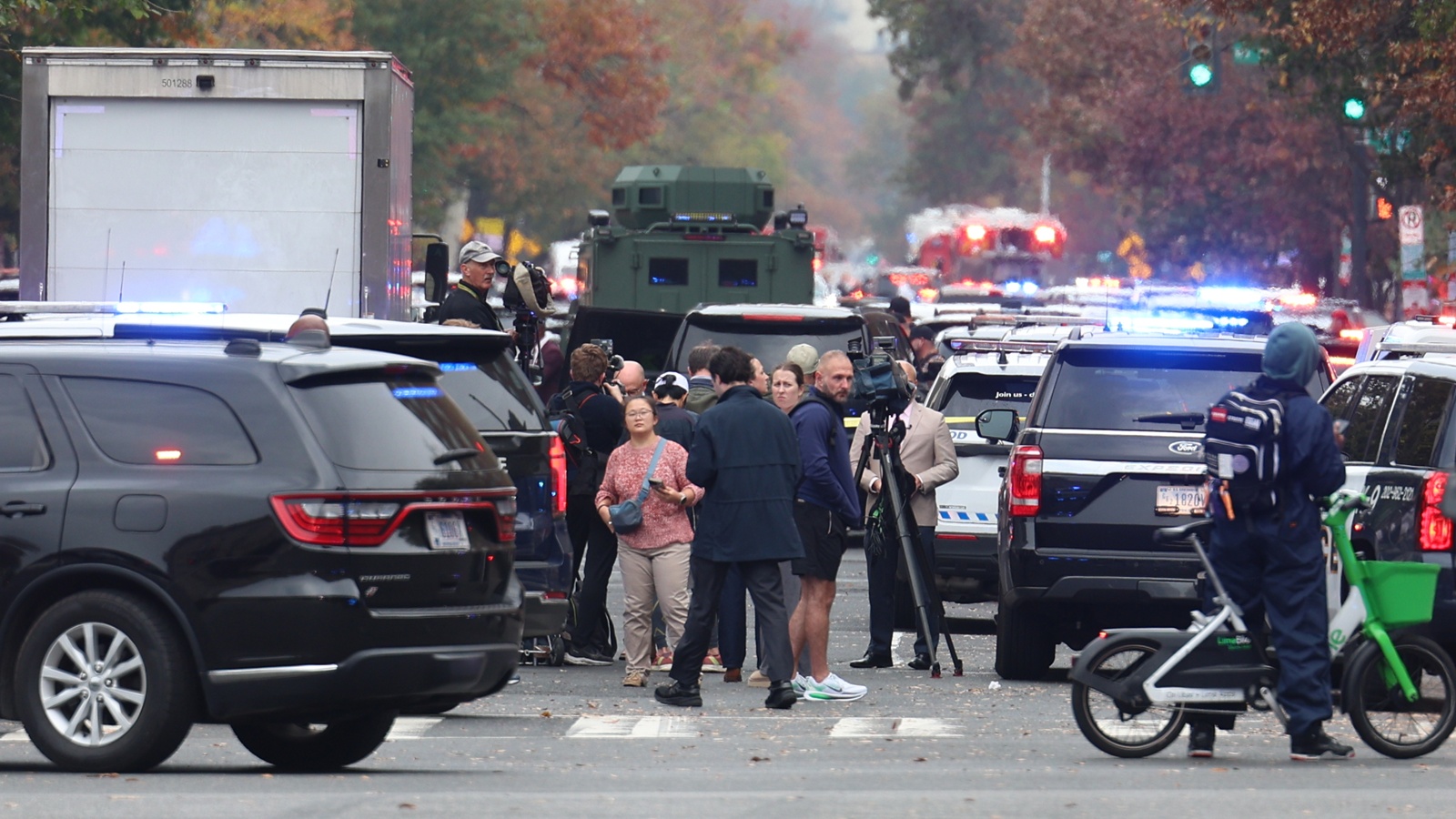
When gunfire erupts within blocks of the White House, leaving five people shot and a suspect dead, the immediate aftermath follows a familiar, tightly choreographed script. Sirens wail across downtown Washington, D.C., Secret Service agents lock down the Executive Mansion, and cable news chyrons flash red with breaking alerts. Yet beneath the surface of an incident that triggers the most sophisticated security apparatus in the world lies a stark reality that law enforcement officials rarely say out loud. Perimeter security cannot stop a threat that originates outside the fence.
The shooting near the White House—which left five victims wounded and ended with the death of the suspect—was not a breach of presidential security, nor was it an assassination attempt. Instead, it serves as a brutal case study in the friction between the fortress mentality of federal Washington and the everyday realities of urban gun violence in the District of Columbia. While the headlines inevitably tether the violence to the nation’s most famous address, the operational truth is far more complicated.
The Geography of a High-Profile Incident
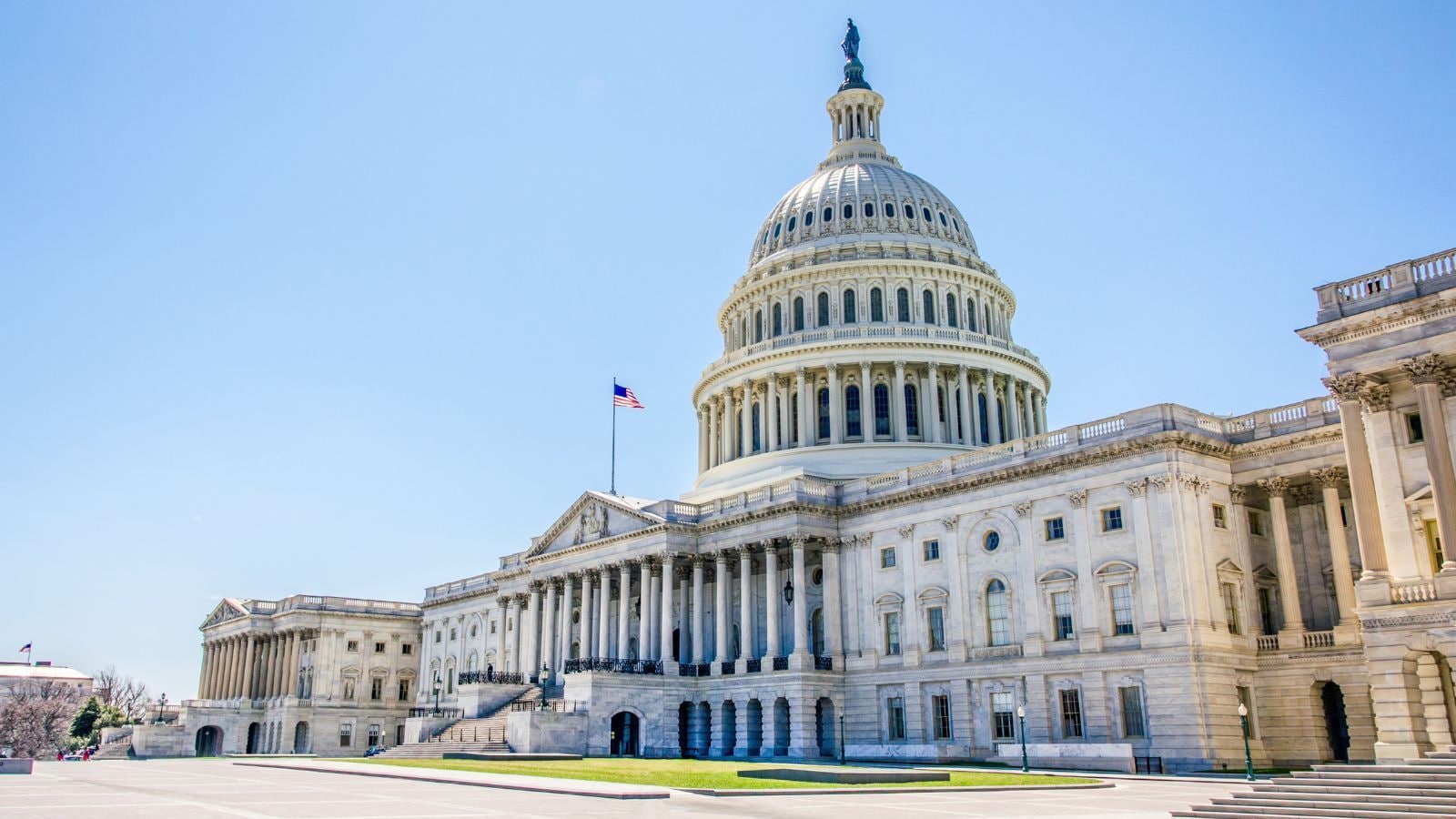
To understand how five people can be shot in one of the most heavily policed square miles on earth, you have to look at the invisible lines dividing Washington. The White House complex itself is a multi-layered fortress. It features anti-climb fencing, acoustic gunshot detection sensors, counter-snipers on the roof, and plainclothes officers blending into the tourist crowds on Pennsylvania Avenue.
Step two blocks north or east, however, and the jurisdiction—and the reality—shifts dramatically.
Downtown D.C. around McPherson Square, Franklin Square, and the K Street corridor is a dense commercial hub that empties out after business hours, leaving behind a mix of late-night service workers, unhoused populations, and foot traffic moving between Metro stations. When a shooting occurs in this buffer zone, the proximity to 1600 Pennsylvania Avenue guarantees international headlines. That proximity also triggers a massive, multi-agency response involving the Metropolitan Police Department (MPD), the U.S. Park Police, and the Secret Service Uniformed Division.
The speed of that response is often what prevents a mass casualty event from escalating further. In incidents where a suspect is killed at the scene, the engagement typically lasts seconds, not minutes. Law enforcement officers stationed on fixed posts near the Executive Mansion are trained to move toward the sound of gunfire immediately, bypassing standard patrol protocols because every active shooter near the White House must be treated as a potential diversion or vanguard for a larger attack on the presidency.
Why the White House Tag Distorts the Narrative
In the breaking news cycle, geography dictates coverage. A shooting that leaves five people wounded in Ward 7 or Ward 8 might warrant a brief segment on the local eleven o'clock news. Move that exact same crime scene to the shadows of the Treasury Building or Lafayette Square, and it becomes a national security story.
This media reflex creates a distorted picture of both the threat to the president and the nature of crime in the capital.
- The Target Misconception: The public hears "shooting near the White House" and instinctively assumes the building or its occupants were the intended targets. In reality, the vast majority of violent incidents within a half-mile radius of the Executive Mansion are interpersonal disputes, robberies gone wrong, or targeted street violence that happen to occur near federal landmarks.
- The Jurisdictional Maze: Washington, D.C., has more overlapping police forces than any other city in America. When shots ring out near the White House, MPD handles the criminal investigation of the shooting itself, while the Secret Service investigates any potential nexus to protectees. The public rarely sees the bureaucratic friction this causes in the first crucial hours, as agencies compete to control the perimeter and manage press briefings.
- The Political Football: High-profile downtown violence instantly becomes ammunition in broader national debates over D.C. home rule, local prosecution rates, and federal oversight of the District.
The focus on the White House backdrop obscures the victims. Five people shot in a single incident represents a significant casualty count, requiring multiple trauma teams at George Washington University Hospital or MedStar Washington Hospital Center. Yet their stories are almost always secondary to the question of whether the president was in the building at the time.
The Anatomy of a Law Enforcement Response
When an armed suspect opens fire near federal property, the tactical response is overwhelming by design. It is a doctrine built on decades of hard-earned lessons, from the 1994 shooting by Francisco Martin Duran, who fired dozens of rounds at the North Portico, to the 2011 incident where Oscar Ramiro Ortega-Hernandez struck the White House residence with bullets from a semi-automatic rifle.
Those historical failures forced the Secret Service to expand its defensive ring outward. Today, the agency relies on a concept known as defense in depth.
The innermost ring is the physical barrier—the reinforced steel fence erected during the first Trump administration and maintained through the Biden era, standing thirteen feet tall with anti-scale technology. Beyond that lies the soft perimeter, extending several blocks in every direction. Here, surveillance cameras feed into the Joint Operations Center, while behavioral detection officers watch for anomalies in crowd movement.
When a shooting breaks out in this outer ring, the rules of engagement are unforgiving. Officers do not wait for SWAT teams to assemble. The nearest armed personnel—whether a Secret Service uniformed officer on a corner post or an MPD patrol officer—are required to close the distance and neutralize the threat. If the suspect refuses to drop their weapon or turns it toward responding officers, lethal force is immediate. The death of a suspect at the scene is the predictable outcome of a security doctrine that prioritizes the absolute containment of a threat over prolonged negotiation in an open, crowded environment.
The Limits of Surveillance and Deterrence
A persistent myth in modern policing is that enough cameras and armed guards will eventually deter all violent crime. Downtown Washington disproves this theory every week.
The area surrounding the White House has one of the highest concentrations of closed-circuit television cameras in the Western Hemisphere. Every street corner, building entrance, and federal plaza is recorded. ShotSpotter acoustic sensors triangulate the exact location of gunfire within seconds, alerting dispatchers before the first 911 call is even connected.
None of this stops a shooter in the moment.
Deterrence relies on rational calculation. A person deciding to pull a trigger in a dispute or during a mental health crisis is rarely weighing the response time of the Secret Service Emergency Response Team. Surveillance cameras are investigative tools, not physical shields. They ensure that if a suspect survives and flees, they will likely be tracked and arrested within hours. They do nothing to stop bullets from flying into a crowd of five people on a downtown sidewalk.
Furthermore, the heavy security presence creates a false sense of invulnerability among tourists and commuters. People walk through the blocks around the White House assuming they are inside a safe zone. When violence pierces that bubble, the psychological shock is amplified precisely because the security theater—the black SUVs, the tactical vests, the concrete bollards—promised a level of safety that no police force can actually guarantee on open city streets.
The Aftermath and the Forgotten Investigation
Once the yellow crime scene tape comes down and the news vans pack up their satellite dishes, the real work begins—and it usually happens far from the cameras.
When a suspect dies during a shooting incident, the legal trajectory changes entirely. There will be no high-profile criminal trial, no motive teased out through months of pre-trial motions, and no public testimony from the perpetrator. Instead, the investigation splits into two quiet, methodical tracks.
First, homicide detectives must reconstruct the shooting to determine the exact sequence of events. They will spend weeks pulling footage from private businesses, Metro stations, and federal cameras to map the suspect’s movements prior to the first shot. They will interview the five surviving victims—a process complicated by trauma, surgery, and the reluctance of some witnesses to cooperate with police. Ballistics experts will match shell casings to weapons to determine how many rounds were fired and whether any victims were struck by crossfire.
Second, if the suspect was killed by police gunfire, an internal use-of-force investigation is automatically triggered. In Washington, D.C., fatal police shootings are reviewed by the MPD Internal Affairs Division and the U.S. Attorney’s Office for the District of Columbia. Prosecutors must determine whether the officers' use of lethal force was legally justified under federal civil rights statutes and local law. This review routinely takes a year or more, long after the public has forgotten the incident ever happened.
The Structural Vulnerability of an Open Capital
The tension between security and openness is the defining architectural and operational problem of Washington, D.C. Unlike fortified compounds in authoritarian capitals, the American seat of power is intentionally woven into a functioning, dense city. Citizens walk past the White House on their way to work. Protesters gather legally on the sidewalks outside the gates. Tourists take selfies against the iron bars.
You cannot secure that environment against random or targeted street violence without turning downtown Washington into a militarized green zone—a move that would destroy the city's economy and violate the democratic symbolism the capital is meant to project.
Every time a shooting occurs near the White House, voices emerge calling for wider perimeters, more street closures, and heavier federal patrols. Yet the history of D.C. security shows that pushing the fence out another block simply moves the friction point one block further down the street. You can harden a building, and you can protect a president, but as long as firearms remain easily accessible and urban streets remain open to the public, the area just outside the spotlight will always remain vulnerable. The sirens eventually fade, the barricades reopen to traffic, and the capital returns to its uneasy truce between total security and everyday life.