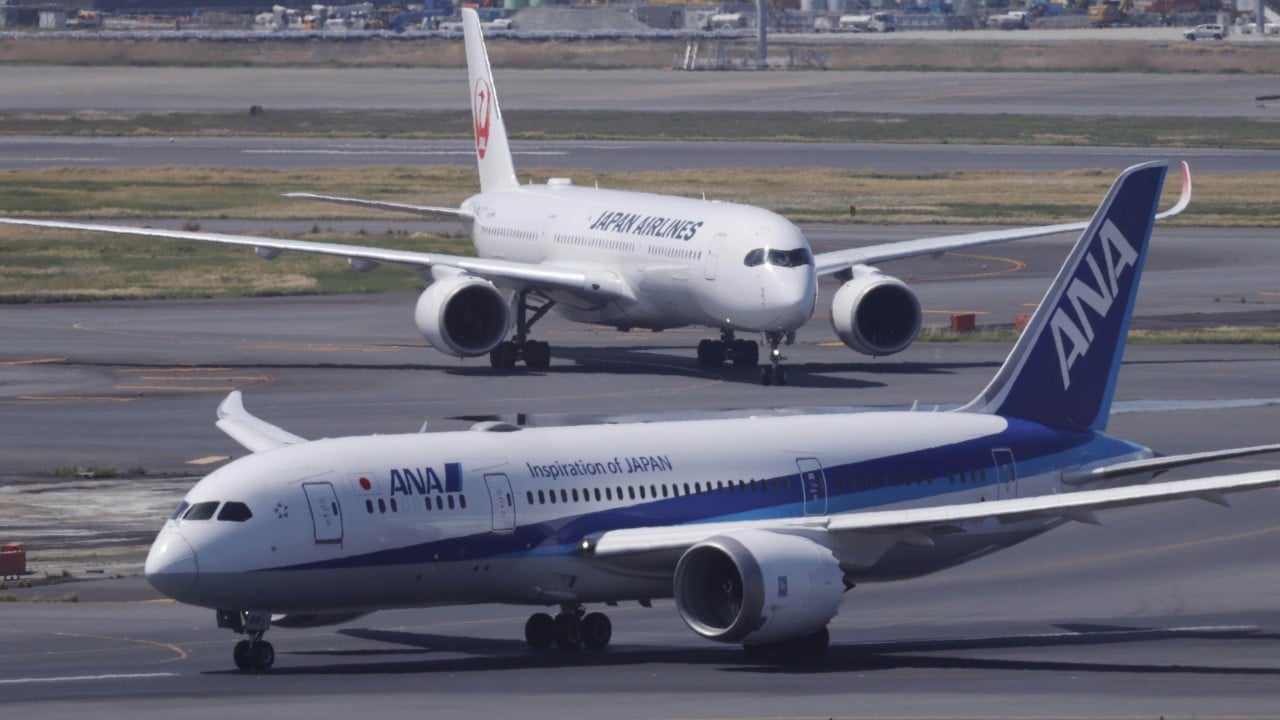
The unilateral reduction of international aviation capacity serves as one of the fastest transmission mechanisms for geopolitical friction to manifest as measurable economic loss. When structural political alignment ruptures, the immediate casualties are not trade tariffs or manufacturing blocks, but highly perishable airline inventory: passenger seats. The 57% projected collapse in scheduled flight capacity between mainland China and Japan for the summer peak demonstrates how state-directed policy and consumer sentiment intersect to destabilize a historically profitable aviation corridor.
Understanding this contraction requires looking past superficial political headlines and analyzing the microeconomics of airline network planning, fleet utilization strategy, and the structural realities of passenger load factors. When passenger load factors on remaining routes plummet to between 40% and 48%—well below the industry standard 70% break-even baseline—the commercial viability of these operations vanishes. This dynamic triggers an immediate supply-side rationalization as carriers reallocate capital-intensive assets away from non-performing corridors.
The Microeconomics of Route Viability: The Load Factor Bottleneck
Aviation networks operate on exceptionally thin margins, where route profitability depends on optimizing the relationship between Available Seat Kilometers (ASK) and Revenue Passenger Kilometers (RPK). The financial collapse of the China-Japan corridor can be modeled through a standard linear cost function where total flight operating costs match the sum of fixed asset costs, fuel burn, landing fees, and crew allocations.
When bilateral diplomatic friction intensified following external political statements regarding regional security boundaries, passenger demand suffered an immediate, asymmetric shock. The resulting drop in demand altered the fundamental revenue metrics of major Chinese legacy carriers, including Air China, China Eastern Airlines, and China Southern Airlines.
The Break-Even Deviation Matrix
The underlying structural deficit becomes apparent when comparing standard operating requirements against current corridor performance:
- Industry Standard Break-Even Load Factor: 70% to 75% seat occupancy per block hour.
- Observed Corridor Load Factor: 40% to 48% seat occupancy.
- Net Revenue Variance: A systemic shortfall of 22 to 30 percentage points per departure, rendering standard commercial flights structural loss-leaders.
Because a seat un-flown is an asset whose revenue potential is permanently lost, airlines cannot afford to absorb these losses over an extended summer travel peak. Fixed costs—such as aircraft leasing debt service, scheduled airframe maintenance, and flight crew standby pay—remain constant regardless of whether a plane is 40% full or 90% full. Variable costs, dominated by jet fuel pricing, have simultaneously risen due to global supply chain pressures and airspace diversions. When low load factors combine with elevated fuel inputs, the marginal cost of operating a flight exceeds the marginal revenue generated by the remaining passengers.
To mitigate these losses, carriers extended ticket flexibility and fee-free refund policies through late October. This move represents a calculated risk-containment strategy. By allowing passengers to cancel or rebook without penalty, airlines gain early clarity on true booking density. This clarity allows network planners to cancel under-booked flights weeks in advance rather than executing costly last-minute cancellations at the gate.
Asymmetric Compression: Route Categorization and Structural Fragility
The reduction in capacity does not occur uniformly across all geographical markets. Instead, it follows a distinct hierarchy dictated by the nature of the passenger demographic and the structural economic ties between specific city-pairs. Analyzing the cancellation metrics reveals a stark divergence between primary business trunk routes and secondary tourism corridors.
Tier-1 Trunk Routes: Structural Resilience
Core business corridors linking primary economic hubs—such as Shanghai Pudong or Beijing Capital to Tokyo Narita and Tokyo Haneda—have retained a baseline level of capacity. These routes are insulated by structural corporate dependencies:
- Inelastic Corporate Demand: Multinational corporate operations, supply chain management personnel, and essential diplomatic travel require non-discretionary transit. Corporate travelers buy premium cabins at short notice, yielding high corporate yields that preserve flight profitability even when total passenger volume dips.
- Cargo and Belly Freight Capacity: Passenger aircraft operating between primary hubs carry significant belly cargo. The demand for just-in-time electronics components, automotive parts, and high-value e-commerce goods between industrial hubs provides an alternative revenue stream that subsidizes lower passenger ticket sales.
Tier-2 and Tier-3 Leisure Corridors: Complete Market Evaporation
In contrast, secondary routes connecting lower-tier Chinese industrial cities with Japanese leisure destinations have experienced total market evaporation. March civil aviation data showed complete 100% cancellation rates across 53 distinct routes. Notable examples included the absolute suspension of service between Beijing Daxing and Osaka Kansai, Shanghai Pudong and Sapporo, and regional links such as Shenyang to Osaka and Dalian to Fukuoka.
The vulnerability of these specific routes stems from three distinct structural characteristics:
- Pure Discretionary Tourism Dependency: These flights rely almost exclusively on group leisure travel and independent holidaymakers. Discretionary travelers are highly sensitive to safety advisories, social sentiment, and shifting domestic cultural preferences. When bilateral relations cool, this demographic pivots to alternative locations within days.
- Point-to-Point Network Limitations: Unlike hub-and-spoke networks, these regional point-to-point routes lack connecting passenger traffic to sustain load factors when local demand dries up. If the specific city-pair demand drops, the flight cannot be saved by transferring passengers originating from other regions.
- Low-Yield Pricing Structures: Regional tourism routes operate on low-yield structures with thin margins. Without the cushion of high-fare business class bookings, a small drop in economy ticket sales quickly pushes the route below the break-even threshold.
Capital Redistribution Framework: The Fleet Reallocation Matrix
Airlines are asset-management firms that operate highly mobile, capital-intensive equipment. A parked aircraft incurs significant capital depreciation without generating revenue. When an international corridor suffers a structural demand shock, network executives execute a fleet reallocation framework to shift capacity to more profitable regions.
The current withdrawal of capacity from the Japan sector has initiated a major realignment of widebody and narrowbody aircraft across alternative international routes.
[China-Japan Flight Contraction]
               │
               ▼
   [Unviable Load Factors: 40%-48%]
               │
               ▼
   [Fleet Reallocation Protocol]
        ╱              ╲
       ▼                ▼
[Intra-Asia Pivots]  [Long-Haul Expansion]
- Seoul (Incheon)     - Central & Western Europe
- Bangkok (Suvarnabhumi)- Middle East Transit Corridors
- Singapore Changi
Intra-Asia Substitution
Carriers are redeploying narrowbody aircraft, such as the Airbus A320neo and Boeing 737 MAX families, onto short-haul regional alternatives where demand remains stable or growing. Seoul Incheon, Bangkok Suvarnabhumi, and Singapore Changi are the primary beneficiaries of this capacity shift. These markets offer established tourism infrastructure and simplified visa regimes, allowing them to absorb displaced Chinese leisure travelers.
Long-Haul Intercontinental Expansion
For widebody aircraft like the Airbus A350 and Boeing 787, which were previously used on high-density routes to Tokyo and Osaka, carriers are looking toward long-haul expansions. Air traffic data shows a clear shift toward European destinations. Chinese carriers hold a distinct operational cost advantage over European peers on these routes: they retain access to Russian airspace, which shortens flight times by up to three hours and lowers fuel burn per block hour. This advantage lets them deploy capacity into Western and Central Europe at lower costs than their international competitors.
Downstream Microeconomic Shockwaves
The consequences of a 57% reduction in aviation capacity extend far beyond airline balance sheets. The aviation industry serves as the primary gateway for international trade, service exports, and consumer spending, meaning this structural contraction triggers a multi-sector economic slowdown.
The Japanese Inbound Hospitality Deficit
Mainland Chinese tourists historically represented the highest-spending inbound demographic for the Japanese tourism sector. The contraction in flight options has caused visitor numbers to drop by over 50% year-on-year, creating immediate financial pressure across several industries:
- High-End Retail and Department Store Subsidization: Major retail hubs in Ginza, Shinjuku, and Osaka Minami rely on tax-free consumer spending from Chinese travelers. The drop in arrivals has lowered luxury goods sales and duty-free revenues, forcing domestic retailers to adjust their earnings forecasts.
- Regional Hospitality Distress: Leisure destinations outside Tokyo, such as Hokkaido's ski resorts and Kyushu's hot spring districts, built infrastructure to serve direct flights from regional Chinese airports. The total suspension of these flights leaves high-end hotels and local transit networks with unutilized capacity that cannot be easily replaced by other international markets.
The Pricing Choke Point for Remaining Cross-Border Air Travel
As state carriers remove thousands of weekly seats from the market, the remaining aviation capacity operates under a classic supply-demand mismatch. For essential business travelers, academic researchers, and cargo shippers who must travel between China and Japan, this capacity crunch creates a clear economic bottleneck.
The reduction in direct flights pushes remaining inventory toward premium fare pricing. Passengers face two main challenges:
- Elevated Ticket Pricing on Surviving Core Flights: With direct capacity cut by half, remaining non-stop flights command high pricing premiums. This shields the surviving routes from immediate financial losses but increases transit costs for businesses.
- Extended Connection Times through External Hubs: Travelers unable to secure high-priced direct tickets must route through intermediate hubs, primarily Seoul Incheon or Taipei Taoyuan. This adds hours to travel times, introduces connection risks, and complicates regional supply chains.
Strategic Playbook for Corporate Supply Chains and Network Planners
Operating within a structural capacity contraction requires corporations and logistics planners to move away from legacy transit frameworks and implement active risk-management strategies.
Logistics and Corporate Travel Protocols
- Audit Corporate Travel Contracts Immediately: Organizations running active operations between China and Japan must review their carrier agreements. Secure block-space allocations or corporate fare guarantees on remaining Tier-1 legacy lines before summer peak pricing takes effect.
- Decouple Freight from Passenger Networks: Companies relying on belly cargo for component transit should transition critical items to dedicated air freighters or fast-marine transit options. Relying on passenger schedules during high cancellation periods introduces unacceptable supply chain risks.
- Establish Secondary Transit Hubs: Re-route non-essential corporate travel through Seoul Incheon or Taipei Taoyuan. Establishing standing corporate accounts with carriers operating through these transit hubs helps bypass direct flight bottlenecks and provides predictable pricing structures.
Airline Asset Optimization
- Accelerate Route Diversification: Network planners must stop viewing the Japan slowdown as a temporary disruption. They should finalize the transfer of widebody assets to high-yield European corridors and growing Southeast Asian hubs to secure alternative revenue streams before peak summer allocations lock in.
- Optimize ACMI and Wet-Lease Opportunities: If domestic or alternative regional routes cannot absorb excess narrowbody aircraft, explore wet-lease options to wet-lease capacity to partners in regions experiencing summer demand surges. This keeps assets active and generating revenue without risking capital on low-load point-to-point flights.