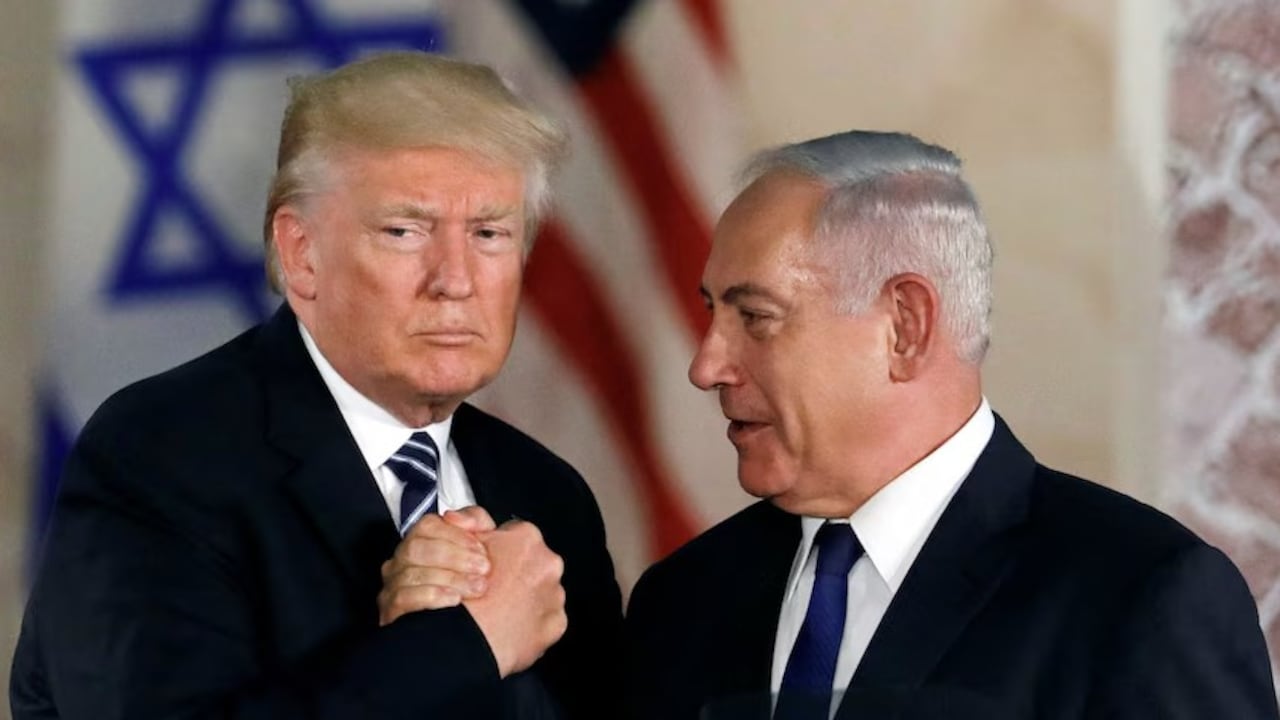
The assumption that shared ideological hostility toward a state adversary guarantees operational synchronization is a persistent flaw in conventional geopolitical analysis. The sudden friction between US President Donald Trump and Israeli Prime Minister Benjamin Netanyahu—triggered by Trump’s abrupt cancellation of planned military strikes and his public declaration of an imminent framework agreement with Tehran—reveals a fundamental structural misalignment. Netanyahu’s lack of advance warning was not an isolated breakdown in communication. It was the mathematical consequence of two states operating under entirely different strategic cost functions.
When the United States and Israel initiated coordinated military operations against Iran on February 28, their initial objectives appeared aligned: degrading the Islamic Republic's missile capacity and neutralizing its nuclear infrastructure. However, the operational execution of a military campaign invariably forces a recalculation of national interest based on asymmetric vulnerabilities. Also making headlines in related news: The Invisible Men on the Water and the Diplomatic Storm Ashore.
The Strategic Disconnect: Competing Cost Functions
To understand why the White House bypassed Israeli channels before announcing a diplomatic breakthrough on Truth Social, one must quantify the variables driving each leader's decision-making architecture.
[Iranian Closure of the Strait of Hormuz]
       │
       ├─► [Sustained Global Energy Supply Shock] ──► [US Domestic Inflation Risk] ──► [Trump Cost Function: High Risk]
       │
       └─► [Localized Kinetic Escalation] ─────────► [Israeli Existential Threat] ──► [Netanyahu Cost Function: Acceptable Risk]
The US Maritime Security and Macroeconomic Function
The United States evaluates regional conflict through the lens of global market stability and domestic economic indicators. Iran’s closure of the Strait of Hormuz introduced an immediate supply shock to international energy markets. For a US administration facing a domestic election cycle later this year, the economic variables are clear: Further information on this are covered by The New York Times.
- Commodity Pricing: Prolonged maritime blockades directly correlate with increased domestic fuel prices, inflating consumer price indices.
- Geopolitical Overextension: Retaliatory Iranian strikes on economic infrastructure across Gulf states (including Saudi Arabia, the UAE, and Qatar) threaten a wider regional escalation that demands sustained US military resource allocation.
- The Off-Ramp Imperative: The primary US objective rapidly shifted from long-term regime transformation to securing an immediate maritime off-ramp that restores commercial shipping and stabilizes global energy distribution.
The Israeli Existential Security Function
Israel calculates risk through a localized, existential framework shaped heavily by the strategic realities following October 7. The Israeli cost function prioritizes the absolute neutralization of adjacent threats over global macroeconomic stability:
- The Threat Proximity Variable: Israel views an un-demolished Iranian nuclear program and active ballistic missile infrastructure as an unacceptable long-term cost.
- The Momentum Multiplier: From the perspective of Israeli defense doctrine, pausing military operations during a period of tactical advantage permits an adversary to restock proxy networks, such as Hezbollah in Lebanon, and fortify underground enrichment sites.
- The Political Survival Constraint: Netanyahu faces intense domestic pressure to demonstrate absolute victory. Accepting a ceasefire that punts core security issues—like uranium enrichment thresholds—to a secondary phase of negotiations represents an unacceptable political and security compromise.
The Breakdown of Information Asymmetry
The breakdown in the bilateral intelligence loop occurs when the senior partner in an asymmetric alliance determines that sharing operational intent with the junior partner will actively sabotage the desired outcome.
Trump’s unilateral cancellation of the Thursday evening strikes indicates a calculated decision to minimize Israel's capacity to veto the diplomatic track. Had the White House provided Netanyahu with a standard multi-hour advance notification, Israeli leadership would have possessed the window required to launch independent, preemptive operations inside Iran or Lebanon. Such an action would have effectively locked the US back into a kinetic escalation cycle, destroying the fragile diplomatic leverage built during backchannel talks in Tehran.
The administrative rationale behind this informational blockade is verified by Trump’s explicit statement that "all parties involved" had conceptually approved the framework—listing a broad coalition of regional states including Saudi Arabia, the UAE, Turkey, and Jordan, while notably omitting direct, real-time consultation with the Israeli security cabinet. The inclusion of Gulf states underscores the economic drivers of the negotiation: these nations require an end to the maritime conflict to protect their own sovereign infrastructure, aligning their strategic weight with the White House rather than Jerusalem.
Tactical Friction Points in Lebanon and Tehran
The operational divergence is most visible along two distinct geographical axes: the maritime boundary of the Persian Gulf and the land border of southern Lebanon.
The Lebanon Bottleneck
A primary source of friction during the run-up to the diplomatic announcement was Israel's continued bombardment of Hezbollah assets in Lebanon. The US administration viewed these persistent strikes as an destabilizing variable that complicated wider regional negotiations. When Trump expressed public frustration at Israel's "constantly fighting with Lebanon," he was identifying a structural bottleneck: Iran conditioned its willingness to sign a draft framework on a comprehensive regional truce that included its primary Levant proxy. Netanyahu's tactical insistence on degrading Hezbollah thus directly conflicted with Trump’s strategic timeline for a global energy settlement.
The Minimum Acceptable Threshold of De-escalation
The core structural flaw in the current US-led diplomatic framework lies in the definition of success. The preliminary terms reported demonstrate the vast delta between Washington's immediate targets and Jerusalem's absolute requirements:
| Variable | US Proposed Framework | Israeli Strategic Requirement |
|---|---|---|
| Primary Focus | Reopening the Strait of Hormuz & Sanctions/Tariff Relief | Complete Dismantlement of Enrichment Infrastructure |
| Nuclear Material | Removal of existing 60% enriched uranium stockpiles | Zero enrichment capability on Iranian soil |
| Proxy Networks | De-escalation of regional strikes | Absolute disarmament of Hezbollah and regional militias |
| Strategic Timeline | Immediate economic stabilization ahead of US elections | Indefinite military pressure until systemic regime change |
The Strategic Playbook
The divergence between Washington and Jerusalem cannot be resolved by standard diplomatic platitudes or assurances of mutual alignment. Israel now faces a critical structural choice: adapt to the shifting priorities of its primary superpower patron or accept the strategic risks of unilateral military execution.
- Enforce Redlines Via Unilateral Interdiction: If the final US-Iran memorandum of understanding fails to mandate the absolute destruction of Iran's centrifuges, Israel must pivot its defense architecture toward independent, deniable sabotage operations. Lacking US logistical support for sustained, heavy long-range bombings, the Israeli intelligence apparatus must maximize cyber warfare and targeted kinetic interventions against critical nodes within the Iranian nuclear supply chain.
- Decouple the Northern Front: Israel must resist binding its operations in Lebanon to the broader US-Iran diplomatic framework. If Washington secures a maritime truce in the Persian Gulf, Jerusalem must maintain independent military pressure along its northern border to establish a demilitarized buffer zone south of the Litani River, regardless of whether a formal ceasefire is signed in Tehran.
- Leverage the Gulf Sanctions Architecture: Israel should utilize its remaining diplomatic leverage with the US Congress and institutional allies within Washington to ensure that any sanctions relief granted by the White House is strictly tied to verifiable, physical verification protocols conducted by international monitors, preventing Tehran from utilizing newfound liquidity to rebuild its proxy networks.