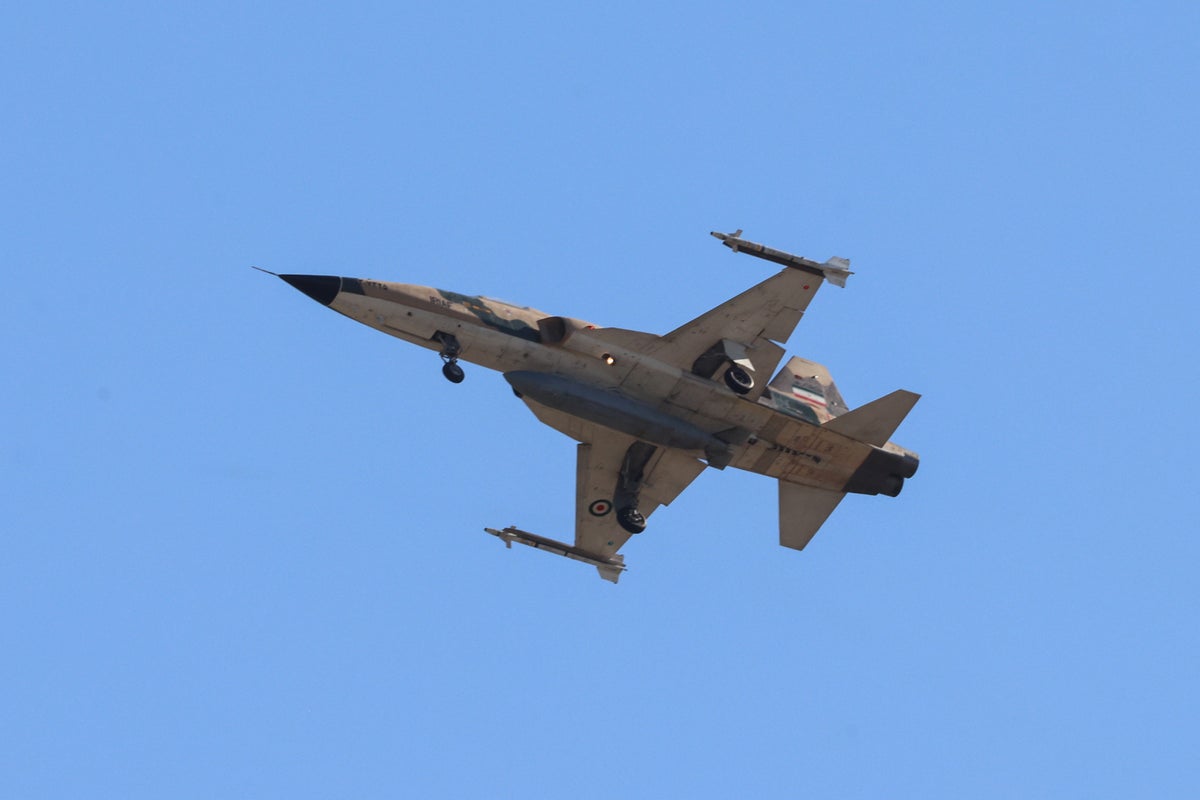
Geopolitical friction points frequently generate asymmetrical narratives where operational facts collide with strategic posturing. The diplomatic confrontation between Doha and Tehran regarding the status of downed military aviators provides a case study in modern airspace defense mechanics and state-level communication breakdowns. When claims regarding detained personnel emerge months after a kinetic engagement, the underlying drivers are rarely limited to humanitarian inquiries. They reflect broader pressures within an active theater of operations.
The Operational Timeline of the March Engagement
Understanding the current dispute requires stripping away political rhetoric and examining the sequence of events from March 2026. Two Iranian Sukhoi Su-24 bombers crossed into sovereign Qatari airspace, establishing a direct targeting trajectory toward strategic infrastructure hosting coalition forces, specifically the Al Udeid Air Base.
Air defense protocols dictate a strict operational hierarchy during active hostilities:
- Radar acquisition and positive identification of hostile intent.
- Repeated radio hailing across international aviation and military frequencies.
- Evaluation of interception vectors against rules of engagement thresholds.
- Kinetic interdiction if uncommunicative platforms continue an offensive flight path.
Qatari air defense units executed this exact sequence. Interceptor assets scrambled after radio hails went unanswered, resulting in the shoot-down of the two aircraft. The kinetic phase concluded swiftly, but the logistical and humanitarian aftermath set the stage for the current information friction.
The Divergence in Casualty Accounting
The core of the recent controversy stems from a direct contradiction between the Missing Persons Search Committee of Iran's Armed Forces General Staff and the Qatari Ministry of Foreign Affairs.
Iranian military officials, led by General Mohammad Bagherzadeh, asserted that three crew members—identified as Javad Salehi, Abdolmajid Dashtian, and Omran Behraveshian—survived the ejection or crash and entered Qatari custody, where they have allegedly been held for six months. Tehran escalated this claim to the International Committee of the Red Cross, demanding access and immediate repatriation.
Conversely, Qatari authorities, through Foreign Ministry Spokesperson Majed Al Ansari, categorised these assertions as entirely fabricated. Doha maintains that search and rescue teams recovered the remains of only one pilot, Majid Kazemi, whose body was processed and returned through established humanitarian channels. According to Qatari operational records, no surviving pilots were captured or detained.
Information Warfare and Diplomatic Timing
The timing of Tehran's public accusation offers critical insight into its strategic utility. Surfacing claims of detained personnel half a year after an incident coincides with delicate regional de-escalation initiatives and stalled negotiations over maritime transit corridors like the Strait of Hormuz.
When conventional military options narrow, state actors frequently utilize institutional channels, such as human rights appeals and missing persons inquiries, to exert diplomatic leverage. By petitioning the International Committee of the Red Cross, Tehran constructs a pressure point designed to place regional adversaries on the defensive during fragile diplomatic windows.
Doha's counter-strategy relied on transparency and procedural documentation. By publicly detailing the standing invitation extended to Iranian delegations in April to inspect search and rescue archives, Qatar shifted the burden of proof back to Tehran. The fact that Iranian officials had not responded to the invitation prior to launching public accusations undermines the operational credibility of the detention claims.
The Verification Impasse
Resolving disputes involving missing combatants in active conflict zones depends entirely on institutional trust and forensic verification. Standard military protocols for such incidents rely on bilateral or third-party neutral verification, including the exchange of flight data recorders, crash site forensics, and biometric confirmation of remains.
When one party refuses or ignores bilateral invitations to inspect recovery operations, verification stalls. The absence of a response from Tehran regarding the April site inspection invitation creates an evidentiary vacuum. In this vacuum, unverified claims propagate through state-affiliated media networks, substituting political narrative for forensic reality.
Future developments in this standoff will depend on whether international bodies like the Red Cross choose to formalize an inquiry or if bilateral channels can bypass public posturing. Until structural verification mechanisms are permitted at the crash sites, the dispute will remain an unresolved friction point in the broader operational theater.
Evaluate future state-level accusations of detained personnel by auditing the accused state's paper trail, specifically tracking whether open invitations for independent forensic audits were issued and ignored prior to public escalation.
Iran Seeks Return Of 3 IRGC Pilots From Qatar Captured During US War! Doha Denies Claims | Watch
This video provides additional context regarding the specific claims made by Iranian military officials and the subsequent diplomatic denials issued by Qatari authorities.


