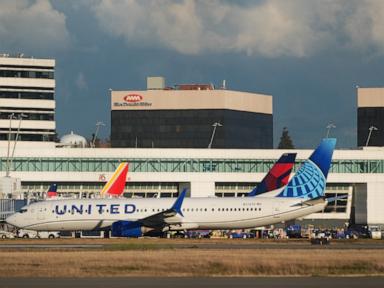
A 90-minute technology failure at a major carrier like United Airlines does not cost the network 90 minutes of operations. It induces a nonlinear capacity collapse that degrades schedule integrity for 48 to 72 hours. Standard aviation reporting treats a system outage as a localized pause, akin to stopping a conveyor belt and restarting it once the fault clears. Commercial aviation operates as a tightly coupled, zero-slack state machine. When the central nervous system of an airline—specifically its weight-and-balance calculation engines, flight dispatch software, or crew-tracking databases—goes offline for 90 minutes, the physical aircraft do not wait in suspended animation. They remain trapped at gates, blocking inbound arrivals, burning crew duty clocks, and severing the topological links of a hub-and-spoke network.
To understand why a 1.5-hour disruption forces widespread departure delays and subsequent cancellations, one must analyze the mechanics of aviation network architecture, regulatory constraints, and queuing theory. If you liked this post, you might want to check out: this related article.
The Architecture of Tightly Coupled Aviation Systems
Modern legacy carriers rely on a distributed stack of mainframe backends and cloud-native middleware to execute a single departure. A flight cannot legally push back from the gate without the synchronized completion of three distinct data pipelines:
- Flight Dispatch and Meteorological Routing: The generation of the operational flight plan, fuel load calculations, and air traffic control (ATC) slot filing.
- Weight and Balance (W&B) Telemetry: Real-time aggregation of passenger manifests, checked baggage weights, cargo loads, and fuel distribution to calculate the aircraft's center of gravity and takeoff trim settings.
- Crew Legality Verification: Automated validation that every pilot and flight attendant on the roster complies with federal duty-time limits at the exact moment of door closure.
When an outage severs connectivity to any one of these systems, the airline loses its ability to generate a legally binding dispatch release. Even if the physical aircraft is fueled, boarded, and mechanically sound, it is legally grounded. For another look on this development, check out the recent update from The Motley Fool.
During a 90-minute blackout, operations teams often attempt manual workarounds—calculating weight and balance via paper tables or voice-relaying dispatch releases over radio frequencies. This degrades throughput by an order of magnitude. A hub operation designed to process 60 departures per hour drops to a manual processing rate of four to six departures per hour. The system transitions immediately from flow state to accumulation state.
The Three Cascading Bottlenecks of a 90 Minute Blackout
The true damage of the outage occurs after the software patch is applied or the server cluster reboots. The recovery phase encounters three compounding physical and regulatory bottlenecks.
1. Gate Saturation and Apron Gridlock
Hub airports operate on turn times measured in minutes, frequently scheduling narrowbody aircraft for 45-to-55-minute gate occupancy. Every gate is assigned to multiple incoming and outgoing tails throughout a banking period.
When departing flights are held at the gate for 90 minutes, inbound flights that were already airborne when the outage began land on schedule with nowhere to park. These arriving aircraft accumulate on taxiways and penalty boxes. Once taxiways saturate, airport ramp control halts ground movement entirely. Even after the IT system comes back online, a cleared departing flight cannot push back because arriving aircraft physically block its alley. Clearing apron gridlock requires manual, sequential towing and marshaling operations that proceed at walking speed.
2. The Federal Duty Clock Cliff
In the United States, flight crews operate under Federal Aviation Regulation (FAR) Part 117, which imposes strict, non-negotiable limits on flight duty periods based on the time of day and number of flight segments. These clocks start ticking when the crew reports for duty, not when the aircraft takes off.
A 90-minute departure delay consumes the buffer built into crew schedules. If an outage pushes a crew's projected arrival past their legal duty limit—even by a single minute—the crew becomes legally "timed out." They cannot fly. The airline must then pull a reserve crew from standby. However, reserve crews are finite resources positioned primarily at major hubs. If an aircraft is stranded at a spoke airport when its crew times out, the flight faces an automatic overnight cancellation while replacement personnel are deadheaded in the next day.
3. The Hub and Spoke Bank Severing
United Airlines, like its legacy peers, utilizes a banked hub-and-spoke model. Flights arrive in concentrated waves (banks), passengers and bags transfer across terminals within a 60-to-90-minute window, and aircraft depart in a subsequent wave.
A 90-minute outage completely desynchronizes incoming and outgoing banks. Airlines face a binary, high-cost optimization problem during recovery:
- Option A (Hold for Connections): Delay outbound flights further to wait for passengers stranded on late inbound aircraft. This preserves passenger itinerary integrity but propagates the delay downstream to the next three legs the outbound aircraft is scheduled to fly.
- Option B (Protect the Tail): Depart outbound flights as soon as the IT system recovers, leaving connecting passengers behind. This restores aircraft utilization schedules faster but creates a massive passenger re-accommodation backlog, overwhelming customer service systems and requiring complex baggage offloading—which itself adds 20 to 30 minutes of delay per flight due to security matching rules.
Quantifying the Recovery Curve Through Queuing Theory
Standard reporting treats delay recovery as a linear subtraction problem: if a flight is delayed by 90 minutes, it runs 90 minutes late. Queuing theory demonstrates that recovery follows an exponential decay curve governed by utilization rates.
The average wait time in a system ($W$) scales disproportionately as the system utilization rate ($\rho$) approaches 100 percent, expressed fundamentally as:
$$W \propto \frac{\rho}{1 - \rho}$$
Major airlines schedule hub operations and aircraft utilization at roughly 85 to 92 percent capacity during peak travel periods to maximize return on invested capital. At 90 percent utilization, the denominator ($1 - \rho$) is small, leaving minimal spare capacity (slack) to absorb shocks.
When a 90-minute outage occurs, the arrival rate of tasks (flights needing dispatch, gates needing clearance, passengers needing rebooking) vastly exceeds the service rate, driving effective utilization past 100 percent. Because the airline lacks spare aircraft and spare gates sitting idle at hubs, it cannot process the backlog while simultaneously executing the rest of the day's baseline schedule.
The backlog can only be cleared during the overnight maintenance window—typically between 1:00 AM and 5:00 AM—when scheduled flight volume drops near zero. If the backlog of displaced aircraft and timed-out crews exceeds what can be repositioned during a single four-hour overnight window, the disruption spills into Day Two.
The Cost Function of IT Fragility
Evaluating the financial impact of a 90-minute outage requires separating immediate operational expenses from downstream brand and regulatory liabilities. The total cost function ($C_{total}$) of an aviation system failure comprises four distinct variables:
- Direct Operational Burn ($C_{ops}$): Jet fuel burned by aircraft idling on taxiways with Auxiliary Power Units (APUs) or main engines running, overtime pay for ground handlers, and premium pay triggered for flight crews operating outside original bid lines.
- Passenger Re-accommodation ($C_{pax}$): Hotel vouchers, meal stipends, and interline ticketing fees paid to competitor airlines to transport displaced passengers when internal capacity is exhausted.
- Regulatory Penalties and Audits ($C_{reg}$): Increased scrutiny from the Department of Transportation (DOT) and Federal Aviation Administration (FAA). While technical outages are categorized as "controllable" delays—requiring airlines to provide specific customer amenities under DOT dashboard commitments—recurring failures trigger formal agency audits of operational resilience.
- Opportunity Cost of Lost Capacity ($C_{opp}$): Revenue lost from flights that must be proactively canceled to reset the network. Canceled flights represent permanent inventory loss; an empty seat on a departed or canceled flight cannot be resold tomorrow.
Known Facts Versus Operational Hypotheses
When analyzing sudden airline ground stops based on initial public disclosures, analysts must separate verified telemetry from structural inference:
Verified Operational Realities:
- The outage lasted approximately 90 minutes, halting departing flights across the network.
- Ground stops of this nature stem from centralized dispatch, weight-and-balance, or communications infrastructure failures rather than localized airport weather or ATC staffing.
- Flights already airborne during the blackout continue to their destinations under existing ATC clearances, creating immediate arrival-to-departure imbalances at hubs.
Analytical Hypotheses (Pending Post-Incident Audit):
- Root Cause Mechanism: While single-point hardware failures are largely mitigated in modern aviation IT, 90-minute network-wide outages typically indicate a cascading software failure—such as an expired security certificate, a corrupted database replication cycle, or a failed failover sequence between primary and secondary data centers.
- Downstream Cancellation Volume: Based on historical network recovery curves for Tier-1 US carriers, a 90-minute midday outage generally forces the cancellation of 3 to 7 percent of the following day's schedule to reposition out-of-place aircraft and reset crew bases.
Limitations of Aviation Resilience Strategies
Critics frequently ask why multi-billion-dollar airlines do not build completely immune, zero-downtime IT architectures. The answer lies in the economic and technical trade-offs inherent to legacy aviation infrastructure:
- The Mainframe Integration Trap: Core airline reservation and flight-ops engines often run on decades-old Transaction Processing Facility (TPF) architectures designed for extreme transactional speed. Wrapping these legacy cores in modern cloud APIs introduces translation layers. When latency spikes or a microservice fails, the entire translation layer can lock up to prevent data corruption—prioritizing data integrity over availability. In aviation, corrupted weight-and-balance data is fatal; a delayed flight is merely expensive.
- The Cost of Idle Slack: Building true physical resilience requires maintaining spare aircraft, spare gates, and reserve crews at every major hub. In an industry with historically thin net profit margins (often 2 to 5 percent), holding 15 percent of fleet capacity in idle reserve destroys unit economics and renders the carrier uncompetitive on ticket pricing.
- Failover Latency: Active-active data center architectures allow instant switching during an outage, but synchronizing real-time flight telemetry across geographically separated servers without race conditions is notoriously difficult. Many failover protocols still require human verification before switching primary traffic, accounting for the 60-to-90-minute resolution window observed in major outages.
Strategic Imperatives for Aviation Operations Leaders
To compress the recovery tail of future technology disruptions from days to hours, airline chief operating officers and chief information officers must shift investment from pure uptime metrics to rapid-recovery mechanics:
- Decouple Edge Dispatch Capabilities: Equip airport station operations and flight decks with localized, offline-capable Electronic Flight Bag (EFB) software that can compute certified weight-and-balance and performance metrics independently of central servers, syncing data asynchronously once connectivity returns.
- Implement Automated Schedule-Thinning Protocols: Replace manual crisis management with pre-programmed algorithmic schedule pruning. The moment an IT outage crosses the 45-minute threshold, optimization engines should automatically cancel low-load, high-frequency shuttle flights to instantly free up gates, aircraft tails, and crew hours for long-haul and high-connectivity hub banks.
- Mandate Chaos Engineering on Core Middleware: Move beyond passive disaster-recovery drills. Subject the API layers connecting legacy TPF mainframes to modern cloud dispatch tools to automated, randomized latency injection and failover testing during low-volume overnight windows to expose hidden single points of failure before they trigger a network-wide ground stop.


