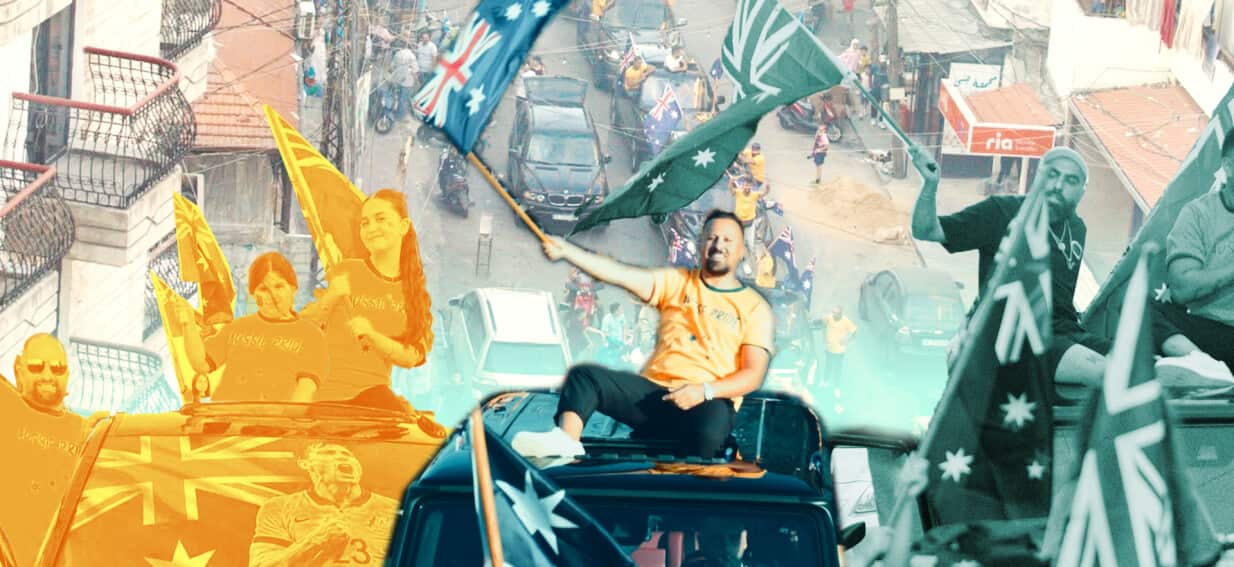
The bars were packed. The beer was flowing. The videos circulating online showed thousands of fans screaming, waving flags, and losing their collective minds over the US Men's National Team securing another hard-fought victory. The media is doing what it always does: treating a standard win as a historic turning point, a sign that the United States has finally arrived as a global soccer superpower.
It is a comforting narrative. It is also completely detached from reality.
Celebrating these sporadic, isolated victories blinds American soccer fans to a harsh truth. The USMNT is trapped in a cycle of mediocrity, and the national euphoria surrounding every decent result is the exact reason the program cannot genuinely progress. We are throwing parades for a team that is essentially just treading water in a shallow pool.
The Mirage of the Meaningless Victory
When you look past the slow-motion replays and the emotional social media edits, what did that victory actually accomplish? Historically, USMNT celebrations center around regional dominance or surviving a group stage. We beat a transitional Mexican side in a continental tournament, or we scrape together a win against a second-tier European nation in a friendly, and the headlines proclaim that the "golden generation" has reached maturity.
This is a structural illusion. Soccer infrastructure in the United States is designed to generate revenue, not elite international competitors. The victory everyone is cheering about does not fix the fundamental flaws in how the sport is run here.
Consider the "People Also Ask" obsession that surfaces during every major tournament: When will the US win a World Cup?
The premise of the question is flawed because it assumes a linear progression. Fans think that if we win enough games today, we automatically get closer to a trophy tomorrow. But international soccer is not a corporate ladder. It is a closed ecosystem dominated by countries with deeply entrenched footballing cultures, merit-based developmental pyramids, and ruthless talent identification systems.
The USMNT wins games because of superior athleticism and tactical discipline, not because we are producing superior soccer players. When we hit a team that possesses both athleticism and elite technical intelligence—think France, Argentina, or a fully functioning Germany—the athletic gap closes, and the technical gap becomes a canyon. Celebrating wins over inferior or equal opposition just masks the fact that the canyon isn't shrinking.
The Pay-to-Play Stranglehold on American Talent
I have spent years analyzing sports developmental models, and the American soccer system remains one of the most economically exclusionary setups in the world. In virtually every country that wins World Cups, soccer is the sport of the working class. It is accessible, cheap, and deeply rooted in local communities.
In America, soccer is a suburban luxury asset.
+------------------------------------------+------------------------------------------+
| Global Developmental Model               | American Developmental Model             |
+------------------------------------------+------------------------------------------+
| - Free, scout-driven academy systems     | - Expensive pay-to-play club models      |
| - Focus on technical mastery by age 10   | - Focus on physical size and speed       |
| - Open pyramid with promotion/relegation | - Closed franchise systems (MLS)         |
| - Hyper-competitive local environments   | - Travel teams prioritizing trophies    |
+------------------------------------------+------------------------------------------+
To get noticed by top scouts in the US, a kid's parents usually need to fork over thousands of dollars a year for travel teams, elite club fees, and specialized coaching. We are actively pricing out the exact demographic that drives the sport globally.
When you look at the rosters of elite basketball or football teams in the US, talent rises regardless of socio-economic status because the infrastructure supports it. Soccer does the opposite. It selects for wealth first and talent second. Until that pyramid is inverted, the USMNT will continue to rely on a limited pool of players who had the financial means to stay in the sport past puberty.
The Hard Truth About European Progress
The counterargument is always the same: "But look at our players in Europe!"
True, the current roster boasts players contracted to clubs in the Premier League, Serie A, and the Bundesliga. That is a massive leap forward from twenty years ago. But let's look at the nuance the mainstream media ignores. Having a player on the books at a top European club is not the same as having a player who dictates the tempo of a Champions League knockout match.
There is a distinct difference between being a squad rotation player in Europe and being a transformative world-class talent. The USMNT has plenty of the former and almost none of the latter. Christian Pulisic, Weston McKennie, and Antonee Robinson are excellent professionals. They are reliable, athletic, and tactically astute. But they are not Kylian Mbappé, Jude Bellingham, or Vinícius Júnior.
When American fans see a US player score a goal in Italy, they assume it translates directly to international dominance. It doesn't. International football at the highest level requires players who can create something out of absolutely nothing when a defense is completely suffocated. The USMNT still creates goals through transition play, set pieces, and opposition mistakes. We rarely create goals through pure, unadulterated technical brilliance.
Stop Demanding Wins, Start Demanding Reform
If you want American soccer to actually mean something on the global stage, you have to stop participating in the collective delusion every time the team wins a match. The constant demand for immediate results forces national team managers to play conservative, risk-averse soccer. They stick to the veteran players they trust to secure a 1-0 win rather than blooding the teenagers who might actually elevate the team's ceiling in eight years.
There is a downside to this contrarian view, of course. Cynicism can breed apathy. If you don't celebrate the wins, the sport loses its casual fan base, and casual fans drive the revenue that keeps the lights on. It is a brutal catch-22.
But unconditional praise is worse than apathy. It breeds complacency inside U.S. Soccer. It allows executives to point to TV ratings and sold-out stadiums as proof of success, while the actual product on the pitch remains lightyears behind the world elite.
Stop watching the post-game celebration videos. Stop buying into the hype machine that treats every continental trophy like a World Cup victory. Demand an end to pay-to-play. Demand that Major League Soccer incentivize the development of creative playmakers over mechanical athletes. Until the foundational system changes, these victories aren't a sign of progress—they are just a distraction.