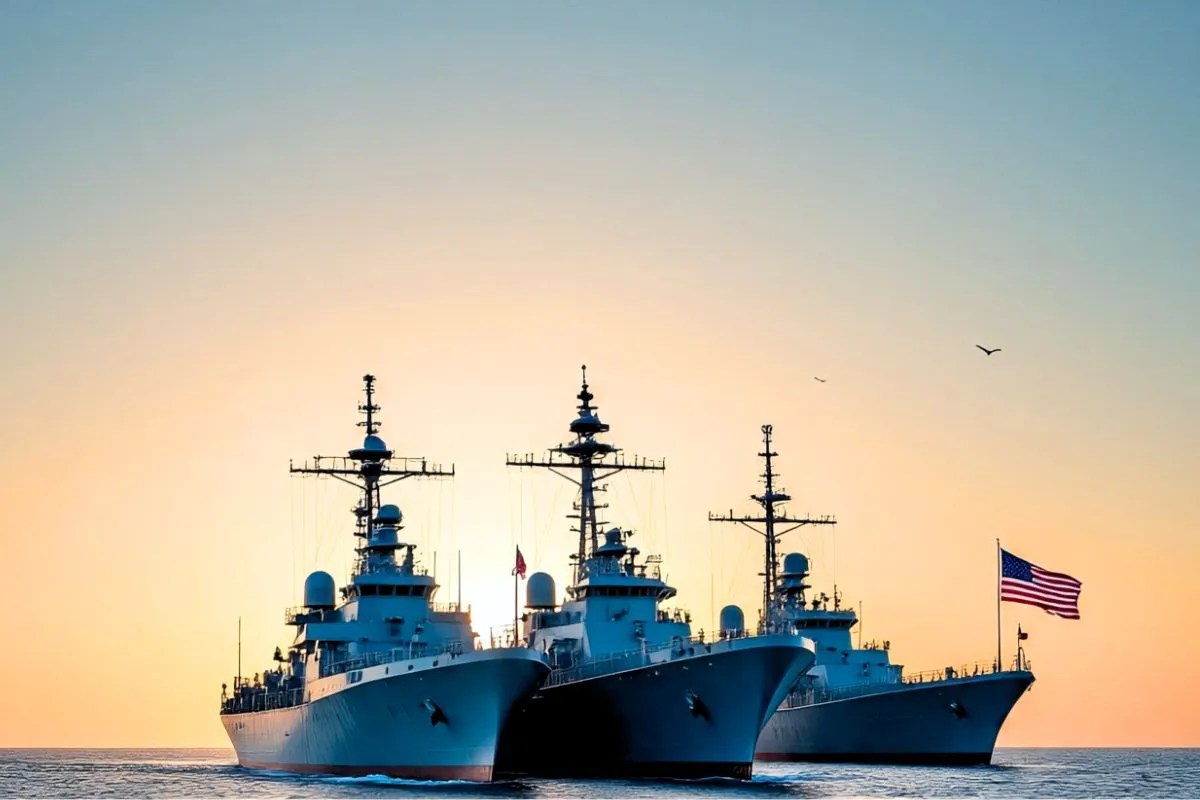
The headlines are screaming about a massive surge of American naval power toward the Middle East. Media outlets are obsessed with the optics of steel hulls cutting through the Persian Gulf and the supposed "imminent" seizure of strategic islands by the Trump administration. They want you to believe we are on the brink of a 20th-century style land grab. They are wrong. They are chasing ghosts of 1991 while ignoring the reality of 2026.
Moving a Carrier Strike Group isn't a prelude to an invasion; it’s an expensive exercise in bureaucratic inertia. If you’ve spent any time in the defense procurement space or sat in on high-level strategic briefings, you know that these movements are often more about justifying budget allocations than executing tactical masterclasses. The "lazy consensus" says that more ships equals more control. The reality is that in an era of hypersonic missiles and drone swarms, a massive, slow-moving carrier is often less of a threat and more of a target.
The Island Myth and the Sovereignty Trap
Let’s dismantle the "island seizure" narrative. The chatter suggests a move on strategic locations like Socotra or Kish. This misses the point of modern warfare entirely. Why would a modern superpower expend the political capital and lives to physically occupy a piece of rock when you can achieve total dominance through electronic warfare and "silent" blockades?
Physical occupation is a liability. It creates a fixed target for asymmetric attacks. The real "capture" isn't happening with boots on the ground; it’s happening in the electromagnetic spectrum. If you control the data uplinks and the subsea cables passing near these islands, you own the territory without ever firing a shot.
The competitor’s article focuses on the "brawn" of the U.S. Navy. I’ve watched the Pentagon burn through billions on "presence" missions that achieve nothing but maintenance backlogs. True power in 2026 is distributed. It’s about the integration of low-orbit satellite constellations and autonomous underwater vehicles (AUVs). A warship is a loud, vibrating signal that says "I am here." A fleet of AI-driven submersibles is a whisper that says "You are already lost."
The Energy Illusion
The argument usually follows that the U.S. is moving into the region to "secure the oil." This is 1970s thinking. The United States is currently the world's largest producer of crude oil. The strategic necessity of the Strait of Hormuz has shifted from a survival requirement to a geopolitical lever used primarily to check China’s energy security.
When you see a destroyer move toward the Middle East, don't think about "securing the flow." Think about "controlling the valve." The goal isn't to keep the oil moving for American gas stations; it’s to ensure that the U.S. maintains the ability to turn the lights off in Shanghai if necessary. This isn't about protection; it's about leverage.
The Cost of "Projection"
Every day a Carrier Strike Group sits in the Middle East, it costs approximately $6.5 million in operating expenses alone. This doesn't include the long-term structural fatigue on the airframes or the psychological toll on the crew.
- Maintenance cycles: For every month deployed, you need three months of pier-side maintenance.
- Opportunity cost: Those assets are not in the South China Sea, where the actual long-term threat resides.
- Asymmetric risk: A $20,000 suicide drone can theoretically disable a $13 billion platform.
The math doesn't work. The obsession with "islands" and "warships" is a legacy mindset that refuses to die because it looks good on a news ticker.
Socotra and the Misplaced Fear
People are asking: "Will the U.S. seize Socotra to control the Gulf of Aden?"
The answer is: Why bother?
The United Arab Emirates already has a significant footprint there. The U.S. doesn't need to "occupy" it; they just need to subsidize the right people. This isn't the era of the East India Company. It’s the era of the Private Military Contractor and the "Security Assistance" package.
If you want to understand where the real conflict is, stop looking at the surface of the water. Look at the seabed.
The Silicon Shield vs. The Steel Hull
The real island that matters isn't in the Middle East. It’s Taiwan. And the real "warships" aren't made of steel; they are made of silicon. The movement of troops and ships to the Middle East is often a sophisticated shell game. By drawing global attention to the Levant and the Persian Gulf, the administration creates a vacuum elsewhere.
I’ve seen this play out in corporate boardrooms and theater-level war games. You make a loud, aggressive move in a secondary market to distract your competitors from the fact that you are quietly monopolizing the supply chain in the primary market.
While the media tracks the USS Abraham Lincoln, they are missing the quiet deployment of "loitering munitions" and the hardening of cyber-defenses around critical infrastructure. The war of the future won't be won by the side with the most ships. It will be won by the side that can maintain a "common operating picture" when the satellites go dark.
Stop Asking if War is Coming
The question "Is war coming to the Middle East?" is flawed. The war has been constant; only the tools change. The surge of warships is a psychological operation aimed at two audiences:
- Domestic voters: To show "strength" and "decisiveness."
- Regional adversaries: To force them to spend resources on conventional defenses rather than asymmetric ones.
If you are waiting for a formal declaration or a D-Day style landing on a Middle Eastern island, you are going to be waiting a long time. We are in a state of "perpetual gray-zone competition." It’s messy, it’s expensive, and it doesn't fit into a neat 30-second news clip.
The smart move isn't to watch the ships. It's to watch the bond markets and the insurance premiums for commercial shipping. When the "War Risk" insurance for tankers in the Red Sea drops despite the presence of U.S. warships, you know the "threat" was never as high as the headlines suggested.
The navy is there to provide a sense of order in a world that is increasingly chaotic, but order is an expensive product to sell. Don't buy the hype of a "new invasion." Buy the reality of a desperate attempt to maintain a 20th-century hegemony in a 21st-century decentralized world.
The ships are a stage prop. The island is a distraction. The real game is being played in the servers and the subsea trenches where the media doesn't have a camera.
Stop looking where they want you to look.