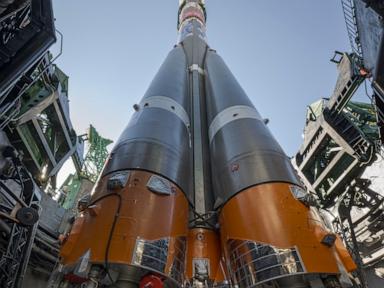
The Diplomatic Myth at the Launchpad
When the chief of NASA travels to Russia's Baikonur Cosmodrome to watch an American astronaut ride a Soyuz rocket into low Earth orbit, mainstream media commentators rush to publish the exact same narrative. They call it a triumph of space diplomacy. They frame it as a rare bridge between warring superpowers, an island of geopolitical sanity floating above sanctions and proxy conflicts.
They are dead wrong. Building on this theme, you can also read: The Underwater Drone Revolution Most People Are Missing.
This isn't high-stakes diplomacy. It is operational addiction disguised as international cooperation.
The standard media narrative assumes that NASA visits Baikonur to extend an olive branch, maintaining a delicate bridge for the sake of human exploration. The reality is far more transactional and significantly less romantic. NASA executives don't fly to Kazakhstan out of diplomatic goodwill. They go because the International Space Station is an interconnected machine that cannot survive a sudden divorce, and neither nation's space agency has an immediate way out without suffering astronomical financial and technical losses. Analysts at Wired have provided expertise on this matter.
Viewing these joint launches through the lens of peace treaties ignores the harsh engineering realities of orbital mechanics and systems integration.
Redundancy Is Not Friendship
The defense of U.S.-Russian space cooperation relies on a flawed premise: that mixed crews on joint missions represent a grand human consensus. In reality, seat swaps are an exercise in risk mitigation.
When NASA trades seats on Russian Soyuz launches in exchange for Roscosmos cosmonauts flying on American commercial crew vehicles, nobody is extending a hand in brotherhood. They are managing single-point failure risks.
If a commercial crew vehicle gets grounded due to a hardware anomaly, the U.S. segment of the space station loses its crew unless an astronaut is flying on a Soyuz. Conversely, if a Soyuz suffers a thruster malfunction or launch abort, Roscosmos relies on American hardware to keep its cosmonauts on orbit.
Calling this mutual affection is like calling an insurance policy a love letter.
I have spent decades watching aerospace programs burn through billions in capital to maintain legacy operational dependencies long after their strategic alignment evaporated. Pushing the "space diplomacy" narrative creates a dangerous blind spot. It allows decision-makers to defer hard choices about sovereign capabilities by pretending that an unstable partnership is actually an intentional diplomatic strategy.
The Asymmetric Dependency Trait
Pundits love to claim that both nations are equally dependent on each other in orbit. This statement sounds balanced, but it collapses under technical scrutiny.
The International Space Station is split into two primary segments, but their technical responsibilities are radically uneven:
- Propulsion and Attitude Control: The Russian segment controls station orientation and orbital reboosts using its progress supply ships and core module thrusters.
- Power and Communications: The U.S. segment generates the overwhelming majority of the power via its solar arrays and manages high-bandwidth telemetry and life support.
If you sever the connection, the U.S. segment loses its ability to stay in orbit without spending billions to rapidly deploy an artificial reboost capability. Meanwhile, the Russian segment starves for power and bandwidth.
This is not a harmony of interests; it is a Mexican standoff at 17,500 miles per hour.
When NASA leadership stands on the steppe at Baikonur to watch a Soyuz engine ignite, it is an acknowledgment of technical capture. Until commercial platforms develop integrated, high-thrust propulsion modules capable of routinely boosting a 450-ton space station without Russian hardware, NASA’s presence at Baikonur remains an operational necessity, not a diplomatic choice.
Why "Commercial Space" Hasn't Solved The Problem Yet
A common counterargument is that private commercial space ventures have rendered Russian reliance obsolete. Commercial crew platforms launch regularly from Florida, carrying mixed crews into orbit. Why, then, does Baikonur still matter?
Because throughput and redundancy are two completely different metrics.
Private launch providers have drastically lowered the cost of getting mass to orbit. They have disrupted a bloated contractor ecosystem that bled taxpayers dry for decades. But private platforms operate within strict regulatory and hardware bottlenecks. A single unexpected vehicle grounding—a failed parachute deployment during tests, an upper-stage anomaly, or a launchpad incident—can halt operations for months.
When a hardware failure occurs, you do not launch on optimism. You launch on whatever rocket is sitting on a pad, fully tested and cleared for flight.
Until the commercial sector operates multiple, entirely independent human-rated launch architectures simultaneously, Baikonur remains the default relief valve. Ignoring that operational vulnerability because private companies are making progress is irresponsible systems engineering.
The Hidden Cost of the Baikonur Playbook
Relying on legacy infrastructure in Kazakhstan comes with severe operational tax.
Every seat swap requires cross-training crews on two radically different systems, languages, and operational philosophies. American astronauts must master Russian flight software, emergency procedures, and technical jargon, while cosmonauts undergo the same grueling adaptation at Johnson Space Center.
This dual-training regime consumes thousands of crew hours that could otherwise be spent on scientific research or developing deep-space exploration protocols.
Furthermore, maintaining this legacy connection requires ongoing administrative coordination with an entity whose operational standards and funding models have faced severe domestic headwinds. Roscosmos has struggled with budget cuts, quality control lapses on assembly lines, and workforce retention issues.
By pretending that everything is business as usual at Baikonur, global space policy defers an inevitable reckoning:
- Capital Allocation: Billions remain tied to maintaining a 1990s-era orbital architecture rather than accelerating next-generation habitats.
- Technical Drift: Engineering talent is spent maintaining legacy interfaces instead of building autonomous orbital logistics.
- Strategic Inertia: Agencies remain locked into a station that is aging far faster than public relations updates care to admit.
The Brutal Reality of Station Deorbiting
The ultimate proof that the "cooperation" narrative is a myth will come when it is time to destroy the space station.
Deorbiting a structure the size of a football field requires massive, controlled retrograde thrust. You cannot simply let it decay naturally; an uncontrolled re-entry would scatter high-density wreckage across populated continents.
Who carries the burden of that final burn? The very Russian propulsion systems that analysts claim we can move beyond.
NASA has committed to funding a dedicated deorbit vehicle to manage the station's final descent into the South Pacific, but that project is an admission of failure: it exists solely to untangle an operational web that should have been decoupled a decade ago.
We built an orbital outpost that requires two geopolitical rivals to pull the trigger on its execution simultaneously. That isn't vision. It's an engineering trap.
Stop Confusing Mechanical Logistics with Global Harmony
The next time you see headlines covering a NASA administrator inspecting facilities in Kazakhstan, ignore the fluff pieces about scientific unity and global peace.
Look at the mechanics.
Look at the propulsion trades, the crew rotation matrices, and the single-point failures engineered into a station that was designed in a completely different geopolitical epoch.
NASA isn't at Baikonur to build bridges. NASA is at Baikonur because, right now, the math leaves no other option.
Accepting that reality isn't cynicism; it is the absolute prerequisite for building a space exploration model that actually lasts.

:max_bytes(150000):strip_icc():focal(842x0:844x2)/twin-peaks-billy-zane-040425-70a37fe9a7cb4ffb9e7821106c80f296.jpg)

