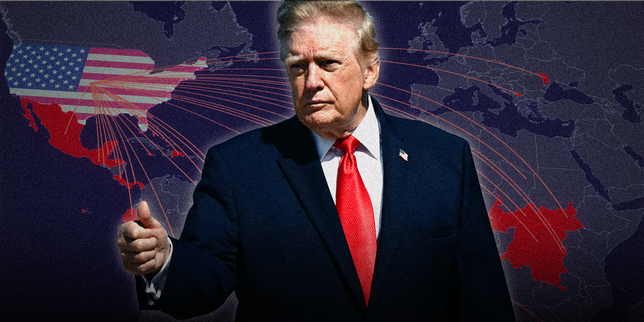
Imagine showing up to a routine immigration check-in, expecting to touch base on your case, and ending up on a charter flight to Eswatini, South Sudan, or Rwanda 24 hours later. You don't speak the language. You've never stepped foot on the continent. You aren't given a chance to call your family or your lawyer.
That isn't a hypothetical scenario. It's the stark reality of how third-country deportations operate right now under Donald Trump’s administration.
The US government isn't just deporting undocumented migrants back to their countries of origin. Instead, federal agencies are sending people thousands of miles away to third-party African nations that have agreed to take them. Official statements frame these moves as necessary steps for national security and border enforcement. Behind closed doors, it's a mix of diplomatic pressure, financial incentives, and legal loopholes designed to purge asylum seekers from American soil at any cost.
Here is what's actually happening on the ground, why international law isn't stopping it, and what it means for global migration policy.
The Mechanic Behind Outsourcing Expulsions
Why send someone from Myanmar, Vietnam, or Jamaica to an African nation?
When a migrant's home country refuses to accept deportees—or drags its feet on issuing travel documents—US law traditionally hits a wall. Under previous precedents, the government couldn't hold people in detention indefinitely if their home country wouldn't take them back.
To bypass this roadblock, the administration turned to bilateral arrangements with foreign governments willing to act as landing zones. By striking deals with countries like Liberia, Rwanda, Eswatini, South Sudan, and Burundi, Washington found a fast track around domestic flight delays and non-cooperative home regimes.
The framework relies heavily on "diplomatic assurances". The Department of Homeland Security secures paper promises from receiving nations stating that deported individuals won't face torture or harm. Once that assurance is signed, standard due process checks get bypassed. Officers pack people onto long-haul flights before defense attorneys even know a removal order has been executed.
It isn't cheap, either. A Senate Foreign Relations Committee report revealed that flying a single Jamaican national to Eswatini cost over $181,000. Weeks later, that same individual was flown back across the globe to Jamaica after diplomatic channels cleared. Taxpayers paid twice for a single deportation simply to force an fast expulsion.
The Non-Refoulement Reality Check
International human rights law hinges on a foundational principle called non-refoulement. Grounded in the 1951 Refugee Convention and the Convention Against Torture, it explicitly forbids returning anyone to a territory where their life, liberty, or physical safety would be threatened.
Technically, US officials argue that sending an asylum seeker to a third country doesn't violate non-refoulement if the third country isn't the origin country they fled.
In practice, this creates a dangerous "chain deportation" pipeline. Once a migrant lands in a receiving nation like Cameroon or South Sudan, local authorities often lack the infrastructure, legal frameworks, or political desire to process complex asylum claims. Many deportees face severe restrictions on movement, limited legal representation, or outright coercion to self-deport back to the original homeland they ran from.
United Nations experts and groups like Human Rights Watch have repeatedly called out these practices. When people are dropped off in countries with known human rights records, denying them access to counsel or due process breaches basic international obligations.
Financial Carrot and Tariff Stick Diplomacy
African nations aren't taking on foreign deportees purely out of diplomatic goodwill. The agreements rely heavily on transactional foreign policy.
During public address defense briefings, administration officials made the philosophy explicit: American foreign policy is no longer guided by broad global stability, but strictly by whether a deal makes America safer, richer, or stronger. State Department negotiations have treated asylum arrangements as leverage.
The deals operate through two main levers:
- Financial Sweeteners: Direct payments and cash allocations are quieted into assistance packages. Reports show single-transfer payments reaching $100,000 to process specific individuals, alongside broader aid guarantees.
- Economic Threats: Developing nations facing debt crises or export dependency are reminded of target trade statuses, prospective tariffs, or visa restrictions on their own elites if they refuse cooperation.
This transactional model turns vulnerable governments into off-shore holding areas for foreign nationals. It also stirs significant domestic backlash inside the host countries. Citizens in Eswatini and South Sudan have protested secret bilateral negotiations, arguing their governments are compromising national integrity for short-term payouts.
A Template for Other Western Nations
America isn't acting in a vacuum. European leaders are watching the Washington model closely.
Offshoring asylum management has been a goal for European nations for years, famously seen in the UK's long-stalled attempts to route migrants to Rwanda. With the US aggressively pushing charter flights to African hubs, several EU countries are citing these operations as precedent to establish their own "return hubs" outside European borders.
If this practice becomes the global norm, the entire framework of the 1951 Refugee Convention breaks down. Wealthy nations can effectively buy their way out of international obligations, outsourcing refugee processing to lower-income states least equipped to handle it.
What Comes Next for Immigrant Rights Advocates
Legal organizations in the US are pushing back through federal habeas corpus petitions and class-action suits alleging clear due process violations. Federal judges have issued injunctions temporarily halting third-country removals. Yet enforcement remains erratic, with authorities moving detainees across multiple regional facilities to execute expulsions before emergency stays can be served.
If you are an advocate, attorney, or affected community member tracking this issue, immediate concrete steps include:
- Document ICE Check-Ins Rigorously: Ensure legal counsel attends every routine check-in with migrants flagged under third-country orders, establishing an active paper trail for immediate habeas corpus filings.
- Track Detention Relocations: Monitor DHS detainee locators continuously; swift transfers between regional hubs often signal an impending third-country charter flight.
- Engage International Watchdogs: Formal complaints submitted to UN Special Rapporteurs and regional bodies like the African Commission on Human and Peoples' Rights build international oversight on receiving governments.


