Stop calling them lungs.
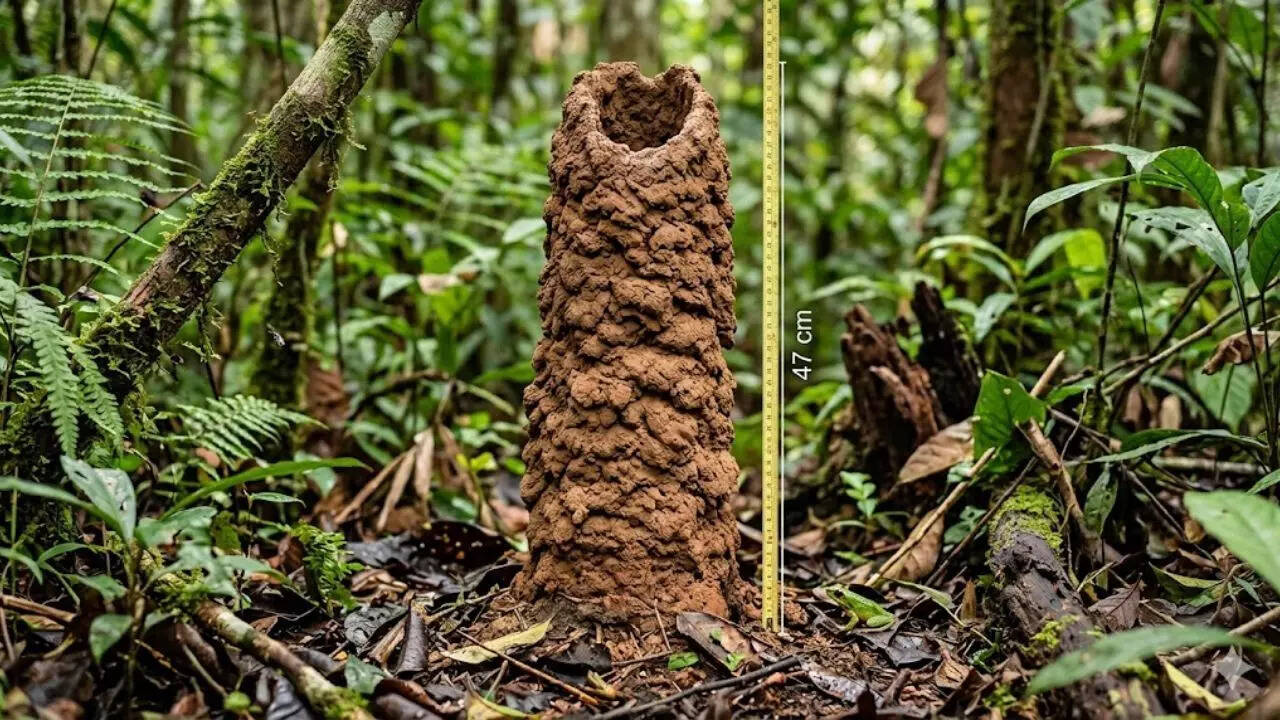
Every pop-science outlet is currently obsessed with the "cicada towers" of the Amazon—those 47-centimeter mud chimneys built by Guyalna chlorogena. They want you to believe these structures are some architectural marvel designed for sophisticated "ventilation" or "respiration." They are drawing comparisons to the climate-controlled mounds of termites or the air-exchange systems of human skyscrapers.
It is a charming narrative. It is also fundamentally backward.
The scientific community recently patting itself on the back for using condoms—yes, literally stretched over the towers to measure airflow—is missing the forest for the latex. They found that air flows in and out. They found that pressure differentials exist. They slapped a "lung" label on it and went to lunch.
But biology rarely builds for the sake of aesthetics or "balance." Biology builds for survival under duress. These towers aren't about breathing; they are about escaping a watery grave and managing a thermal nightmare that most researchers are too comfortable in their air-conditioned labs to truly grasp.
The Ventilation Fallacy
The "lung" metaphor implies a proactive system designed to facilitate gas exchange. If you look at the fluid dynamics, the towers do indeed move air. Using the Bernoulli principle, faster-moving air over the top of the tower creates a lower pressure zone than the air at the base, effectively "sucking" stale air out of the subterranean tunnels.
However, calling this the primary "purpose" of the tower is like saying the purpose of a chimney during a house fire is to provide a nice breeze.
I have spent enough time looking at soil mechanics in tropical environments to know that the Amazonian floor is not a static substrate. It is a sponge. During the rainy season, the soil becomes anoxic—oxygen-depleted—not because the cicadas are breathing too hard, but because the water table has effectively sealed the earth.
The tower isn't a lung. It is a snorkel.
When the water rises, the nymphal cicadas, which spend years underground feeding on root xylem, face a choice: drown in the mud or build upward. The height of the tower—that specific 47-centimeter mark that everyone is marveling at—isn't a "calculated" engineering feat for optimal airflow. It is the minimum viable height to clear the average leaf litter and localized flooding of the forest floor.
The Condom Experiment Was a Distraction
The study everyone is citing used condoms to trap air and measure volume. It proved that gas exchange happens. Great. We already knew that physics exists.
What the "lung" theory fails to account for is the energetic cost. Constructing a half-meter mud tower is an exhausting, dangerous task for a nymph. If the goal was simply "more oxygen," there are far more efficient ways to achieve gas exchange in soil that don't involve exposing your location to every predator in the canopy.
The real genius of the tower isn't the air it lets in; it’s the temperature it regulates.
In the subterranean world, temperature is stability. But for a cicada preparing for its final molt, stability is a trap. To transform into an adult, the nymph needs a specific thermal window to harden its exoskeleton. The tower acts as a thermal buffer. It allows the nymph to move vertically within a controlled gradient, independent of the water-logged soil temperature.
- Fact: The towers are built from the inside out using the nymph’s own anal secretions as a binding agent.
- Correction: This isn't "nature's cement." It's a desperate use of metabolic waste to create a waterproof barrier.
- The Nuance: The "breathing" observed by the researchers is likely a secondary benefit of a structure primarily designed to keep the nymph dry and at the right temperature for ecdysis.
Nature Isn't Efficient It Is Just Persistent
We love to project human engineering ideals onto insects. We see a tower and think "HVAC system." We see a collective and think "smart city."
I’ve watched researchers spend millions trying to mimic termite mounds for "passive cooling" in office buildings, only to realize that the energy required to maintain the structural integrity of those designs often outweighs the savings. The cicada tower is the same. It is a high-risk, high-reward survival strategy born of necessity, not a masterclass in green architecture.
If you want to understand the towers, stop looking at the air. Look at the mud.
The towers are composed of specific soil horizons brought up from the deep. By moving this soil, the cicadas are actually altering the mineral composition of the surface. This is "bioturbation" on a massive scale, yet the "lung" narrative ignores the geological impact in favor of a catchy medical metaphor.
The Industry Insider’s Take on Biomimicry
In the world of professional biological engineering, we see this "discovery" for what it is: a data point being stretched into a headline.
If you ask the "People Also Ask" sections of the internet, they want to know if these towers can help us design better buildings. The honest, brutal answer? No.
Human buildings don't have the luxury of being made of spit and mud, and we certainly don't want our skyscrapers to function like snorkels for a flooded basement. We are obsessed with the "ventilation" aspect because it feels relevant to our current obsession with "smart" materials.
But the real lesson from Guyalna chlorogena isn't about how to move air. It's about environmental resilience.
The cicada doesn't try to change the Amazon. It doesn't try to drain the swamp. It builds a localized, temporary solution to a recurring environmental crisis. It accepts the flood and rises above it.
Stop Sanitizing Biology
The "lung" metaphor is too clean. It suggests a rhythmic, peaceful process.
The reality of the Amazonian floor is a brutal, competitive, and filthy struggle. The towers are often covered in fungi that can turn the inhabitant into a zombie. They are raided by wasps. They are knocked over by heavy rainfall and rebuilt in a feverish race against time.
By calling them "lungs," we strip away the sheer grit of the organism. We turn a desperate survival tactic into a textbook diagram.
The Actual Mystery We Haven't Cracked
Scientists claim to have "cracked the mystery," but they haven't addressed the most glaring question: Synchronization.
How do thousands of nymphs, isolated in their individual mud tubes, decide to build to the same height at the same time? Airflow doesn't explain that. Pressure doesn't explain that.
There is a chemical or vibrational signaling network happening beneath the surface that makes the condom experiment look like a middle school science fair project. We are so focused on the structure above ground because it’s easy to photograph, but the real "technology" is the distributed intelligence in the soil.
If you want to find the next "game-changing" (to use a word I hate) insight in biology, stop looking at the chimneys. Start looking at the communication protocols that trigger the construction.
The towers are just the physical manifestation of a much deeper, more complex social algorithm. They are the artifacts of a crisis management system that has been running for millions of years.
You want to learn from the Amazon? Stop trying to build "lungs" for your buildings. Start building systems that can handle a total loss of infrastructure without collapsing.
Build the snorkel. Forget the air conditioning.
The cicada doesn't care about the "mystery" of its tower. It cares about not drowning in the dark. We should start valuing that kind of pragmatism over our obsession with elegant metaphors.
The next time you see a 47-centimeter tower in the mud, don't think of a lung. Think of a finger being flipped at the environment by an insect that refuses to die.
That is the only "insight" that matters.