Every transport journalist in London and Brussels is currently popping champagne over the latest "breakthrough" at the Channel Tunnel. They are calling it a triumph of diplomacy. They claim that bringing "airport-style" border checks to Folkestone and Coquelles will save travelers from impending post-Brexit gridlock.
They are completely wrong.
Look closely at what is actually being celebrated here. Politicians and pundits are praising the introduction of biometric kiosks, digital pre-clearance, and aviation-grade security bottlenecks to a system whose entire historical value proposition was built on the exact opposite model. The Eurotunnel was never supposed to feel like Heathrow. That was the whole point.
If you have spent any real time working in European cross-border logistics, infrastructure planning, or passenger rail operations, you know the dirty secret behind this announcement. You cannot slap an aviation security model onto a roll-on, roll-off rail shuttle without destroying the fundamental economics of time that make the tunnel worth using in the first place.
The lazy consensus says that mirroring airports is the smart, modern way to handle the European Union's Entry/Exit System (EES) and the UK's Electronic Travel Authorisation (ETA). The reality is much bleaker. By adopting airport-style checks, operators are not preventing border chaos—they are simply rebranding it, spreading it out across your living room floor before you even pack your bags, and guaranteeing permanent friction at the terminal gates.
The Airport Fallacy in Ground Transport
Let’s dismantle the core premise right now. Why do people use the Eurotunnel LeShuttle instead of flying from London City to Paris Orly, or taking a low-cost carrier from Gatwick to Amsterdam?
It is not the scenery. You spend thirty-five minutes staring at the inside of a steel-gray metal box beneath the seabed.
People pay a premium for the Channel Tunnel because of frictionless aggregation. You drive your car onto a train. You stay inside your vehicle. Thirty-five minutes later, you drive off in another country. Historically, the magic of Folkestone and Coquelles was throughput. Cars arrived in waves, cleared juxtaposed border controls in minutes without drivers ever unbuckling their seatbelts, and rolled directly onto the shuttle.
Airports operate on the exact opposite principle: forced dwell time and individual processing.
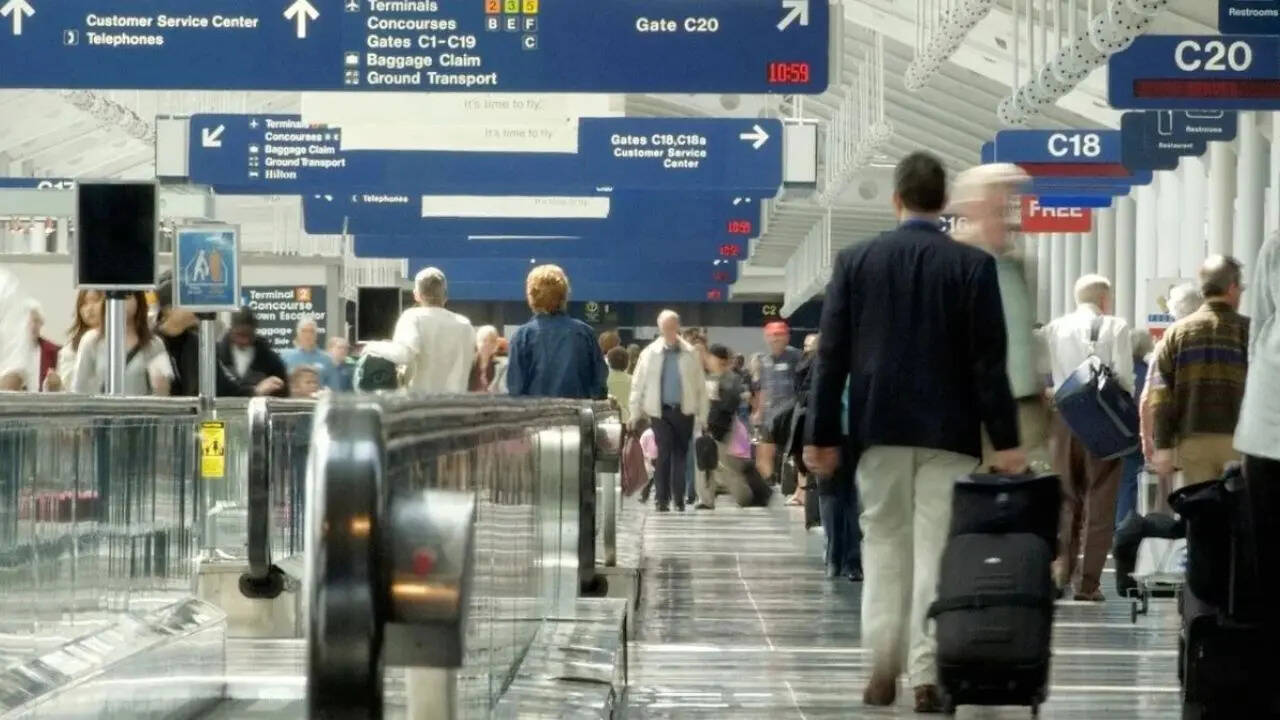
Aviation security assumes every passenger is a standalone pedestrian unit who must be stripped of liquids, separated from their luggage, funneled through serpentine queues, scanned biometrically, and held in a sterile departure lounge for two hours so they buy overpriced duty-free perfume.
When officials boast about bringing "airport-style checks" to the Eurotunnel, they are admitting defeat. They are conceding that the speed of the train is now irrelevant because the border architecture has become the primary bottleneck.
The Physics of the Car Queue
I have watched municipal planners and transport authorities burn millions of pounds trying to apply terminal-building logic to vehicular transit hubs. It fails every single time because of basic geometry.
In an airport terminal, a thousand delayed passengers take up roughly 1,500 square meters of floor space. They stand tightly packed in zig-zagging fabric stanchions. It is miserable, noisy, and slow, but it is spatially compact.
Now put those same thousand passengers inside 350 family SUVs, campervans, and estate cars at Folkestone.
Suddenly, those thousand people occupy nearly four kilometers of tarmac. When an "airport-style" biometric check stalls because a family of four struggles to get out of their vehicle, walk to a kiosk, scan four passports, register sixteen fingerprints, and capture four facial images in the pouring Kent rain, the queue does not just bend around a corner. It backs straight onto the M20 motorway, triggering Operation Brock and turning the entire county of Kent into a parking lot.
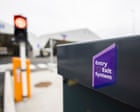
Getlink, the parent company operating the Channel Tunnel, has spent tens of millions of euros building covered drive-through bays and installing pre-registration kiosks to mitigate this exact nightmare. They know the math. If processing a single car increases from 45 seconds to three minutes, the terminal capacity collapses before noon on a Friday in July.
What "Airport-Style" Actually Means for Your Wallet and Schedule
To understand why this policy shift is a trap, we need to strip away the soothing diplomatic jargon. When Brussels and Westminster talk about "harmonized pre-clearance" and "digital border management," they are talking about offloading state border enforcement onto private operators and individual travelers.
Here is what the new reality actually looks like on the ground:
- The Death of Spontaneous Travel: The glory days of deciding on a Thursday night to drive to France for lunch on Friday are over. Between the UK ETA, the EU ETIAS (once fully rolled out), and mandatory pre-arrival data submissions, spontaneous cross-Channel driving now requires the same administrative lead time as an international flight.
- The "Out-of-Vehicle" Penalty: Under the EU Entry/Exit System rules, third-country nationals—which now includes every British passport holder—must provide biometric data (fingerprints and facial scans) upon first entry into the Schengen Area. You cannot reliably capture four-finger slaps and clear biometric portraits through a tinted car window while a toddler is crying in the backseat. People have to exit their vehicles. Every time a human opens a car door in a border lane, throughput plummets.
- Hidden Costs Passed to the Consumer: Building massive covered biometric halls, hiring hundreds of border marshals to shepherd confused drivers toward tablet kiosks, and maintaining redundant IT infrastructure costs a fortune. Getlink is a publicly traded infrastructure company, not a charity. Those capital expenditures will inevitably show up in higher ticket prices.
Are Travelers Asking the Wrong Question?
If you look at search trends and travel forums right now, everyone is asking the same panicked questions: Will the new Eurotunnel checks cause delays? and How early do I need to arrive at Folkestone?
Those are the wrong questions. They accept the premise that the border process is an unavoidable force of nature that you just have to endure.
The real question you should be asking is: At what point does driving through the Channel Tunnel become slower, more expensive, and more stressful than flying or taking a high-speed train?
Let’s do the honest math. Imagine a scenario where a family of four lives in North London and wants to get to Brussels or northern France.
Previously, driving to Folkestone took 90 minutes, check-in took 30 minutes, the crossing took 35 minutes, and they were on the French autoroute in under three hours door-to-terminal. Today, with mandatory 90-to-120-minute early arrival windows recommended for peak biometric processing, plus the physical hassle of exiting the vehicle at kiosks, that three-hour window stretches to four-and-a-half or five hours—before you have even driven past Calais.
At that point, Eurostar from St Pancras—despite its own severe terminal bottlenecks—or a regional flight from Stansted suddenly looks competitive again. The Eurotunnel’s single greatest competitive moat was speed and simplicity. Adopting airport procedures voluntarily drains that moat.
The Bureaucratic Illusion of "Pre-Clearance"
Proponents of the new UK-EU arrangement argue that moving checks upstream—allowing passengers to submit data via smartphone apps before leaving home—solves the physical bottleneck.
Anyone who has actually worked in customs software integration knows this is wishful thinking dressed up as innovation.
Why Smartphone Apps Don't Fix Physical Borders
First, mobile biometric enrollment is notoriously inconsistent. Lighting conditions in a traveler's kitchen, older smartphone cameras, damaged passport NFC chips, and user error mean that anywhere from 15% to 25% of digital pre-submissions fail automated verification or get flagged for secondary manual review.
In a high-volume border lane, a 15% failure rate is catastrophic. It means one in every six cars gets pulled aside, requiring dedicated inspection bays, additional border guards, and manual overrides.
Second, international border treaties rarely allow an app to replace the physical presence of a traveler in front of a sovereign border officer. French Police Aux Frontières (PAF) and UK Border Force officers still have the legal mandate—and the operational habit—of verifying that the person sitting behind the steering wheel matches the digital token transmitted three hours earlier.
You do not eliminate the border check with an app. You simply do the paperwork twice: once on your sofa, and once again in a concrete bay in Kent while a border guard squints at your license plate.
| Border Model | Traditional Eurotunnel (Pre-2020) | New "Airport-Style" Eurotunnel | Commercial Aviation (Short-Haul) |
|---|---|---|---|
| Primary Unit of Processing | The Vehicle (Bulk throughput) | The Individual (Granular biometric) | The Individual (Granular biometric) |
| Passenger Behavior | Remains seated inside car | Exits car for kiosks/scans | Walks through multi-stage terminals |
| Recommended Arrival Buffer | 30–45 minutes | 90–120 minutes (Peak periods) | 120–150 minutes |
| Failure Mode | Minor rolling delay | Motorway gridlock (M20 / A16) | Missed flight / Terminal crowding |
| Core Value Proposition | Speed and frictionless transit | Regulatory compliance | Long-distance reach |
The Uncomfortable Truth About Juxtaposed Controls
To be completely fair—and to acknowledge the validity of the counter-argument—Getlink and the UK and French governments are playing a terrible hand.
Once the United Kingdom chose to leave the European Union and exit the Single Market and Customs Union, hard border friction became legally inevitable. Under Schengen Border Code regulations, France is legally obligated to treat British citizens as third-country nationals. They cannot simply wave cars through with a glance at a blue passport cover anymore.
Given those rigid legal constraints, building massive, roofed kiosk plazas and adopting aviation-style passenger processing was arguably the only way to prevent total collapse at the tunnel portals. Without these pre-registration zones, the first day of full EES enforcement would have paralyzed cross-Channel trade and tourism within three hours.
So yes, the engineers at Folkestone and Coquelles deserve credit for building a pressure valve that prevents a total explosion.
Where the media and politicians lose all credibility is when they spin a defensive damage-control measure as an exciting upgrade for the customer. It is not an upgrade. It is a managed retreat. Calling it an "airport-style breakthrough" is like a restaurant bragging that they have introduced "hospital-style dining" because they replaced your steak knife with a plastic spoon for safety reasons.
How to Actually Beat the New Cross-Channel Bottleneck
If you rely on the Channel Tunnel for business travel, logistics, or family holidays, complaining about Brussels and Westminster will not get you through Calais any faster. You have to adapt your operational playbook to exploit the weaknesses in the new system.
Stop following the standard tourist advice. Do these four things instead:
- Abandon Peak Friday and Saturday Departures Entirely: The new biometric kiosk system operates near maximum theoretical capacity during the Friday 2:00 PM to 8:00 PM window and Saturday mornings. Because individual biometric registration has a hard physical speed limit, any minor IT glitch or spike in first-time EES travelers causes exponential queue growth. Book crossings after 9:00 PM or before 6:00 AM. The border lanes are empty, the officers are faster, and dynamic ticket pricing is often 40% cheaper.
- Separate First-Time EES Travelers from Repeat Crossers: Under EES rules, the heavy biometric enrollment (fingerprints and facial scan) happens on your first crossing within a three-year validity window. Subsequent crossings only require a quick biometric verification against your existing digital file. If you are traveling with family members or colleagues who have not yet enrolled in the system, budget an extra 45 minutes compared to a car full of frequent cross-Channel commuters.
- Pre-Register Advance Passenger Information (API) 48 Hours Out—Not in the Car Park: Do not wait until you pull off the M20 to type passport numbers into the LeShuttle app. Data synchronization between carrier systems, UK Border Force, and French PAF takes time. Submit everything at least two days prior so your vehicle license plate is already linked to cleared passenger tokens when the ANPR (Automatic Number Plate Recognition) cameras read your plate at the tollbooth.
- Re-Evaluate Ferry Routes for Heavy or Complex Loads: If you are towing a caravan, driving a commercial van, or traveling with pets (which already require mandatory Animal Health Certificate checks at the Pet Reception building), the Eurotunnel's new airport-style processing turns a quick trip into an endurance test. Compare the total door-to-door time against conventional ferries from Dover to Calais or Newhaven to Dieppe. On a ferry, you clear border control once and spend the crossing eating a meal or sleeping, rather than shuffling between three different concrete kiosks in a terminal compound.
Stop Celebrating the Bureaucratization of Travel
Infrastructure exists to compress space and time. Every great leap in transport history—from the steam locomotive to the jet engine to the Channel Tunnel itself—was built to remove barriers between human beings and their destinations.
When a twenty-first-century rail link celebrates becoming more like a 1990s airport terminal, something has gone deeply wrong with our standards. We are conditioning travelers to accept two-hour buffers, invasive biometric harvesting, and multi-app compliance checks as normal features of a thirty-five-minute train ride.
The bureaucrats got their compliance. The contractors got their infrastructure budgets. The journalists got their upbeat headlines.
Everyone won except the person sitting behind the steering wheel.