Airlines don't ground the world's largest passenger jet over minor hiccups. When the European Union Aviation Safety Agency (EASA) issues an emergency airworthiness directive to pull massive double-decker jets out of service immediately, engineers around the globe pay close attention.
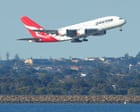
EASA just targeted 16 Airbus A380 superjumbos for urgent wing-spar inspections after maintenance crews discovered cracks in a major structural beam inside the wing box. Five of those aircraft, all operated by Emirates, faced an instant grounding order. They had to undergo intense non-destructive testing before they could legally carry passengers again. The remaining 11 planes, which include a Qantas airframe, have been restricted to a strict countdown of 25 flight cycles before they must report to the hangar. Don't forget to check out our earlier coverage on this related article.
If you are wondering why regulators are panicking over microscopic metallic fractures, the reason comes down to physics and aging. The affected component is the wing mid-spar. It acts as a primary backbone running the length of the wing, taking the brunt of the immense aerodynamic flexing and upward lifting forces during flight. EASA stated flatly that left unchecked, the damage could compromise the overall structural integrity of the wing.
The Root Problem Inside the Wing Box
This is not a generic wear-and-tear issue. This specific emergency order traces back to a tighter inspection regime established in late 2025 under EASA Directive 2025-0280. Engineers tracking the fleet noticed localized cracking occurring between the ribs inside the wing's middle spars. If you want more about the context here, TIME offers an excellent summary.
To understand why this happens, you have to look at the manufacturing timeline. Airbus built these 16 specific airframes under a shared production background, utilizing similar material batches and component configurations. Because metal fatigue builds up predictably based on specific stress patterns, a flaw found on one plane in a production batch often means the sister ships are ticking time bombs for the exact same issue.
The mechanics in the maintenance bays are using advanced eddy-current testing and ultrasonic scanning. These methods send electromagnetic fields and high-frequency sound waves through the aluminum and composite structures. This lets inspectors map out tiny structural failures buried deep behind rows of solid rivets without having to saw the wing apart.
A Familiar Problem for the Superjumbo
Long-time aviation watchers will tell you that the A380 has walked this road before. Back in 2012, Airbus faced a massive crisis when mechanics discovered cracks in the wing rib feet, the metallic brackets anchoring the outer wing skin to the internal frame. That discovery triggered an expensive global modification program that cost the manufacturer hundreds of millions of dollars and forced design changes for all later production models.
The current 2026 issue is completely separate but inherently more tricky. The 2012 cracks occurred in secondary attachment brackets. These newer cracks are developing right along the primary mid-spar structures. It is a stark reminder that as the global A380 fleet enters its second decade of heavy long-haul flying, the compounding stress of carrying over a million pounds into the air is catching up with the airframes.
What This Means for Global Travel
If you have an international flight booked on a superjumbo, you probably don't need to cancel your trip. The targeted nature of the EASA order tells us that the immediate risk is tightly isolated to a specific manufacturing subset. Here is how the numbers stack up across major global operators:
- Emirates: 15 affected aircraft (including the 5 grounded instantly)
- Qantas: 1 affected aircraft
- Other Operators: No current immediate groundings required
Emirates owns roughly half of the global active A380 fleet, flying well over 100 of the type. Sidelining five or even fifteen planes is a logistical headache, but the airline has a deep enough bench to swap aircraft types or stagger flights without collapsing its entire hub network. Most passengers will experience an equipment swap to a Boeing 777 or a different A380 hull rather than a flat-out cancellation.
The bigger question is what happens if the test results come back positive for widespread cracking across all 16 target jets. If those mid-spars need deep structural reinforcement, those aircraft will remain stuck on the tarmac for weeks or months while engineers install heavy structural patches.
Airlines must pull the specific maintenance tracking data for any A380s matching the affected serial numbers. Operators need to ensure their engineering teams are coordinating directly with Airbus technical support to pull the exact inspection procedures. If you manage fleet logistics or scheduling, expect minor capacity bottlenecks on heavy trunk routes through Dubai and Sydney over the coming weeks as these airframes cycle through non-destructive testing.
This video breaks down the technical details of the recent safety directives and explains exactly how aviation authorities monitor metal fatigue in large commercial transports: A380 Wing Structural Inspections Breakdown.