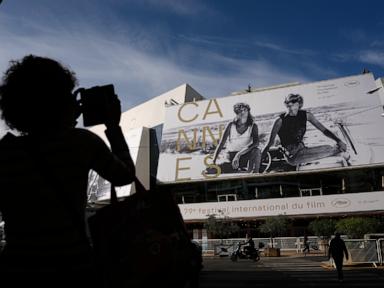
The red carpet at the Cannes Film Festival usually smells of expensive perfume and sea air. This year, it smells like panic.
Walk through the Marché du Film—the festival's massive business hub—and you'll see studio executives huddled over espresso, arguing about algorithmic screenplays and digital actors. The central question dominating the Croisette isn't about indie cinema anymore. It's about survival. Directors and producers are trying to figure out if artificial intelligence is just a shiny new camera lens or the entity that replaces the entire crew.
People are asking the wrong questions here. They are terrified that a software program will generate a Palme d'Or winner by next May. It won't. The real tension isn't that machines are getting too creative. The problem is that the film industry infrastructure has become so formulaic that machine output fits right in.
Cannes has always positioned itself as the high church of human expression. Yet the anxiety rippling through the French Riviera proves how fragile that stance really is.
The False Panic Over Synthetic Cinema
Walk into any panel discussion in Cannes right now and you will hear a lot of doomsday rhetoric. Creatives fear the loss of their copyright, their likenesses, and their jobs. These are valid economic worries. But artistically? The fear is wildly overblown.
AI cannot make a great movie. It can make a highly predictable sequence of moving images. It can copy the lighting of Roger Deakins or the pacing of Martin Scorsese. What it lacks, by its very architecture, is the capacity for malice, regret, or genuine surprise. Great cinema lives in the errors. It lives in the director deciding to shoot into the sun because a sudden cloud ruined the lighting plan.
The tech industry wants us to believe that storytelling is just data management. It's an optimization problem. If you feed enough French New Wave films into a neural network, it should spit out Jean-Luc Godard.
It doesn't work that way. Art happens when a human being breaks a rule they didn't even know existed. Computers don't break rules unless they malfunction. A malfunction isn't an artistic choice; it's a technical hitch.
Where the Real Machine Creep is Happening
While directors romanticize the threat of a robot auteur, the real shift is happening in the unsexy corners of production. This is where the money moves, and this is what Cannes is actually wrestling with behind closed doors.
Consider the distribution side. Global sales agents use historical data to predict how a script will perform in international territories. They plug in the genre, the lead actors, and the budget. The software tells them if Germany will buy the theatrical rights.
This predictive modeling has been around for years, but it's getting hyper-specific. Studios now use software to optimize dialogue pacing for specific demographics before a single frame is shot. That's not art. That's product manufacturing.
Look at the actual mechanics of modern filmmaking where automation thrives:
- Automated color grading that matches shots across different cameras in seconds.
- Predictive script analysis that flags pacing issues based on historical box office hits.
- Digital de-aging and voice cloning that extend an actor's career indefinitely.
- Localization tools that change an actor's lip movements to match foreign dubbing perfectly.
The threat isn't a synthetic director winning the top prize. The threat is that human directors will be forced to make movies that appease the optimization software just to get funding. It's a subtle distinction, but a crucial one. It turns the human artist into a supervisor for a machine-generated template.
The Copyright Trap on the Croisette
You can't talk about Cannes without talking about European film policy. The French take authorship seriously. Under French law, the droit d'auteur protects the director's vision with fierce intensity.
This creates a massive legal headache for international co-productions utilizing generative tools. If a visual effects house in Los Angeles uses a machine learning model trained on uncopyrighted images to build a background plate for a French-funded film, who owns that frame?
The European Union's regulatory stance is notoriously strict compared to the American hands-off approach. This creates a massive fracture at a global festival like Cannes. American indie producers want to use every cheap tool available to cut costs. European financiers are terrified those same tools will make the finished film legally toxic and impossible to distribute in Europe.
I spoke with an entertainment lawyer outside the Palais des Festivals who summed it up bluntly. The industry is rushing to use tools before the courts can decide if those tools are legal. We are looking at a decade of massive copyright lawsuits that could bankrupt independent production companies.
How Indie Filmmakers Outmaneuver the Tech Giants
The big budget studios are trapped. They have to use automation because their budgets are bloated and their investors demand predictable returns. A $200 million blockbuster cannot afford a human whim. It needs to be precise.
This is the massive advantage for independent filmmakers at Cannes. Use the tools to eliminate the expensive, boring parts of filmmaking, then double down on raw human weirdness.
If you don't need to spend $50,000 on a basic visual effects shot because a desktop application can handle it, that money goes back into your pocket. Or better yet, it goes into paying your human crew a living wage. You can shoot for three extra days. You can spend more time rehearsing with your actors.
The goal isn't to fight the technology. The goal is to make things that are so specific, so local, and so bizarre that an algorithm trained on global averages could never generate them.
Think about the films that win at Cannes. They are usually messy. They are often uncomfortable. They deal with cultural specificities that don't translate cleanly into global data points. A machine learning model thrives on consensus. Great cinema thrives on friction.
Your Radical Action Plan for Contemporary Filmmaking
If you are a filmmaker sitting in a theater or working from your laptop, stop watching the panels and start changing your workflow.
First, audit your pre-production. Look at the software you use for scheduling, budgeting, and script analysis. If a tool is telling you that your story structure is atypical, ignore it. That variance is your only competitive advantage against the flood of content hitting streaming platforms.
Second, secure your contracts immediately. If you are an actor or a director, ensure your paperwork explicitly bans the training of models on your likeness, voice, or writing style without separate compensation and explicit consent. Do not sign boilerplate contracts from major studios without an addendum protecting your digital identity.
Third, learn the mechanics of these tools. You cannot subvert a technology you don't understand. Figure out where the software fails. Discover its limitations, its visual artifacts, and its predictable patterns. Once you know what the machine naturally does, you know exactly what to avoid in your own work to keep your films looking human.
The festival will end. The yachts will leave the harbor. The tech companies will pitch their new software updates next year. The filmmakers who survive are the ones who realize that the soul of cinema isn't a technical specification. It's the willingness to look at the world through a deeply flawed, intensely personal human lens and press record. Get back to work and make something a computer would find completely illogical.