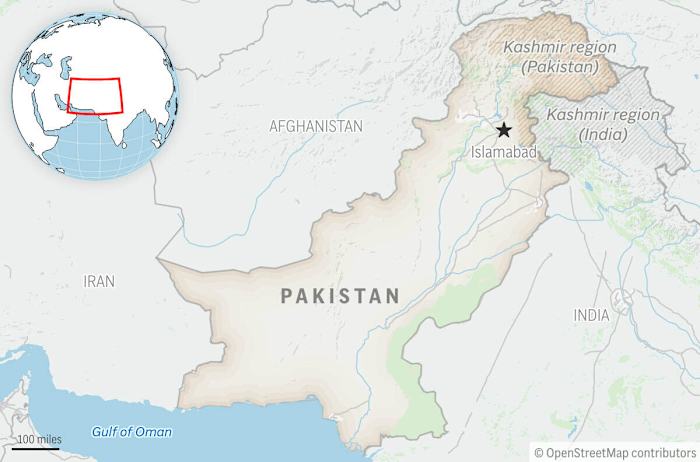
Hundreds of people are dead and the Durand Line is a mess. That's the reality after weeks of heavy artillery fire and ground skirmishes between Afghanistan and Pakistan. Now, both sides say they’ve agreed to "explore a solution." If you think that means peace is around the corner, you’re missing the bigger picture. This isn't just a border spat. It's a fundamental breakdown of a relationship that everyone expected to improve when the Taliban took over Kabul in 2021.
The recent fighting wasn't some minor misunderstanding between border guards. We saw sustained combat involving heavy weaponry. It displaced thousands of families in Pakistan's Kurram district and Afghanistan’s Khost and Paktia provinces. When two neighboring nations start trading mortar fire over a line on a map, the "agreements" they sign afterward usually aren't worth the paper they're printed on. They’re just catching their breath.
Why the Durand Line remains a flashpoint for violence
The root of this disaster is the Durand Line. It’s a 2,640-kilometer border established in 1893 that Afghanistan has never truly accepted. Pakistan wants it fenced and respected. The Taliban, like the Republic before them, see it as a colonial relic that splits the Pashtun heartland.
You can’t just fence off a people who have walked those mountains for centuries. Pakistan’s push to complete its border fence has been a constant source of friction. Every time a Pakistani engineer lays a roll of barbed wire, an Afghan fighter sees it as an act of aggression. This isn't about moving a few feet left or right. It's about sovereignty and identity.
I’ve seen this cycle play out a dozen times. A skirmish breaks out. Both sides blame the other. People die. Then, high-ranking officials meet in Kabul or Islamabad, shake hands for the cameras, and promise a "joint committee." It’s a stall tactic. It doesn't address the fact that Pakistan believes Afghanistan is harboring militants, while Afghanistan believes Pakistan is trying to suffocate its economy.
The TTP factor is the real elephant in the room
Let’s be honest about what’s actually driving the body count. It's the Tehrik-i-Taliban Pakistan (TTP). Islamabad is furious. They claim the Afghan Taliban are giving the TTP a safe haven to launch attacks inside Pakistan. The Afghan side denies this, but the evidence on the ground suggests otherwise.
- Casualty counts: In the last month alone, security forces on both sides have suffered double-digit losses.
- Civilian impact: Markets in border towns like Parachinar have been shuttered for weeks.
- Military buildup: Both nations have moved tanks and heavy artillery closer to the front lines than we’ve seen in years.
When Pakistan launches airstrikes into Afghan territory—as they did earlier this year—the Afghan Taliban feel forced to respond to save face. They can’t look weak to their own rank-and-file. If the leadership in Kabul reins in the TTP too much, they risk those fighters defecting to even more radical groups like ISIS-K. It’s a political trap.
This agreement won't fix the trade blockade
While the generals talk about security, the common people are starving because of trade. Every time a shot is fired, the border crossings at Torkham and Chaman get slammed shut. Perishable goods rot in trucks. Millions of dollars in trade evaporate.
Pakistan uses the border as a lever. They tighten visa requirements or close the gates to pressure the Taliban. It backfires. Instead of getting the Taliban to cooperate, it fuels resentment among the Afghan population. It makes the "solution" they’re supposedly exploring even harder to find. You don't make friends by blocking their food supply.
Moving toward a real resolution instead of a photo op
If these two countries actually want to stop the bleeding, they have to stop lying to each other. Pakistan needs to accept that the Taliban will never fully purge the TTP. The cultural and historical ties are too deep. Conversely, the Taliban must understand that they cannot have a functional economy if they are constantly at war with their most important neighbor.
The "solution" being explored right now needs to move beyond military de-confliction. It requires a permanent cross-border trade framework that stays open even when tensions are high. It needs a joint commission with actual teeth, not just a group of men who meet once a year to drink tea.
The international community usually looks away from this region until something explodes. That’s a mistake. The instability on this border filters out into the rest of the world. It affects global security, migration patterns, and the fight against extremism.
Stop watching the handshakes. Watch the movement of the heavy guns. If those artillery pieces don't move back from the ridges, the agreement is a lie. If the trade trucks don't start moving without being harassed by guards on both sides, the fighting will start again by next month.
Watch the Torkham crossing data over the next fourteen days. If the volume of commercial traffic doesn't return to pre-skirmish levels, consider this "agreement" dead on arrival. For those living in the shadow of the Hindu Kush, peace isn't a press release. It's the sound of a market opening in the morning without the fear of a shell landing in the town square.



