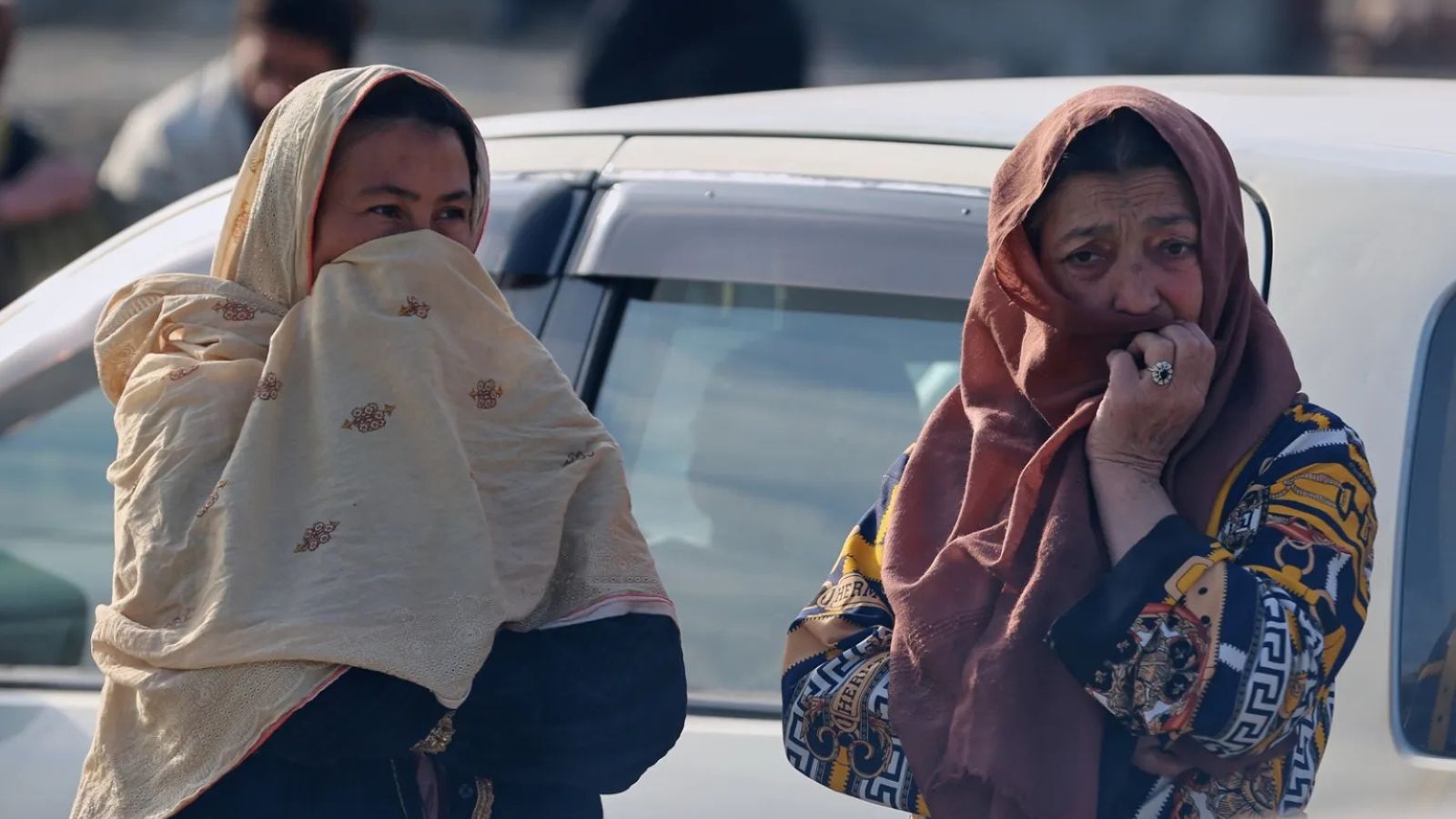
The air over northeastern Afghanistan didn’t just carry the scent of cordite this Monday; it carried the final, shredded remains of a decade-long geopolitical gamble. When Pakistani missiles slammed into civilian homes and a university campus, leaving seven dead and 85 wounded, they did more than just break a fragile, Chinese-mediated peace. They signaled that the era of "strategic depth"—the long-held Pakistani military doctrine of maintaining a friendly, subordinate regime in Kabul—has officially collapsed into a state of open, unpredictable warfare.
This latest strike was not an isolated flare-up. It was a calculated, desperate response to a reality Islamabad never expected: the Taliban, once its protégé, has become its most volatile adversary. By targeting areas in the northeast, the Pakistani military is attempting to cauterize the flow of Tehrik-i-Taliban Pakistan (TTP) militants who use the rugged borderlands as a sanctuary. Yet, as the high casualty count among students and families suggests, the cost of this "security" is a deepening blood feud that neither side can afford, but neither side knows how to quit. Meanwhile, you can find other events here: The Fall of D-Company’s Ghost Architect.
The Mirage of Control
For twenty years, the Pakistani establishment waited for the return of the Taliban to Kabul, convinced that a shared ideological bond would secure its western flank. Instead, they inherited a nightmare. Since 2021, the TTP—an ideological twin and battlefield ally of the Afghan Taliban—has used its newfound breathing room to launch a scorched-earth campaign across Pakistan's Khyber Pakhtunkhwa province.
The Afghan Taliban’s refusal to hand over TTP leadership is not merely a matter of inability. It is a matter of identity. Asking the ruling council in Kabul to liquidate the TTP is like asking a revolutionary government to execute its own veterans. The two groups shared foxholes against NATO for two decades; those bonds of "jihad" are proving far stronger than any diplomatic pressure Islamabad can exert. To understand the full picture, we recommend the excellent article by The Washington Post.
This deadlock has forced Pakistan into a policy of "hybrid coercion." When diplomacy fails—as it did during the failed April talks in Urumqi—Pakistan reaches for the only lever it has left: kinetic force. The Monday strikes were a message to the Taliban leadership that their sovereignty is conditional on Pakistan’s security. But in the eyes of a Taliban government obsessed with its own image of independence, such strikes only harden their resolve to defy "Big Brother."
The Shadow of the Durand Line
At the heart of every mortar shell and missile lies a 2,600-kilometer scar in the earth: the Durand Line. Pakistan views this colonial-era border as a sacrosanct international boundary, which it has spent billions of dollars fencing and fortifying. The Taliban, like every Afghan government before them, views it as an illegitimate imposition that cuts through the Pashtun heartland.
This dispute is the friction point that turns every minor skirmish into a potential regional war. When Pakistani jets cross into Afghan airspace, they aren't just hunting militants; they are violating what the Taliban considers their ancestral territory. The retaliation is almost always immediate, usually involving heavy artillery fire directed at Pakistani border posts. This cycle of "action-reaction" has created a permanent war zone where trade is choked, and thousands are displaced.
- October 2025: Pakistan launches "Operation Khyber Storm," targeting TTP leaders in Kabul and Paktika.
- February 2026: Afghanistan launches a rare cross-border offensive, prompting strikes on military installations in Kandahar.
- April 2026: The latest strike kills seven, wounding 85, ending the Chinese-brokered truce.
Weaponizing the Economy
Pakistan’s military might is formidable, but its most potent weapon is the border gate. Afghanistan is a landlocked nation that relies on Pakistani ports for nearly 40% of its customs revenue and the bulk of its consumer goods. By periodically shutting down the Torkham and Chaman crossings, Islamabad can effectively starve the Taliban’s treasury.
This economic warfare is a double-edged sword. While it pressures the Taliban, it also radicalizes the local population and pushes Kabul closer to regional competitors like Iran or India. The recent meeting between Iran’s Foreign Minister and Pakistan’s Army Chief in Rawalpindi underscores the complexity: everyone in the region is terrified of a total Afghan collapse, yet no one is willing to stop the activities that make such a collapse likely.
The humanitarian toll is staggering. The 85 wounded in the latest strike represent a civilian population caught in a pincer movement between TTP insurgency and Pakistani retaliation. When universities become targets, the message is clear: there are no safe zones in this conflict.
A Failed Mediation
The role of China in this mess cannot be overstated. Beijing, desperate to protect its multi-billion dollar Belt and Road investments, has stepped in where the West has stepped out. The Urumqi talks earlier this month were supposed to be the breakthrough. Both sides "agreed" to explore a comprehensive solution, yet within weeks, the missiles were flying again.
The failure of Chinese mediation proves that this isn't a conflict that can be solved with infrastructure deals or vague promises of regional connectivity. It is a fundamental disagreement over who controls the border and who is responsible for the militants living on it. The Taliban’s "calculated ambiguity"—denying the TTP exists while giving them shelter—has met its match in Pakistan’s "aggressive recalibration."
Pakistan is currently facing its bloodiest year in over a decade. Its internal political instability and teetering economy leave no room for a prolonged border war, yet its security establishment feels it has no choice. The military is trapped in a paradox: it cannot let the TTP continue to kill its soldiers, but every strike it conducts inside Afghanistan creates more TTP recruits and pushes the Afghan Taliban further into the enemy camp.
The blood on the ground in northeastern Afghanistan is proof that the old playbooks are dead. There is no strategic depth. There is only a deepening hole.