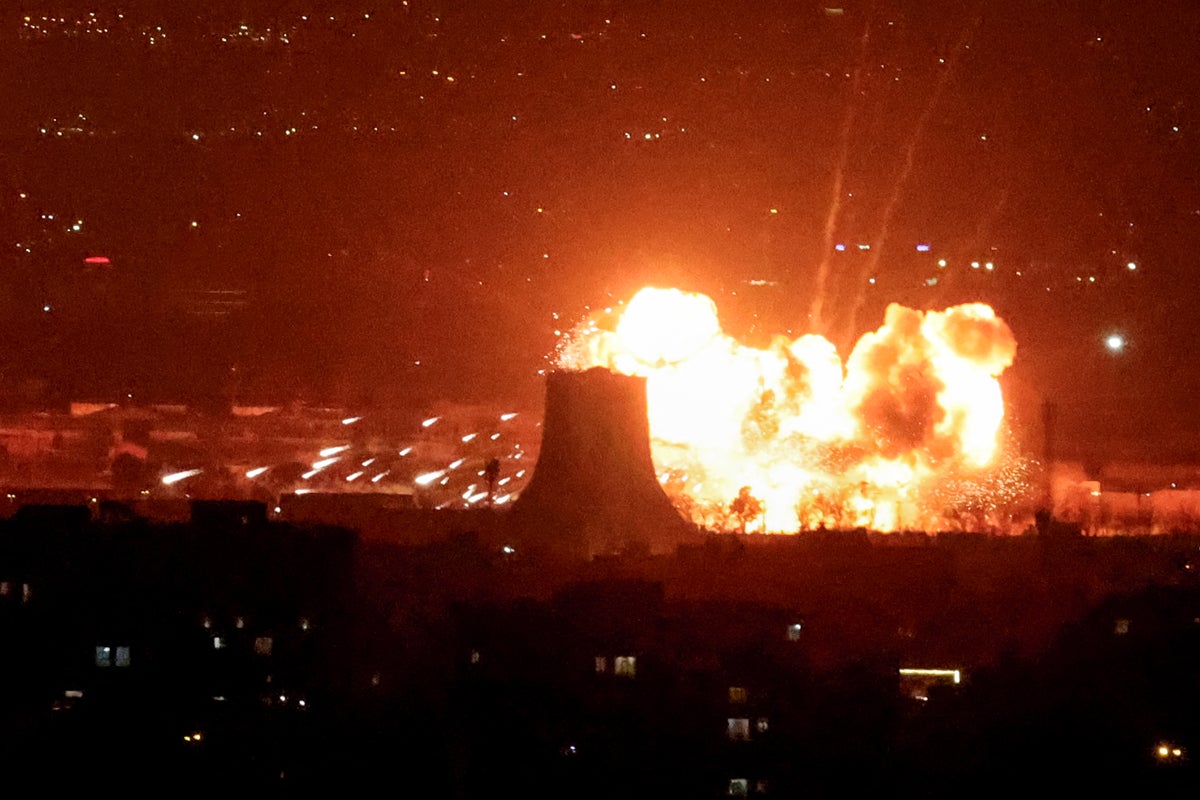
Pete Hegseth does not view war through the lens of logistics, casualty rates, or geopolitical stability. He views it through the lens of a television producer. When the former Fox News host and current Secretary of Defense nominee speaks about potential conflict with Iran, he isn't outlining a traditional military strategy based on the containment of nuclear ambitions or the protection of shipping lanes in the Strait of Hormuz. Instead, he is pitching a narrative where the optics of American "strength" are the only metrics that matter. This shift represents a dangerous transition in American foreign policy—one where the battlefield is secondary to the "clip," and where the primary objective of a strike is how well it plays on a split-screen during prime time.
The reality of a kinetic engagement with Iran is a nightmare of asymmetric warfare, proxy retaliation, and global economic shock. However, in the worldview Hegseth has cultivated over a decade of televised commentary, these complexities are dismissed as the hesitation of a "weak" establishment. By prioritizing the aesthetic of the warrior over the efficacy of the mission, the leadership at the Pentagon is being steered toward a philosophy that values the press clipping over the long-term strategic outcome.
The Performance of Power
In the upper echelons of military planning, the concept of "deterrence" is a mathematical equation involving capability and will. Hegseth has rewritten this equation. To him, deterrence is a vibe. It is the visual of a Tomahawk missile launch or the defiant stance of a commander who looks the part. This is the "central casting" approach to governance. It assumes that if the protagonist looks like a hero from a 1980s action film, the geopolitical reality will naturally align with the script.
This isn't just about vanity. It is a fundamental misunderstanding of how modern adversaries operate. Iran does not make decisions based on whether the U.S. Secretary of Defense has a commanding screen presence. They make decisions based on the survivability of their regime and their ability to bleed the United States through a thousand small cuts in Iraq, Lebanon, and Yemen. When the American leadership becomes obsessed with "winning the cycle" on cable news, it loses sight of the grinding, untelevised reality of a multi-front regional war.
The Fox News Feedback Loop
For years, Hegseth acted as a one-man focus group for the previous administration’s most impulsive instincts. He understood that a certain segment of the American public—and the Commander-in-Chief—wanted to see the world in high-contrast. No gray areas. No diplomatic nuance. Just "us" versus "them."
This feedback loop created a situation where military action was advocated for not because it solved a specific problem, but because it provided the necessary content for the next morning’s broadcast. If you strike an Iranian cultural site or a high-ranking general, the immediate "clippings" are celebratory. The long-term consequences—the collapse of regional alliances, the surge in insurgent recruitment, the spike in oil prices—don't fit into a three-minute segment. They are "boring" problems that happen off-camera.
The Death of the Strategic Deep State
The term "Deep State" is often used as a pejorative to describe career bureaucrats, but in the context of the Pentagon, those bureaucrats are the ones who remember what happens when you start a war without an exit strategy. They are the ones who have spent decades modeling the exact trajectory of an Iranian missile swarm.
Hegseth’s rise signals an intentional dismantling of this institutional memory. By framing expertise as "woke" or "weak," he justifies a move toward a more "instinctual" form of leadership. This is a polite way of saying "uninformed." When you ignore the data in favor of the narrative, you aren't being a maverick. You are being a liability.
Consider the hypothetical scenario of a naval confrontation in the Persian Gulf. A traditional strategist looks at the 2002 Millennium Challenge wargame, which suggested that a swarm of small Iranian boats could overwhelm a U.S. carrier group. A "central casting" strategist, however, focuses on the image of the carrier itself—a symbol of American might that is, in their mind, invincible because it looks invincible. This triumph of symbolism over substance is how empires stumble into catastrophes they cannot afford.
The Cost of the Clip
The obsession with press clippings isn't free. It carries a heavy price tag in both blood and treasure. When policy is driven by what makes for a good headline, the military is forced into "performative deployments." These are movements of troops and hardware designed to send a "message" rather than to achieve a tactical advantage.
The soldiers on the ground are the ones who pay for this. They become props in a larger political theater. If a deployment fails to achieve its stated goal but succeeds in dominating the news cycle for a week, it is viewed as a success by the aesthetic-driven leadership. This creates a massive disconnect between the Pentagon and the men and women in uniform who see the futility of these gestures firsthand.
Iran as the Ultimate Foil
Iran occupies a specific place in the Hegseth worldview. It is the perfect villain for a televised age. It is foreign, it is ideologically opposed to Western liberalism, and it has a flair for its own brand of theatrical defiance. For someone who views the world through the lens of a producer, Iran is the ultimate antagonist.
But Iran is not a movie character. It is a nation-state with a sophisticated understanding of American domestic politics. They know that the American public has a short attention span and a low tolerance for "forever wars." They also know that an administration obsessed with optics is easily manipulated. By baiting the U.S. into a performative strike, Iran can often achieve more in the diplomatic and propaganda spheres than they lose on the battlefield.
Hegseth’s rhetoric suggests that he believes he can "win" through sheer force of will and better branding. The Iranians, meanwhile, are playing a game of decades, not news cycles. They are waiting for the "central casting" leadership to exhaust itself on symbolic victories while they consolidate real, tangible power on the ground in Baghdad and Damascus.
Beyond the Mirror
To understand the danger of the Hegseth Doctrine, one must look past the tattoos and the polished delivery. One must look at the vacuum where a coherent grand strategy should be. If the goal is to prevent Iran from obtaining a nuclear weapon, how does a "press clipping" strategy achieve that? If the goal is to protect Israel and our Gulf allies, how does a policy of maximum provocation without a clear endgame serve their interests?
The answer is that it doesn't. It serves the interests of the personality. It ensures that the Secretary of Defense remains the center of the conversation. It keeps the base energized and the ratings high. But a Department of Defense is not a media conglomerate. Its job is not to entertain or to provide "content." Its job is to manage violence in the service of national security.
When the lines between those two functions blur, the risk of a miscalculation increases exponentially. A leader who is worried about his "clippings" might be tempted to escalate a minor incident into a major conflict just to avoid appearing "soft" on the evening news. This is how a regional skirmish turns into a global disaster.
The Illusion of Certainty
The most seductive part of the Hegseth narrative is the illusion of certainty. He speaks with the absolute confidence of a man who believes that American power is a magic wand that can resolve any conflict if only it is waved with enough vigor. This appeals to a public that is tired of complicated, inconclusive wars.
But that certainty is a lie. War is the most uncertain human endeavor. It is a realm of friction, chance, and unintended consequences. By pretending that it can be managed like a television show, Hegseth is setting the stage for a brutal collision with reality.
The military isn't a stage, and the soldiers aren't actors. When the cameras stop rolling and the "clippings" are filed away, the consequences of a performative foreign policy remain. They remain in the form of occupied territories, displaced populations, and a global order that is less stable and more dangerous.
We are moving into an era where the Secretary of Defense is more concerned with his "brand" than with the readiness of the fleet. This is the logical conclusion of a political culture that has replaced policy with personality and debate with digital engagement. If we continue down this path, we will find that you cannot tweet your way out of a quagmire and you cannot "produce" your way to a lasting peace.
Stop looking at the screen and start looking at the maps.