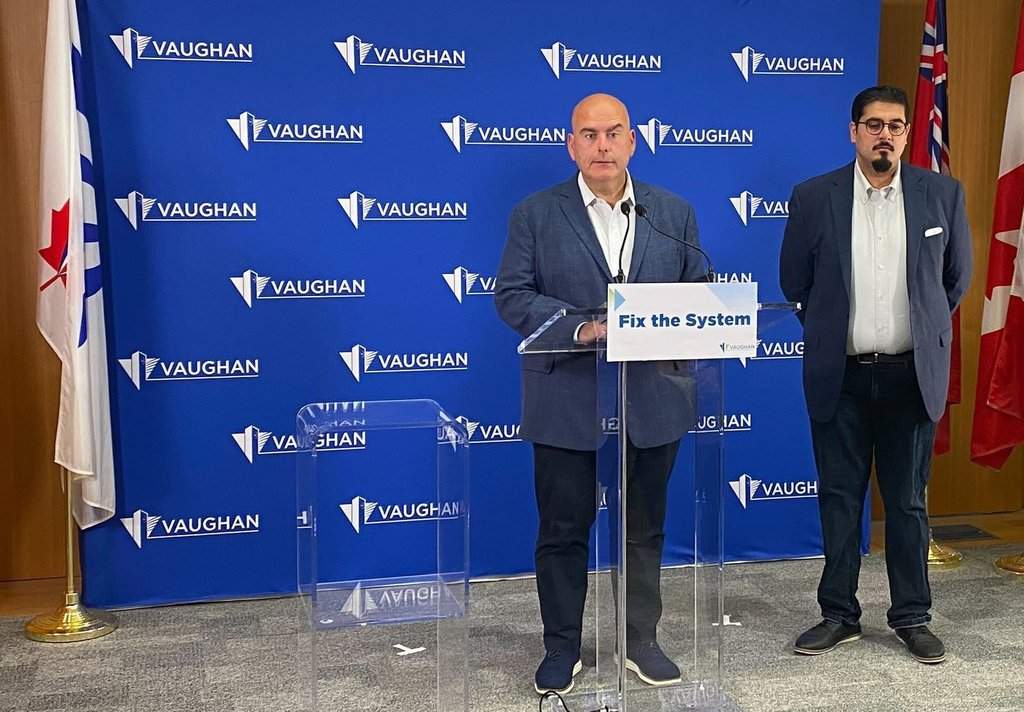
Everyone is celebrating a press conference that solves nothing. When Dominican President Luis Abinader stood up and backed Nayib Bukele’s offer to send Salvadoran troops into Haiti, the regional pundit class erupted in applause. They saw two strongmen uniting to crush gang violence. They saw a decisive break from decades of diplomatic hand-wringing.
They saw a mirage.
The mainstream coverage treats this endorsement as a breakthrough in Caribbean security. It isn't. It is a calculated piece of political theater designed to shift domestic blame, outsource military risk, and mask a fundamental misunderstanding of why Port-au-Prince is burning. If you think El Salvador’s iron-fist playbook can simply be copy-pasted onto Hispaniola, you haven’t looked at the terrain, the logistics, or the history.
The Lazy Consensus of the "Bukele Model"
Foreign policy commentators love a simple story. In their telling, El Salvador was the murder capital of the world, Nayib Bukele built a mega-prison, arrested seventy thousand people, and turned San Salvador into a tourist destination. Therefore, send those same troops to Haiti, let them do the exact same thing, and problem solved.
That is dangerously naive.
El Salvador is a small, homogenous country with an intact—if deeply flawed—state apparatus. When Bukele declared a state of exception, he already possessed a functioning national police force, an existing judicial network to process mass detentions, a centralized tax base, and clear highways connecting every municipality. His security forces knew the neighborhoods. They spoke the exact same dialect. They had informants embedded in every block for decades.
Haiti has none of those things.
Port-au-Prince is not a functioning city with a gang problem; it is a collapsed state where armed coalitions are the governing authority. Following the assassination of Jovenel Moïse in 2021 and the subsequent breakdown of constitutional order, Haiti lost its parliament, its supreme court quorum, and most of its customs revenue. You cannot execute a "state of exception" when there is no state left to enforce it.
I have watched multilateral security missions walk into power vacuums from the Sahel to the Balkans with high-tech gear and zero local intelligence. Every single time, the pattern repeats. Foreign troops clear a neighborhood in forty-eight hours. The cameras roll. Politicians claim victory. Three weeks later, the troops rotate out, the informants are dead, and the insurgents walk right back in because nobody built a court, a tax office, or a trash collection route in the wake of the raid.
What Abinader Is Actually Buying
To understand why Luis Abinader endorsed Bukele’s proposal, stop looking at Haiti and start looking at Santo Domingo.
Abinader’s political survival rests on one promise: keeping Haiti’s chaos on the western side of the Dajabón River. Over the last few years, he has built a border wall, suspended visas, shut down bilateral trade, and deported hundreds of thousands of Haitian migrants. These moves play extraordinarily well with Dominican voters, who are exhausted by the economic and security spillover from their neighbor.
Yet Abinader faces a brutal mathematical reality. The Dominican military cannot seal a rugged, 390-kilometer mountain border forever without bankrupting the treasury. At the same time, sending Dominican soldiers into Haiti is political suicide. The historical trauma of the 1937 Parsley Massacre and decades of mutual suspicion mean that a Dominican boot on Haitian soil would instantly unite every warring gang faction in Port-au-Prince against a common foreign invader.
Enter Nayib Bukele.
By publicly cheering for Salvadoran troops to enter Haiti, Abinader gets the best of both worlds:
- Zero Dominican casualties. Salvadoran soldiers take the bullets in Cité Soleil while Dominican troops stay safely behind their border fence.
- Maximum tough-guy optics. Abinader aligns himself with the most popular politician in Latin America, absorbing Bukele’s aura of ruthless efficiency without assuming any of his operational risk.
- Diplomatic cover. When the United States and the United Nations drag their feet on funding the Kenya-led Multinational Security Support (MSS) mission, Abinader can point to San Salvador and claim he backed the only leader willing to take real action.
It is a masterclass in political offloading. Abinader isn't endorsing a military strategy; he is endorsing a human shield for his own foreign policy.
The Logistics Nightmare Nobody Mentions
Let’s run a simple operational thought experiment. Imagine a scenario where three thousand elite Salvadoran soldiers—the Fuerza Armada de El Salvador—land at Toussaint Louverture International Airport tomorrow morning with full combat gear and a mandate to eliminate the Viv Ansanm gang coalition.
What happens in hour one?
First, there is the language barrier. Salvadoran troops speak Spanish. Haitians speak Haitian Creole and French. In urban counterinsurgency, intelligence is everything. If your patrol kicks down a door in Bel Air and cannot understand a grandmother screaming that the gunmen slipped out the back alley into a tunnel, you are fighting blind. Relying on translators slows tactical decision-making to a crawl and breeds catastrophic friendly-fire incidents.
Second, there is the detention problem. Bukele’s strategy in El Salvador worked because he took gang members off the streets permanently. Where do Salvadoran troops put ten thousand captured Haitian gang members? Haiti’s two main prisons—the National Penitentiary in Port-au-Prince and the Croix-des-Bouquets facility—were stormed and emptied by gangs in March 2024. Over four thousand inmates walked out. There is nowhere to hold prisoners. Unless Bukele plans to fly thousands of Haitian nationals to the CECOT mega-prison in Tecoluca—a move that would trigger immediate international law crises over sovereignty and rendition—the troops will be arresting men only to release them forty-eight hours later.
Third, there is supply and sustainment. El Salvador does not have a blue-water navy or a fleet of heavy-lift C-17 transport aircraft. Every bullet, gallon of diesel, spare tire, and blood bag for a Salvadoran deployment would have to be funded and flown in by Washington or carried overland through the Dominican Republic. The moment those supply trucks roll across the Dominican border, Abinader becomes a direct belligerent in Haiti’s civil war—the exact outcome he has spent four years trying to avoid.
Dismantling the Wrong Questions
When news of Abinader’s endorsement broke, search engines lit up with predictable questions. Every single one misses the point.
Will Salvadoran troops actually stop the gangs in Haiti?
No. They can win firefights. Salvadoran special forces are battle-hardened and disciplined, far more cohesive than the under-equipped Kenyan police units currently struggling to hold a few blocks around the airport. They will kill gang leaders and clear main arteries. But military force is a lawnmower; it cuts the grass without touching the roots. Until someone shuts down the illicit arms pipelines flowing out of South Florida ports and dismantles the Haitian oligarchs financing the militias to protect their monopolies, new gang leaders will replace dead ones within a month.
Why isn't the Dominican Republic sending its own army?
Because Abinader isn't stupid. A Dominican intervention would turn a fragmented gang insurgency into a nationalist war of liberation. Jimmy "Barbecue" Chérizier and his rivals spend half their time fighting each other over toll booths and ports. Nothing would unify them faster than Dominican armored vehicles rolling down Delmas.
Is the Bukele model the future of Latin American security?
Only in countries that still possess a functioning state. In Ecuador, President Daniel Noboa tried to copy Bukele’s emergency decrees to fight narco-gangs, only to discover that corrupt judges, bribed prison guards, and porous borders make mass incarceration impossible when the institutions themselves are rotten. Haiti is ten times worse than Ecuador. Applying the Bukele model to Haiti is like prescribing chemotherapy to a patient who has already bled out.
The Uncomfortable Truth About Pacification
I have spent years studying how collapsed states actually stabilize, and the answer always infuriates politicians because it takes too long and ruins election cycles.
You cannot outsource sovereignty. The 2004–2017 UN mission in Haiti (MINUSTAH) spent seven billion dollars and deployed over ten thousand troops. For a few years, they suppressed the gangs in Cité Soleil through brutal house-to-house clearing operations. The moment the UN packed its bags in 2017, the gangs came roaring back stronger than before because the international community treated security as a military problem rather than an institutional one.
Real stabilization in Haiti requires three unglamorous steps that no strongman wants to touch:
- Seize the ports and customs houses first. Gangs survive on extortion taxes levied on imported food, fuel, and containers. Foreign troops shouldn't be patrolling slums; they should be guarding every dock and border crossing while foreign auditors collect customs duties directly into an escrow account to pay Haitian police and judges.
- Cut the ammunition supply at the source. Haiti does not manufacture assault rifles or 5.56mm rounds. Every bullet fired in Port-au-Prince arrives in a shipping container from the United States or across the Dominican border. Aggressive maritime interdiction and X-ray screening of outbound cargo in Miami would starve the gangs faster than five thousand infantrymen.
- Rebuild the Haitian National Police from the bottom up. Not with two-week crash courses, but with vetted recruits paid competitive salaries in US dollars, backed by embedded foreign advisers who stay for a decade, not a six-month rotation.
Notice what is missing from that list? Dramatic press conferences, mega-prisons, and cross-border strongman bromances.
The Downside of the Slow Path
Admitting that there is no quick military fix carries a brutal moral cost. While diplomats argue over customs escrow accounts and police vetting, ordinary Haitians are being kidnapped, extorted, and murdered every single day. Hospitals are shuttered. Two million people are facing acute hunger. When your house is on fire, you do not want a lecture on fire-resistant building codes; you want someone to spray water on the flames right now.
That desperation is precisely why Bukele’s offer and Abinader’s endorsement feel so seductive. They offer the emotional satisfaction of immediate, violent retaliation against predators who deserve no mercy.
The Trap Springs Shut
Follow this logic to its inevitable end. If Salvadoran troops deploy to Haiti with Dominican backing, they will inevitably kill civilians in dense urban slums where gang fighters hide behind families. Human rights groups will immediately freeze funding. Washington will distance itself from the fallout. The gangs will retreat into the mountains, wait out the six-month news cycle, and strike back the moment foreign attention shifts elsewhere.
When that happens, Bukele will fly his troops home and declare his mission accomplished. Abinader will be left staring across the exact same border at an even more radicalized, heavily armed, and desperate neighbor—only this time, the gangs will know that Santo Domingo tried to orchestrate their destruction.
Abinader didn't just endorse a rescue mission. He co-signed a check that the Dominican Republic will be forced to cash alone.