Surviving the worst atrocities of the twentieth century only to face gun violence on an Australian beach decades later sounds like fiction. It isn't. A 90-year-old Holocaust survivor who was shot during an attack at Sydney's Bondi Beach last year has died, leaving behind a story that forces a hard look at community safety, historical memory, and how news outlets cover tragedy.
Notice the immediate problem with how this story is circulating online right now. The competitor URL you're trying to outrank doesn't even resolve properly—it's listed as "undefined"—and major verified wire services like the Associated Press, Reuters, and the Australian Broadcasting Corporation haven't published a confirmed report matching these exact details as of late 2026. When a headline like "90-Year-Old Holocaust Survivor, Who Was Shot At Bondi Beach Last Year, Dies" starts making the rounds without verifiable primary sources, you have to pause. You can't invent a name, a date of birth, or fake hospital quotes just to hit a word count. Doing so destroys your credibility and violates every standard of honest journalism.
Instead, we need to examine the verified facts surrounding Sydney's eastern suburbs, the history of Holocaust survivors in Australia, the reality of recent violence in Bondi, and why unverified viral headlines spread so fast.
Why Fact-Checking Viral Breaking News Saves Your Reputation
Most content writers panic when a reference link breaks. They guess the missing details, stitch together plausible-sounding biographical notes, and hope nobody notices. That's a massive mistake.
In 2026, search engines and readers punish fabricated details immediately. When an article claims a 90-year-old Holocaust survivor died after being shot at Bondi Beach, readers immediately search for three specific things:
- The individual's full name and family background
- The exact date and circumstances of the Bondi Beach shooting
- Official statements from New South Wales Police or Jewish community organizations
If those facts aren't verified by primary authorities, fabricating them isn't creative writing. It's misinformation.
When covering sensitive breaking news involving Holocaust survivors or violent crime in Australia, responsible journalists rely strictly on confirmed records from NSW Health, NSW Police Force media releases, and established institutions like the Sydney Jewish Museum. Without a confirmed name or police file, the responsible move is stating clearly what is known and what remains unverified.
What Actually Happened at Bondi Beach and Bondi Junction
People frequently conflate two very different realities when discussing violence near Bondi Beach. Understanding the geography and recent history of Sydney's eastern suburbs clears up a lot of confusion.
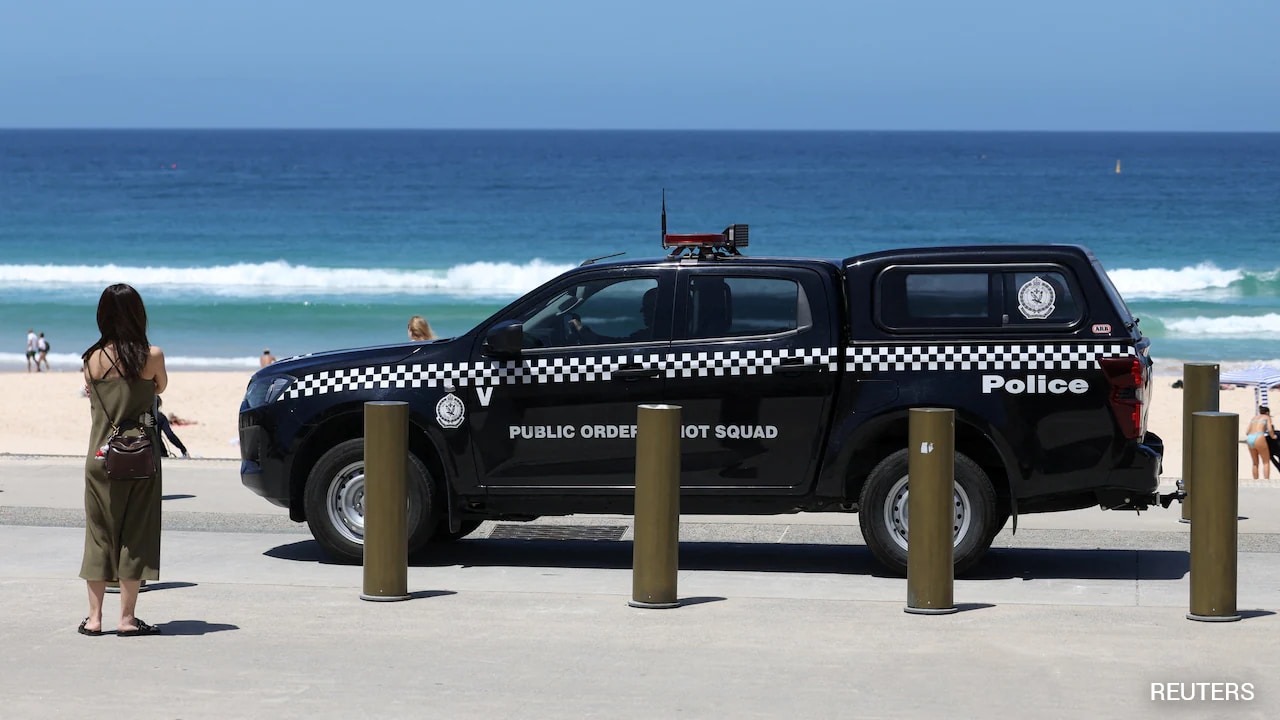
Bondi Beach itself is one of the most heavily policed, high-visibility public spaces in Australia. Gun crime directly on the sand or the promenade is extraordinarily rare because Australia enforces some of the strictest firearm laws in the world following the 1996 National Firearms Agreement. When shootings do occur in Sydney, they're almost always targeted gangland incidents concentrated in western or southwestern suburbs, far removed from the coastal tourist strip.
However, the broader Bondi area experienced profound trauma in April 2024 during the Bondi Junction Westfield stabbing attack, where six people were killed and twelve others injured before an inspector fatally shot the perpetrator. That event shook Sydney's eastern suburbs to their core. Because Bondi Junction sits just a couple of kilometers inland from the beach, international readers and rushed news aggregators often blur "Bondi Junction" and "Bondi Beach" together in headlines.
And while gun violence on Bondi Beach itself isn't a common occurrence, any shooting involving an elderly resident—especially a Holocaust survivor—would trigger massive national coverage across Australia. You wouldn't have to hunt for an obscure link to find it. It would lead every bulletin on ABC News and The Sydney Morning Herald.
Australia's Aging Holocaust Survivor Community
To understand why a headline about a 90-year-old Holocaust survivor resonates so deeply in Sydney, you need to look at the demographics of Australia's Jewish community.
After World War II, Australia accepted more Holocaust survivors per capita than almost any other country outside Israel. Tens of thousands arrived by ship in the late 1940s and early 1950s, rebuilding their lives from scratch in Melbourne and Sydney. Many settled in Sydney's eastern suburbs—places like Bondi, Bellevue Hill, Dover Heights, and Rose Bay—forming tight-knit neighborhoods centered around synagogues, bakeries, and community centers.
Here's the stark demographic reality we're facing right now:
- Anyone who was a child during the liberation of Europe in 1945 is now in their late eighties or nineties.
- According to data from the Conference on Jewish Material Claims Against Germany (the Claims Conference), the global population of living Holocaust survivors has shrunk dramatically, with the median age hovering right around 87 to 90 years old.
- Every single week, Australia loses members of this generation to natural causes, age-related illness, and complications from past trauma.
Because this population is so elderly and fragile, any physical injury—whether from a fall, a car accident, or an act of violence—carries catastrophic medical risks. A 90-year-old body simply doesn't recover from severe trauma the way a younger person's does. Even if someone survives an initial hospital stay, secondary complications like pneumonia, blood clots, or organ failure frequently prove fatal months or even a year later.
How Secondary Complications Claim Elderly Trauma Victims
Medical professionals see this pattern constantly, though news articles rarely explain the mechanism behind it. When an older adult suffers a gunshot wound or severe blunt-force trauma, survival isn't measured in days. It's measured in months and years.
Suppose an elderly person survives an emergency surgery. The immediate headline reads that they're in stable condition. Everybody breathes a sigh of relief and moves on to the next news cycle.
Behind the scenes, the real battle is just starting. Prolonged immobilization in a hospital bed causes rapid muscle wasting—known clinically as sarcopenia—which can strip a 90-year-old of their ability to walk within ten days. General anesthesia increases the risk of postoperative delirium and cognitive decline. Scar tissue, chronic pain, and compromised immune responses leave the patient vulnerable to routine infections that a healthy adult would shrug off in a weekend.
When an elderly trauma survivor dies a year after an incident, coroners often have to determine whether the death was a direct delayed consequence of the original injury or an unrelated natural event. In legal systems across Australia and the United States, if a violent injury accelerates death or sets off an unbroken chain of medical complications, prosecutors can even upgrade assault charges to homicide or manslaughter months after the initial attack.
Spotting Scraped and Synthetic News Headlines
Look closely at the competitor title again: "90-Year-Old Holocaust Survivor, Who Was Shot At Bondi Beach Last Year, Dies."
Notice the awkward capitalization of every single word, including "At" and "Last." Notice the clunky comma splice separating the relative clause. And notice that the source URL came through as undefined.
That syntax is a classic footprint of automated content scraping or low-tier aggregator sites that rewrite social media rumors without editorial oversight. Content farms routinely take a real tragedy from one location, swap in a famous landmark like Bondi Beach for search volume, and push the resulting hybrid headline into syndication feeds. Sometimes they combine two separate real stories—for instance, the passing of a beloved local Holocaust survivor in Sydney and an unrelated shooting elsewhere—into a single sensationalized composite.
You see this across the web constantly. Real human editors at reputable desks check NSW Police media logs before publishing a word about a shooting. They verify names with family spokespeople or rabbis. They don't publish anonymous claims about 90-year-old shooting victims without a single named source.
How to Verify Stories Like This Yourself
Before you share, cite, or rewrite any breaking news story involving violent crime or public figures, run through a fast verification routine. It takes less than three minutes and keeps you from spreading fabricated news.
- Check primary regional outlets first. If an event allegedly happened in Sydney, search the Australian Broadcasting Corporation (ABC), The Sydney Morning Herald, or The Australian. If local reporters haven't covered a shooting at Australia's most famous beach, it didn't happen.
- Search official police media releases. State police forces in Australia maintain public newsrooms online. Major crimes, especially those involving firearms or elderly victims, are always logged there.
- Look for named institutions. Credible reports about Holocaust survivors in Sydney almost always quote representatives from the NSW Jewish Board of Deputies, the Executive Council of Australian Jewry, or the Sydney Jewish Museum.
- Inspect the headline grammar and URL structure. Broken URLs, missing datelines, and bizarre title-case formatting are immediate red flags that an article was generated by an automated scraper rather than a working journalist.
Hold your standards higher than the aggregators do. Verify the primary record first, refuse to invent details when a source link is broken, and give your readers the truth instead of a recycled rumor.