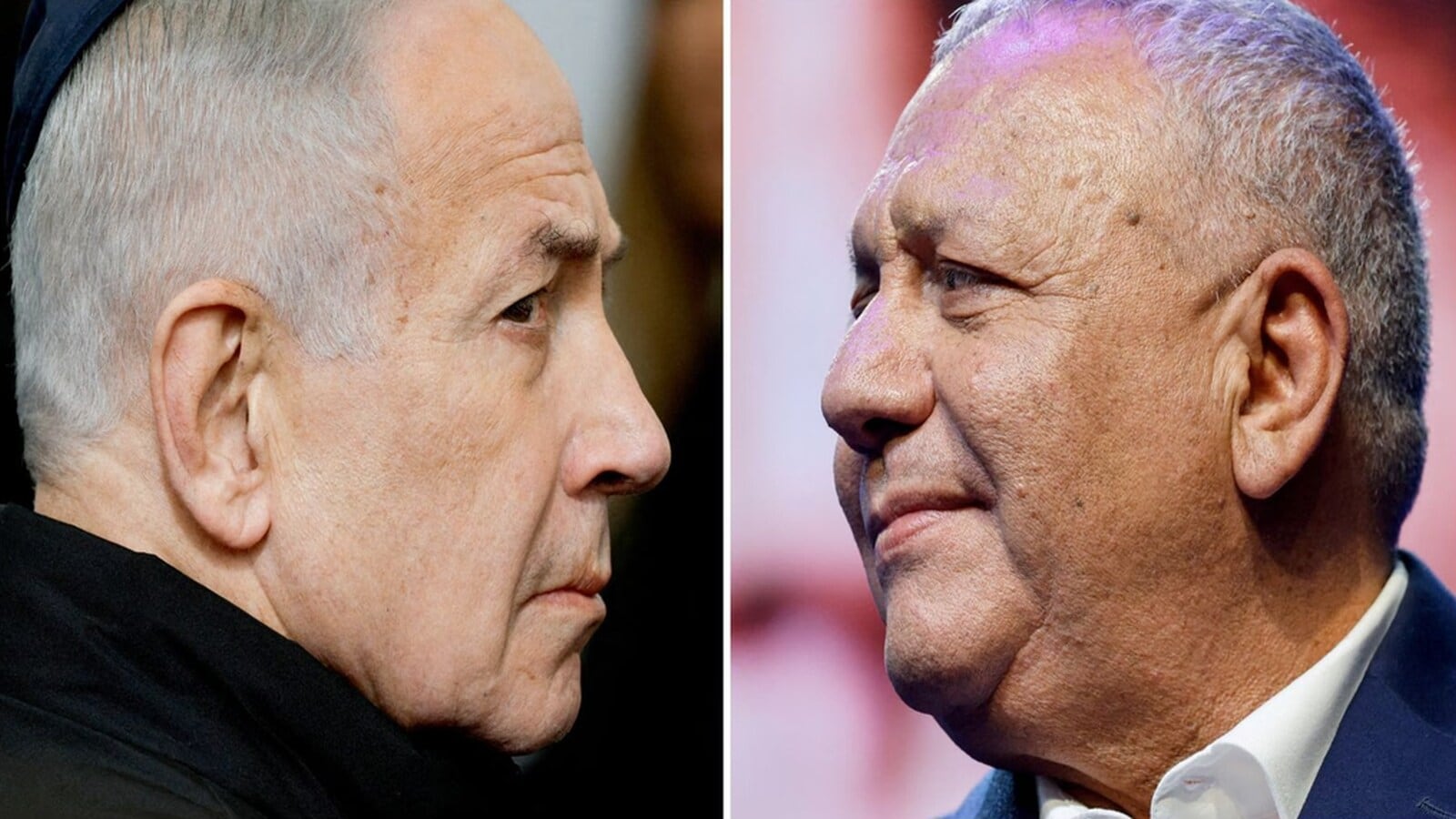
Gadi Eisenkot is trying to build an Israeli government on an arithmetic paradox: he needs 61 seats in the 120-member Knesset to oust Benjamin Netanyahu, his four-party opposition bloc controls only 48, and the 19 seats held by two Arab-majority parties are simultaneously his only viable bridge to power and the exact wedge that could shatter his alliance from within.
That tension defines the political crisis gripping Jerusalem following Israel's October 27, 2026 legislative election. On the surface, the mandate President Isaac Herzog handed to Eisenkot on November 8 looks like a clean opening for a post-Netanyahu era. Voters punished the outgoing coalition, slashing Likud down to 27 seats and leaving Netanyahu's right-wing and ultra-Orthodox bloc stranded at 53. Eisenkot, the stoic former Israel Defense Forces chief of staff running at the head of his new centrist party, Yashar, captured 21 seats. Combined with Naftali Bennett's Together party (12 seats), Yair Golan's left-wing The Democrats (8 seats), and Avigdor Liberman's secular-nationalist Yisrael Beytenu (7 seats), the Change Bloc holds 48 seats.
To cross the 61-seat threshold, Eisenkot has to look outside his core camp. The Joint List (11 seats) and Mansour Abbas's Ra'am (8 seats) both recommended Eisenkot to the president, giving him a theoretical 67-seat majority if their lawmakers back him in a Knesset confidence vote. Yet every step Eisenkot takes toward securing those 19 votes threatens to detonate the 48 he already has.
The Arithmetic of Deadlock
Israeli coalition politics is rarely about ideology alone; it is a ruthless exercise in subtraction. Before a single policy compromise is drafted, party leaders count vetoes. In the 26th Knesset, the vetoes overlap so tightly that almost every mathematically possible coalition looks politically impossible.
| Political Bloc / Party | Leader | Seats Won | Core Coalition Red Line |
|---|---|---|---|
| Yashar (Change Bloc) | Gadi Eisenkot | 21 | Must replace Netanyahu; wants universal national service and a state inquiry into October 7. |
| Together (Change Bloc) | Naftali Bennett | 12 | Refuses to sit in a government formally including Arab parties in the post-October 7 era. |
| The Democrats (Change Bloc) | Yair Golan | 8 | Demands an immediate end to talks with Likud; pushes for alignment with Arab lists. |
| Yisrael Beytenu (Change Bloc) | Avigdor Liberman | 7 | Rejects any government relying on Arab parties; demands Haredi military conscription. |
| The Joint List (Arab Bloc) | Yousef Jabareen | 11 | Will vote to topple Netanyahu, but refuses to join a Zionist cabinet. |
| Ra'am (Arab Bloc) | Mansour Abbas | 8 | Open to pragmatic cooperation, though wary of nationalist partners. |
| Netanyahu Bloc (Likud, UTJ, Otzma, Shas, RZP) | Benjamin Netanyahu | 53 | Eight seats short of a majority; banking on opposition paralysis to force a new election. |
Look closely at those numbers. Netanyahu sits at 53 seats—too weak to govern on his own, yet strong enough to act as a gravitational black hole. If Eisenkot fails to assemble a coalition before his initial mandate expires on December 6 (or after a potential 14-day extension), Israel risks sliding toward another election cycle while Netanyahu remains in office as caretaker prime minister.
That procedural reality gives Netanyahu tremendous patience. He does not need to win 61 seats right now. He only needs Eisenkot's incompatible allies to tear each other apart before they reach the Knesset plenum.
Why Eisenkot Is Playing a Three-Front Game
To escape this trap, Eisenkot has pursued a high-wire negotiating strategy that looks contradictory from the outside. Rather than locking himself into a single track, he has simultaneously courted his natural Change Bloc partners, floated a minority government backed from the outside by Arab lawmakers, and held marathon exploratory talks with Likud.
Each track serves a distinct tactical purpose, and each carries a steep political price.
The Likud Feint
When Eisenkot's negotiating team sat down with Likud representatives in Herzliya for nearly four hours, progressive allies reacted with immediate alarm. Yair Golan's The Democrats froze coalition talks with Yashar in protest, accusing Eisenkot of legitimizing the very leader he promised to replace.
Veteran observers of Israeli politics saw something else happening in that room. Eisenkot has spent months arguing for a broad national emergency government capable of passing a state commission of inquiry into the October 7, 2023 failures and enforcing universal military or national service. By talking directly to Likud, Eisenkot was building an alibi for his right-wing flank. Before he can ask Naftali Bennett or Avigdor Liberman to swallow a minority government reliant on Arab votes, he has to prove beyond doubt that a broad Zionist unity government was impossible.
He needed Likud to say no on the record. Once Netanyahu's emissaries balked at stepping aside or accepting an independent state inquiry, Eisenkot could turn to his right-wing partners and frame the remaining choice in stark binary terms: accept an imperfect governing arrangement, or hand the country back to Netanyahu.
Locking Down the Right Flank
Hours after The Democrats froze talks, Yashar announced its first signed coalition agreement—not with the left, but with Avigdor Liberman's Yisrael Beytenu.
That sequence was deliberate. Liberman has been the loudest voice inside the Change Bloc insisting he will never sit in a government dependent on Arab parties. His stated rationale centers on the refusal of Arab factions to classify Hamas as a terrorist organization, even though those factions have repeatedly condemned the October 7 attacks. Behind that rhetoric lies a simpler electoral calculation: Liberman's secular-nationalist base in the Russian-speaking community and on the hawkish center-right punishes any perceived compromise on national security.
By signing a bilateral deal with Yisrael Beytenu first, Eisenkot anchored his right flank and signaled to Naftali Bennett that the emerging coalition's core policy platform would remain firmly Zionist and security-focused. It also shifted pressure onto Golan's Democrats. With 8 seats, Golan cannot build an alternative government without Eisenkot. Freezing talks makes for sharp headlines, yet the Democrats have nowhere else to go when the actual vote to remove Netanyahu reaches the Knesset floor.
The Outside-Support Loophole
If Likud refuses to budge and the ultra-Orthodox parties—Shas and United Torah Judaism—stay loyal to Netanyahu rather than accept Eisenkot's mandatory draft demands, the former army chief is left with one viable mechanism: a 48-seat minority government sworn in through external abstentions or votes from the 19 Arab lawmakers.
During the campaign, Eisenkot pledged not to form a government dependent on Arab parties. Now, his inner circle is drawing a razor-thin legal and political distinction between coalition membership and parliamentary arithmetic.
Under Israeli parliamentary rules, a government does not need 61 affirmative votes to take office; it simply needs more votes in favor than against during its investiture vote. In practice, if the 48 Change Bloc members vote yes, the 53 Netanyahu bloc members vote no, and the 19 lawmakers from the Joint List and Ra'am vote yes—or even split between voting yes and abstaining—Eisenkot becomes prime minister without signing a single coalition agreement with an Arab party.
Eisenkot's camp has already telegraphed how it plans to sell this to skeptical Jewish voters. No Arab ministers would sit at the cabinet table. No Arab party would hold veto power over military operations or diplomatic decisions. If Ra'am and the Joint List choose to vote to oust Netanyahu on investiture day, Eisenkot's allies argue, that is an independent decision taken by opposition lawmakers in pursuit of their own interest in ending Netanyahu's rule.
It is a clever constitutional workaround. It is also politically fragile.
What Happened the Last Time Israel Tried This
This is not theoretical. Israel already ran a live experiment with Arab-backed governance between June 2021 and June 2022, and the scars from that year explain why both Bennett and Liberman are hesitating now.
In 2021, Naftali Bennett and Yair Lapid assembled an eight-party patchwork coalition that included Mansour Abbas's Ra'am inside the governing alliance. For several months, the arrangement functioned surprisingly well, passing Israel's first state budget in three years and directing billions of shekels toward combating violent crime and upgrading infrastructure in neglected Arab municipalities.
Then the structural flaw kicked in. Because the coalition held a razor-thin 61-seat majority, every individual lawmaker became a walking veto. When security tensions flared in Jerusalem and the West Bank in spring 2022, Netanyahu's opposition hammered Bennett every single day, branding his government illegitimate and claiming it was held hostage by anti-Zionist lawmakers. Right-wing defectors inside Bennett's own party eventually buckled under the social and political pressure, collapsing the government in twelve months.
Now compare 2021 to November 2026.
Three critical variables have changed—and two of them make Eisenkot's task harder.
First, the psychological trauma of October 7, 2023 still dominates Israeli politics. Bennett himself has acknowledged that while Mansour Abbas proved a pragmatic partner in 2021, bringing Arab-led parties into a formal governing coalition in the shadow of the war carries far heavier political baggage. Netanyahu is already weaponizing that sentiment, using the harder-line rhetoric of certain Joint List figures to paint all 19 Arab seats as a security liability.
Second, in 2021, Bennett only needed Ra'am's four seats. Today, Ra'am holds 8 seats, and the Joint List—an alliance encompassing ideological factions far less inclined toward pragmatic compromise with Zionist generals—holds 11. Even if Ra'am's 8 lawmakers backed Eisenkot, 48 plus 8 only equals 56. Without the Joint List's 11 seats either voting in favor or abstaining en masse, the math fails.
Third, however, Eisenkot holds one decisive advantage Bennett never had: command authority. Bennett entered the prime minister's office leading a six-seat party with a thin security resume. Eisenkot is a former chief of staff who lost a son and a nephew fighting in Gaza, entering office at the head of a 21-seat flagship faction. Attacking Eisenkot as soft on security is a much harder sell for Likud's messaging machine than attacking Bennett ever was.
The Forgotten Stakeholders in the Knesset Math
Most coverage in Tel Aviv and Washington treats the 19 Arab seats as passive chips on Eisenkot's roulette table. That misses half the story.
Arab citizens of Israel turned out in force on October 27 precisely because years of surging organized crime, municipal budget freezes, and inflammatory rhetoric from far-right ministers like Itamar Ben-Gvir had turned daily life into an emergency. Yet both Ra'am and the Joint List face acute internal skepticism about handing a blank check to Gadi Eisenkot.
To many Palestinian citizens of Israel, Eisenkot is not a progressive reformer; he is the former general who authored the Dahiya doctrine—the military strategy emphasizing disproportionate force against civilian infrastructure used by militants—and a key architect of Israel's post-October 7 war cabinet. Supporting his premiership is widely viewed within the Joint List's base as choosing the lesser of two evils solely to remove Netanyahu.
Even if Joint List lawmakers hold their noses and vote to swear in an Eisenkot minority government, they will not prop it up for free week after week. Every budget vote, every emergency security extension in the West Bank, and every Knesset committee appointment will become a fresh crisis. A 48-seat minority government can take office with outside support, yet governing without a stable 61-seat floor means living on borrowed time from one Wednesday plenum session to the next.
Why the Haredi Parties Hold the Quietest Leverage
There is one escape hatch that would let Eisenkot bypass the Arab-party dilemma altogether, though it requires an unlikely crack in Netanyahu's bloc.
United Torah Judaism (7 seats) and Shas (6 seats) together control 13 mandates. If either ultra-Orthodox party broke ranks and joined the Change Bloc, Eisenkot would immediately command 54 or 55 seats—and with both, he would sit on a rock-solid 61-seat Jewish majority.
For decades, Haredi leaders treated coalition alliances as purely transactional: whoever funded their yeshivas and protected their young men from military conscription got their votes. That formula broke down after October 7. With the Israeli public overwhelmingly demanding that ultra-Orthodox men share the burden of military service, Eisenkot has made universal national service a non-negotiable pillar of his platform. Liberman has built his entire political career on forcing Haredi conscription.
As long as Eisenkot and Liberman refuse to water down the draft law, Shas and United Torah Judaism have every incentive to stay locked inside Netanyahu's 53-seat bunker. Their occasional public friction with Likud is leverage aimed at extracting better terms from Netanyahu, not a genuine pivot toward Eisenkot.
The Real Stakes Behind December 6
Gadi Eisenkot's deadline is not merely a procedural date on the Knesset calendar. It is a stress test of whether Israel's political center can govern without either capitulating to the far right or pretending that nearly twenty percent of the country's electorate does not exist.
If Eisenkot blinks—if he lets Liberman and Bennett veto any reliance on Arab lawmakers while refusing to compromise on Haredi conscription—his mandate will expire empty-handed. Netanyahu will remain in Balfour Street as caretaker prime minister, framing the opposition's failure as proof that only he can hold a governing bloc together, and marching the country into a bitter repeat election on his own terms.
If Eisenkot pushes ahead with a 48-seat minority government backed from the outside by Ra'am and the Joint List, he will instantly take the prime minister's chair—and inherit the most fragile governing coalition in modern Israeli history. He will have perhaps six months to pass a state budget, establish an October 7 commission of inquiry, and demonstrate tangible governance before the contradictions inside his 67-seat arithmetic begin pulling the roof down.
In Israeli politics, winning the mandate is only the end of the prologue; surviving the first Tuesday in the Knesset is where the real fight begins.


