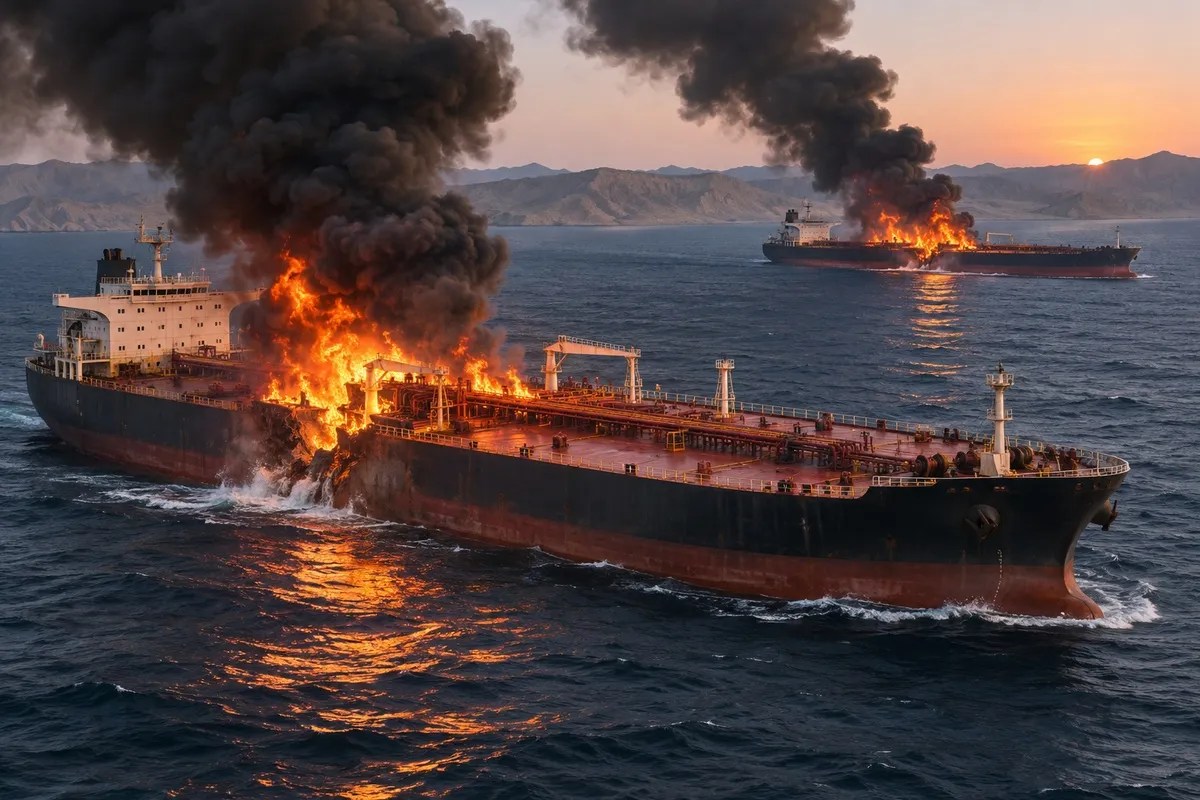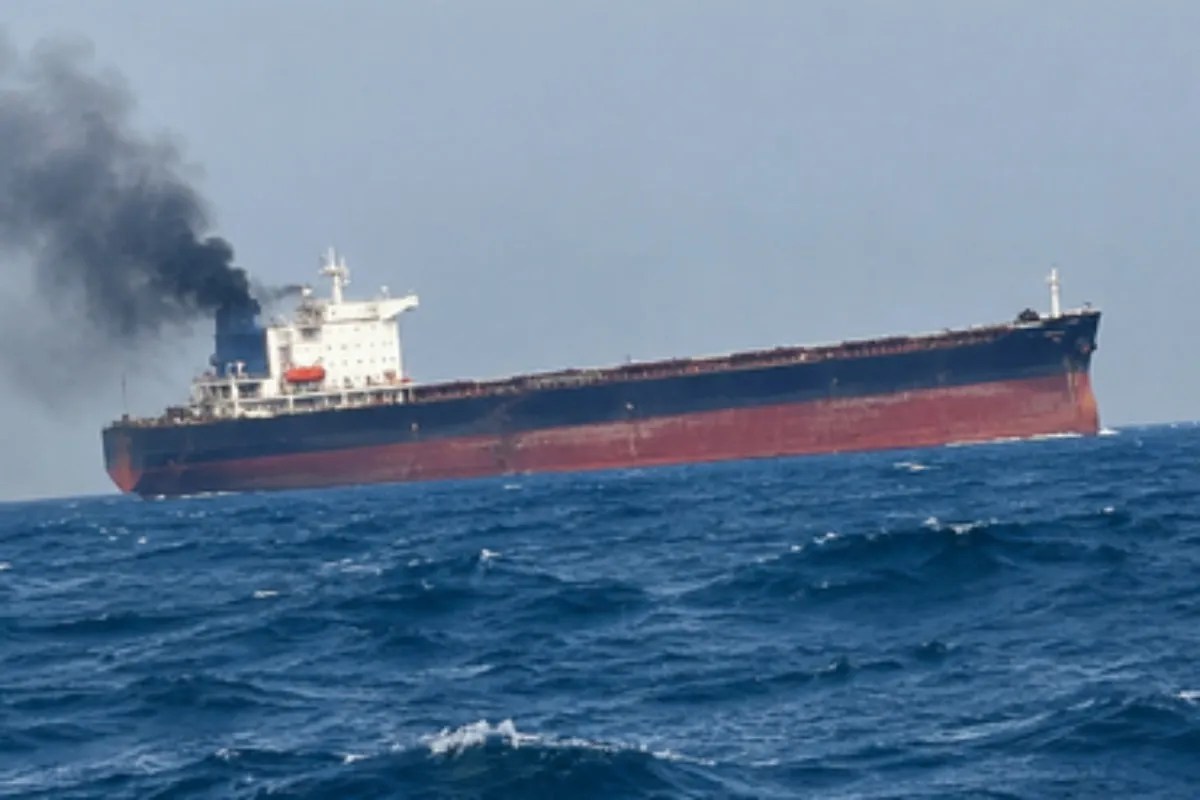
Two ships hit naval mines. Four million barrels of crude vanish. Headlines scream panic. Traders slam buy buttons. Commentators predict a permanent supply shock.
They are looking at the wrong problem.
A headline like that sells clicks because it sounds catastrophic. Four million barrels is a big number. Naval mines sound ancient, sinister, and unavoidable. Put the two together in the Strait of Hormuz, and standard energy reporting defaults to a familiar script: war risk spikes, tankers freeze, global energy markets spiral, and every refinery on earth faces imminent paralysis.
That lazy consensus misses how maritime energy logistics actually absorb shock.
Four million barrels sounds like a staggering loss until you measure it against global throughput and commercial storage buffers. Global crude consumption runs around one hundred million barrels per day. Four million barrels is less than an hour of global oil burn. Even against daily flows through the Strait of Hormuz—which historically sit near a fifth of seaborne petroleum trade—a four-million-barrel loss is a single-day blip in volume, not a structural erasure of supply.
The real story is not the four million barrels that went down. The real story is what naval mines do to schedule integrity, hull insurance, and routing psychology across an entire corridor.
The Lazy Consensus Around Strait of Hormuz Incidents
Standard coverage treats every strike or mine incident in the Persian Gulf as a binary switch: open or closed, boom or bust. If two vessels get hit by naval mines, the narrative assumes the waterway is effectively shut or days away from a total lockup.
History shows that waterways rarely close by two mines alone. They slow down. They reprice. They reroute. They force captains and insurers to recalculate risk every twelve hours.
I have watched energy desks and trading floors blow serious money over this exact misread. During past Gulf tensions, teams treated every incident headline as a multi-month supply cliff. They chased front-month futures at peak panic spreads, locked in expensive hedges on the assumption of sustained physical scarcity, and then watched prices unwind once escort protocols, mine-countermeasure sweeps, and alternative loading patterns took hold.
Panic trades headlines. Physical markets trade replacement barrels, transit times, and insurance terms.
When you confuse a headline shock with a permanent supply deficit, you pay maximum retail for fear.
What Naval Mines Actually Break First
A naval mine does not need to sink twenty supertankers to disrupt trade. Even one or two mine hits change behavior immediately.
First comes war risk insurance. Underwriters do not wait for official diplomatic declarations. When vessels strike mines in a narrow transit lane, premiums jump fast, coverage terms tighten, and shipowners hesitate before committing high-value hulls.
Second comes transit velocity. Convoys form. Sweeps get requested. Night transits get questioned. Speeds drop. Delays pile up outside loading terminals and choke points.
Third comes arbitrage math. Refiners do not buy "oil in general." They buy specific grades—sour, medium, sweet—delivered on a specific laycan window to keep conversion units balanced. When a disruption delays specific cargoes from the Persian Gulf, refiners scramble for Atlantic Basin or West African alternatives, pushing freight rates and grade differentials around even if total global barrels have not disappeared.
Missing that distinction is how smart analysts make dumb calls. Losing four million barrels of crude is a tangible loss for the cargo owners and hull operators involved. Treating it as proof that global energy supply just broke is bad arithmetic.
Why Asking "How Much Oil Was Lost?" Is the Wrong Question
Most readers and commentators ask the wrong question after an incident like this. They ask how many barrels were lost or whether the Strait of Hormuz is about to shut down completely.
Those questions frame the crisis as a static volume count. Energy markets do not fail on static volume counts alone; they fail when alternative routing, refinery slate flexibility, and inventory buffers cannot bridge the timing gap.
A better question is: how much effective supply is delayed beyond refinery tankage limits, and how quickly can alternative pipelines or non-Gulf crudes backfill the gap?
Three Questions That Actually Matter After a Mine Strike
- Can bypass pipelines absorb part of the load? Regional pipeline infrastructure—such as Saudi Arabia's East-West pipeline to Yanbu and the UAE's pipeline to Fujairah—exists precisely to move crude around the Strait of Hormuz when marine risk rises. Capacity has physical limits, and pipeline flow cannot replace every barrel overnight, yet it changes the math compared to a total maritime trap.
- How tight are floating storage and onshore commercial stocks? When transit slows, floating storage and strategic or commercial reserves act as shock absorbers. If stocks are thin, a multi-week slowdown bites harder than a one-off loss of four million barrels. If stocks have cushion, buyers can wait out initial volatility.
- Which refineries face immediate feedstock mismatches? Complex refineries with hydrocrackers and cokers depend on specific crude gravity and sulfur profiles. A sudden gap in Gulf medium or heavy sour grades hits sour-heavy processors harder than light-sweet setups.
Ask those three questions before reacting to any breaking alert. They separate real operational strain from noise.
A Thought Experiment in Chokepoint Friction
Imagine a scenario where no more mines are laid after the initial two strikes, yet navies spend ten days sweeping approaches and insurers triple war-risk premiums for unescorted tankers.
No massive fleet blockade occurs. No grand declaration closes the strait. Yet dozens of vessels anchor, slow-steam, or divert.
In that thought experiment, the four million barrels already lost is still only a fraction of the story. The bigger disruption comes from time compression and working-capital tie-up. Cargoes sit longer on water. Financing costs climb. Buyers in Asia and Europe face staggered arrivals rather than a steady stream.
Even a temporary slowdown creates lumpy deliveries—too little crude this week, a bunch of delayed tankers arriving together two weeks later. Refinery schedulers hate lumpiness almost as much as shortages.
What Serious Observers Get Right—And Where My View Has Friction
Heavy hitters in energy economics, maritime intelligence, and commodity research—from agencies like the International Energy Agency and the U.S. Energy Information Administration to veteran shipping analysts at firms like Clarkson Research, Vortexa, and Kpler—have spent decades tracking chokepoints, vessel tracking data, and crude flows. Their core insight holds up well: narrow maritime corridors amplify geopolitical risk because physical alternatives take time to scale and insurance markets react faster than diplomats.
I do not dispute that naval mines in the Strait of Hormuz are dangerous or serious. Seafarers face real physical risk. Environmental damage from spilled oil is real. Regional escalation risk is real.
Here is the downside to taking a contrarian stance on a headline like this: underestimating tail escalation.
If two mine hits are the opening move of a broader mining campaign rather than an isolated incident, or if mine-laying expands into deeper channels with slower clearance timelines, a "manageable disruption" can turn into a prolonged bottleneck. Being early on calm logic looks foolish if mines keep popping up week after week.
Contrarian analysis is not about pretending danger is fake. It is about sizing the actual mechanism of risk rather than reacting to the biggest number in the headline.
Actionable Moves When Chokepoint Headlines Hit
Do not trade or plan off the first wave of dramatic copy. Do this instead.
- Separate cargo loss from corridor throughput. Track vessel queues, anchorage counts, and transit speeds—not just the headline volume lost in a single incident.
- Watch freight and insurance spreads, not just spot headlines. Rising war-risk premiums and charter rate spikes tell you whether shipowners are actually pulling back.
- Check crude grade exposure before assuming a broad shortage. Look at whether the disrupted flow hits sour, heavy, or light grades most heavily, and which regions rely on those specific specs.
- Stress-test supply chains for timing delays, not just zero-supply scenarios. Build buffers around late arrivals, rerouted vessels, and lumpy deliveries rather than assuming the worst possible Hollywood ending.
The four million barrels lost in two mine strikes is a real hit to specific operators and a wake-up call for maritime security. Treat it as the end of global oil supply, and you will get played every time.