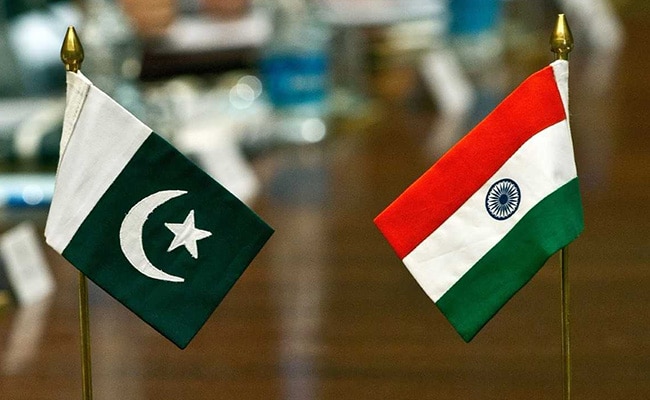
Since August 2019, Pakistan’s decision to suspend bilateral trade with India has cost its economy an estimated $40 billion in lost export potential, inflated import bills, and foregone regional supply chain integration.
That number gets thrown around in think-tank white papers and breathless headlines. It looks clean on a balance sheet. In reality, it is messy. When Islamabad downgraded diplomatic ties and halted formal commerce following New Delhi’s revocation of Article 370 in Jammu and Kashmir, politicians framed the move as an act of principled defiance. Economists saw something else entirely. They saw a nation shooting itself in the foot while insisting the bullet belonged to its neighbor.
For decades, South Asia has remained one of the least economically integrated regions on earth. Intraregional trade accounts for roughly 5 percent of total commerce in South Asia, compared to over 25 percent in Southeast Asia under ASEAN. The border at Wagah-Attari, once a bustling artery of commerce before the 1965 war, has spent most of the last sixty years as a concrete monument to political paralysis.
The Anatomy of a Self-Inflicted Wound
To understand how a trade freeze snowballs into a $40 billion deficit, you have to look at basic geography and freight economics. Shipping a container from Karachi to Mumbai takes about two days by sea. Moving goods across the land border between Lahore and Amritsar takes hours.
When direct trade stops, demand does not vanish. It just takes a detour.
Consider a hypothetical scenario involving a textile mill in Faisalabad that needs specific reactive dyes or specialty chemicals. Before 2019, those inputs could be sourced from Gujarat in western India at competitive prices with minimal transit time. After the ban, that same mill had to source the exact same chemicals from China, Europe, or re-routed through third-party ports in Dubai and Singapore.
The result is predictable. Freight costs jump. Lead times stretch from days to weeks. Working capital gets tied up in floating inventory on the Arabian Sea. By the time the raw material reaches the factory floor in Punjab, the Pakistani manufacturer has already lost its price edge against competitors in Bangladesh and Vietnam.
The World Bank estimated years ago that bilateral trade between India and Pakistan could easily reach $37 billion annually if artificial barriers were removed. Cumulatively, over the course of a multi-year freeze, the opportunity cost easily crosses the $40 billion threshold when you factor in lost industrial competitiveness, higher consumer inflation, and missed foreign direct investment.
The Pharmaceutical Exception Proves the Rule
Even hardline policy meets reality at the pharmacy counter. Shortly after announcing the total trade suspension in 2019, Islamabad had to quietly walk back the ban on active pharmaceutical ingredients and life-saving drugs.
Pakistan’s domestic pharmaceutical sector relies heavily on Indian raw materials to manufacture affordable medicine. Cutting off that supply threatened immediate shortages and price spikes that no government could survive politically. The exemptions remained in place, creating a strange policy contradiction where importing raw materials to keep citizens alive was acceptable, while importing raw materials to keep factories running was treated as treason.
Who Actually Pays for the Third-Party Detour
Official trade statistics between India and Pakistan tell a convenient lie. On paper, bilateral commerce dropped from roughly $2.5 billion in 2018-2019 to a fraction of that amount in subsequent years.
Walk through the wholesale markets of Karachi or Lahore, however, and you will still find Indian-manufactured auto parts, textiles, spices, and industrial machinery. They arrive via informal trade routes and third-country re-exports, primarily through the United Arab Emirates, Afghanistan, and Iran.
This shadow economy works like an unofficial tax on Pakistani businesses and consumers. When an Indian product is shipped to Jebel Ali in Dubai, offloaded, relabeled, and shipped back to Port Qasim in Karachi, everyone takes a cut. Shipping lines, port authorities, middlemen, and customs brokers all extract margins along the way.
By the time the goods hit the Pakistani market, they cost 20 to 40 percent more than they would have if they had crossed the Wagah border thirty miles away. Islamabad collects zero tariff revenue on the smuggled portion, Dubai collects the port fees, and Pakistani consumers pay the markup. It is a wealth transfer disguised as foreign policy.
The Uncomfortable Asymmetry
Any honest analysis of the trade freeze has to confront a blunt economic reality. India does not need Pakistan’s market to grow. Pakistan desperately needs regional access to survive.
India’s economy has expanded past the $4 trillion mark, driven by domestic consumption, services, and manufacturing links with the United States, Europe, and East Asia. For New Delhi, the loss of the Pakistani market is a rounding error—less than half a percent of its total global trade.
For Pakistan, grappling with recurring balance-of-payments crises, International Monetary Fund bailouts, and chronic inflation, the math is unforgiving. Having a massive, rapidly growing consumer market right next door and refusing to sell to it violates every rule of economic survival.
Agricultural Vulnerability and Food Inflation
Nowhere is this asymmetry more painful than in agriculture. Both nations are agrarian economies subject to the same monsoon cycles, heatwaves, and climate shocks. Yet their harvest calendars and surplus crops often complement each other.
When devastating floods wiped out crops across Sindh and Balochistan in 2022, vegetable prices in Pakistan skyrocketed. Tomatoes and onions—staples of every household kitchen—became luxury items overnight. Just across the border in Indian Punjab, surplus produce sat in cold storage.
Importing vegetables across the land border could have cooled food inflation within 48 hours. Instead, politics kept the gates shut. Pakistan ended up importing produce from Iran and Afghanistan at higher costs and lower quality, while millions of its own citizens absorbed the inflationary shock.
Why Business Lobbies Keep Failing to Break the Deadlock
If the economic logic is this overwhelming, why has the freeze lasted so long? Veterans of South Asian diplomacy know the answer. In Islamabad and New Delhi, security doctrine always outranks commercial interest.
In Pakistan, trade with India is never treated as a purely economic transaction. It is viewed through the prism of Kashmir and domestic political survival. Any civilian government that proposes normalizing trade without visible concessions from New Delhi risks immediate backlash from opposition parties, religious groups, and the security establishment. Politicians remember how quickly trade overtures have been weaponized as accusations of weakness in past election cycles.
New Delhi has shown equally little urgency to rescue Islamabad from its self-imposed isolation. Having revoked Pakistan’s Most Favored Nation status in 2019 and slapped a 200 percent customs duty on Pakistani imports following the Pulwama attack, India has largely moved on. Indian policymakers view regional integration through frameworks like BIMSTEC, effectively routing around Pakistan to connect with Bangladesh, Nepal, Bhutan, and Southeast Asia.
The business communities in both countries occasionally issue joint statements calling for dialogue. Chambers of commerce in Lahore and Amritsar host webinars. Nothing moves. Without political cover from the top, cross-border business lobbies have zero institutional muscle to force a policy shift.
The Myth of the China Substitute
A common counter-argument in Islamabad is that the China-Pakistan Economic Corridor and deeper ties with Beijing make trade with India redundant. If you have access to the world’s manufacturing powerhouse to the north, why worry about the neighbor to the east?
The geography tells a different story. The Karakoram Highway connecting Pakistan to western China runs through some of the highest, most treacherous mountain terrain on earth. It is prone to landslides, winter closures, and extreme freight costs. Furthermore, China’s industrial heartland sits thousands of miles away on its eastern coast, not in Xinjiang.
Relying exclusively on China for industrial inputs has also created a lopsided trade deficit. Pakistan imports billions of dollars in Chinese machinery, electronics, and consumer goods while exporting very little in return. True economic resilience requires diversified supply chains, not dependence on a single patron.
What Normalization Would Actually Require
Reopening trade would not magically erase Pakistan’s structural economic problems. Energy sector circular debt, a narrow tax base, and low productivity are domestic failures that have nothing to do with New Delhi. Even if the Wagah border opened tomorrow morning, Pakistan’s exporters would still face high electricity tariffs and inconsistent policy environments.
Moreover, Pakistani manufacturers have legitimate fears about being flooded by cheaper Indian goods. India’s massive scale and industrial subsidies allow its companies to undercut smaller Pakistani competitors in sectors like steel, textiles, and light engineering.
A functional trade agreement would require carefully calibrated negative lists, anti-dumping safeguards, and phased tariff reductions to give Pakistani industries time to adjust. It would also require modernizing border infrastructure, harmonizing customs clearance protocols, and establishing reliable banking channels so traders do not have to settle payments through third-country banks.
None of those technical hurdles are insurmountable. Countries with far deeper historical grievances—from France and Germany to Vietnam and the United States—have separated geopolitical disputes from commercial survival.
Until Islamabad decides that feeding its population and fueling its factories matters more than maintaining a symbolic blockade, that $40 billion tab will keep running. Every container rerouted through Dubai, every factory shuttered for lack of affordable inputs, and every household squeezed by preventable food inflation is part of the bill. Economics eventually collects, regardless of who draws the border.