Rebuilding a completely flattened territory isn't just about hauling away concrete; it's a massive political gamble. When the US-backed Board of Peace rolled out its six-month, $2.45 billion Gaza recovery plan, headlines focused on the hefty price tag. But the money is the easy part. The real hurdle is whether any of this can survive the brutal reality on the ground.
If you look past the polished presentations given in New York by figures like Jared Kushner and former British Prime Minister Tony Blair, the blueprint reveals an immense structural challenge. Let's break down what's actually in this proposal, why the financial numbers only scratch the surface, and what stands in the way of execution.
The True Cost of Devastation
A $2.45 billion injection sounds staggering until you look at the baseline numbers. According to the Board of Peace's own assessments, medium-term physical reconstruction across Gaza will swallow roughly $35.2 billion, with long-term recovery stretching past $71.4 billion over the next decade.
The initial six-month blueprint covers 66 fully costed programs. The lion's share of this immediate funding targets critical infrastructure, clearing out mountains of rubble, repairing crippled hospitals, and setting up temporary housing for families currently living in ruins and tent camps. There are also proposals to build data centers and pivot portions of the shattered economy toward technology.
Yet, as of right now, the Board of Peace and the Palestinian government haven't fully secured that initial $2.45 billion. They are relying heavily on donor countries stepping up once political milestones are met. History shows that international donors love pledging funds for Middle East reconstruction, but check-writing often stalls when political friction flares up.
The Catch Behind the Cash
Money doesn't move without security, and security is where the entire framework hits a brick wall. The recovery plan relies on a conditional, phased approach supervised by an International Verification Committee. Progress isn't calendar-driven; it's performance-based.
The core demands include:
- Full demilitarization and de-radicalization.
- Complete relinquishment of weapons and governance by Hamas, establishing the principle of "One Authority, One Law, One Weapon".
- The deployment of a multinational security force—with countries like Uganda already expressing willingness to send troops—alongside the National Committee for the Administration of Gaza (NCAG) taking over civil functions.
High Representative Nikolay Mladenov has made it clear that full implementation hinges heavily on Hamas disarming—something the group has resisted. At the same time, Israeli military operations continue in various pockets, and international diplomats are pressuring Jerusalem to scale back strikes to give the diplomatic framework room to breathe. Until those security paradoxes are solved, engineers and humanitarian workers can't safely enter to start heavy rebuilding.
Why Skepticism Runs High
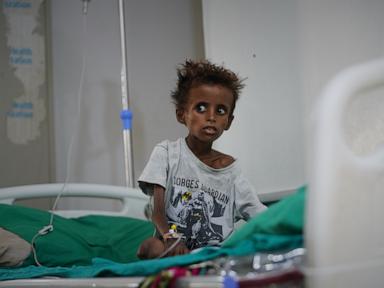
Critics and regional analysts point out a glaring disconnect. Millions of displaced Palestinians are still struggling for basic survival in temporary shelters while diplomats debate governance structures that haven't materialized on the ground. Trust is completely depleted. Past humanitarian funding requests for Gaza hit historic highs—with billions pouring in over the years—only for infrastructure to get repeatedly destroyed in subsequent escalations.
Skeptics argue that pledging billions for reconstruction while active military skirmishes persist is putting the cart before the horse. Without a permanent cessation of hostilities and a genuine political horizon that satisfies both Israeli security demands and Palestinian self-determination, recovery plans remain theoretical exercises.
Where Things Go From Here
If you're watching how this unfolds, stop looking at the spreadsheets and start watching the disarmament compliance. The $2.45 billion plan is a sophisticated menu of projects waiting for a green light. Until the security architecture actually deploys and local authorities yield administrative control to the proposed transitional bodies without violent interference, Gaza's physical landscape will remain defined by tents and rubble. The test of this plan won't be how many donors sign pledges in New York boardrooms, but whether boots on the ground can survive the first month without a collapse of the ceasefire.
Trump's Board of Peace unveils $2.45B Gaza reconstruction plan
This video provides an overview of the Board of Peace's $2.45 billion reconstruction proposal and outlines the challenges surrounding the deployment of an international security force.