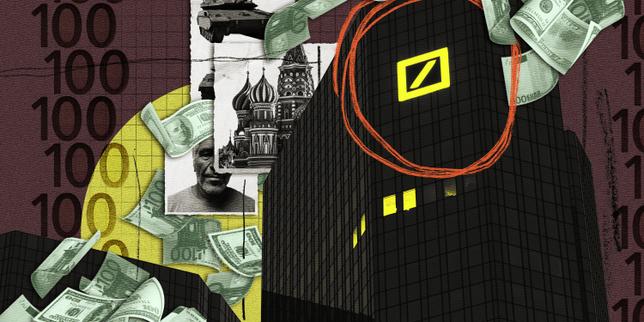
Two anonymous whistleblowers handed over more than 15 million internal records from Germany's largest lender, triggering the biggest single-bank leak in history. Over 230 journalists across more than 50 newsrooms spent months digging through the stash under a consortium project called Inside Deutsche Bank.
What they found isn't a story about a few rogue bankers slipping past compliance officers. It's a documented paper trail showing that the bank's leadership routinely overrode its own risk controls whenever big fees were on the line.
Most coverage of financial scandals treats compliance failures like accidental blind spots. The Inside Deutsche Bank files prove otherwise. Time after time, internal analysts spotted red flags, raised formal alarms, and watched senior executives push the deals through anyway.
Inside Deutsche Bank and the Scale of the 2026 Leak
To grasp how massive this cache is, compare it to earlier offshore leaks. Those databases exposed shell companies registered at law firms. This leak comes straight from inside the compliance, sanctions monitoring, and internal audit divisions of a global systemically important bank.
Two unnamed insiders—who received zero payment from any news outlet—passed the records through their lawyer to investigative journalists in India and South Africa. They also shared material with the US Justice Department, the Treasury's Financial Crimes Enforcement Network (FinCEN), and the UK's HM Revenue and Customs.
Barracuda Media, a South African nonprofit, coordinated the reporting effort alongside the Germany-based Data and Research Center (DARC). Participating outlets included Der Spiegel, The Financial Times, The New York Times, Le Monde, and Kyodo News.
How Journalists Indexed Millions of Buried Records
You can't just hit "Control+F" on 15 million raw banking files. DARC engineers had to upgrade their open-source platform, OpenAleph, just to make the archive readable.
They stumbled onto a bizarre habit inside the bank's workflows. Employees regularly embedded entire files inside other files—hiding PDFs inside Excel spreadsheets or tucking ZIP archives inside Word documents. Standard indexing software would have missed all of them.
Engineers built a custom extraction pipeline, code-named Matryoshka, to unpack those nested layers and process obscure formats like Excel binary workbooks. They also rebuilt email threading to flag when executive assistants sent messages on behalf of managers whose display names didn't match the underlying addresses.
Profit Over Compliance Under Christian Sewing
For years, CEO Christian Sewing pitched himself to regulators and investors as the clean-up man who would make Deutsche Bank "more boring". Private emails and internal memos inside the leak paint a starkly different picture.
Behind closed doors, Sewing pushed for greater risk-taking and complained about internal controls. Even after the bank paid roughly €18.6 billion in misconduct settlements and litigation since 2012, the core tension never disappeared. People paid to bring in revenue consistently outmuscled the staff paid to stop dirty money.
The René Benko Warning Ignored
Take the collapse of Austrian property tycoon René Benko's Signa empire. Internal analysts examined Benko's business model more than six years before Signa imploded. They explicitly warned of "bad karma," and the bank's own committees rejected his companies twice.
Management overruled them. Sewing met with Benko personally, and executives voted to onboard Signa Prime anyway.
Admission of Operating Outside Law and Order
In regulatory filings captured in the archive, Deutsche Bank acknowledged to watchdogs that it had effectively been "operating outside of law and order". Separate internal calculations revealed the bank pulled in roughly $190 million in revenue from transactions tied to hiring relatives of foreign government officials.
Ulrich Göres, the bank's former head of anti-financial crime, gave reporters a blunt assessment of correspondent banking controls. Asked whether a bank can reliably catch money laundering, drug trafficking, and human smuggling inside such a system, his answer was a single word: "No".
What the Files Reveal About Epstein, Trump, and Oligarchs
Beyond corporate governance failures, the Inside Deutsche Bank investigation uncovered concrete financial trails linking high-profile clients to ignored compliance alarms.
- Jeffrey Epstein's $582 Million Trail: Deutsche Bank onboarded Epstein in 2013, years after his conviction for sex offenses. The leaked records show suspicious payments linked to Epstein totaled $582 million—roughly double what regulators and journalists had previously reported.
- Project "Novus Ordo" for Donald Trump: When Donald Trump won his first presidential election in November 2016, the bank faced an awkward reality. The incoming US president was one of its most controversial borrowers, with flagged payments dating across 2014, 2017, and 2019. Executives launched a secret internal protocol called "Novus Ordo"—Latin for New Order—to lock down his files, encrypt communications, and restrict staff access while his businesses kept requesting loan modifications. In 2017, staff even accidentally mailed one of Trump's tax documents to another client's accountant.
- Sanctioned Russian Oligarchs and Regime Links: Whistleblowers cited Russian oligarch accounts as a primary reason for leaking the archive. The records expose financial dealings involving Roman Abramovich, a Canadian steelmaker with Russian ownership concerns, and third-party correspondent payments tied to the late Rifaat al-Assad, Syria's former vice president.
Why Too Big to Fail Became Too Big to Regulate
If you're wondering why a bank raided by German authorities multiple times in a single year still operates normally, look at its systemic footprint.
For 15 years, the Financial Stability Board has classified Deutsche Bank as a global systemically important bank. Shutting it down or stripping its banking license wouldn't just hurt Frankfurt. It would freeze global payment clearing and trigger a liquidity crisis across European markets.
Regulators know this, and bank executives know regulators know this. Fines become a predictable cost of doing business rather than an existential threat.
Deutsche Bank has responded to the Inside Deutsche Bank reporting by repeating familiar talking points. Spokespeople stated that the bank regrets onboarding Epstein in 2013, resolved the al-Assad payment issues in 2022, and has invested heavily in strengthening its financial crime controls.
How to Follow the Ongoing Investigation
Because 15 million documents take years to cross-reference, participating newsrooms are releasing findings in rolling waves rather than a single dump.
- Read the consortium hub directly: Track verified document breakdowns and regional reporting through the Investigative Journalism Bureau at the University of Toronto and Himal Southasian's Inside Deutsche Bank coverage.
- Watch regulatory enforcement actions: Monitor press releases from FinCEN, the US Department of Justice, and Germany's financial regulator BaFin to see whether the whistleblower submissions spark new criminal probes or personal executive liability.
- Check corporate counterparty exposure: If you analyze European equities or institutional banking risk, review Deutsche Bank's upcoming quarterly litigation reserve disclosures rather than relying on management's compliance assurances.
For a closer look at how the leak unfolded, watch this overview on Inside Deutsche Bank and the largest bank document leak, which breaks down the scale of the 15 million leaked files and their global impact.