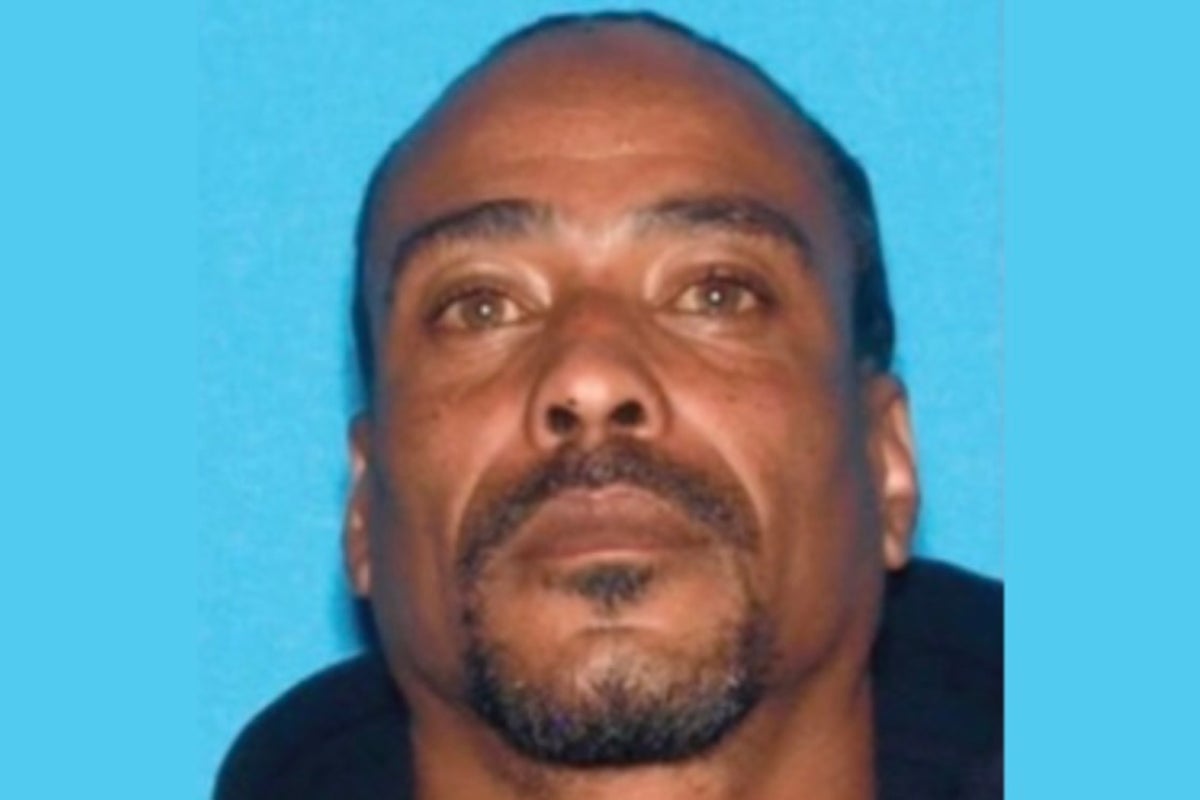
Two teenage girls starting their senior year of high school crossed an intersection in Victorville, California, on August 14, and vanished into twisted steel in a fraction of a second. Maddalyn Dailey and Isabell Hill were best friends, inseparable through childhood, and entirely defenseless against a 50-year-old driver allegedly hurtling down a residential artery at 117 miles per hour.
When San Bernardino County prosecutors slapped Terry Lamar Easter with two counts of second-degree murder, they shifted the legal framework surrounding urban automotive violence. This was not categorized as a tragic traffic accident or mere gross negligence. It was charged as murder, a reflection of a growing prosecutorial appetite to treat high-speed street racing as an act with malicious intent.
The Mechanics of Implied Malice
For decades, drivers who killed people while participating in illegal street races could often beat the murder rap. Defense attorneys routinely argued that reckless driving, no matter how extreme, lacked the specific intent required for murder. Prosecutors had to settle for vehicular manslaughter, a charge carrying far lighter prison sentences.
That legal shield is rapidly dissolving.
Under California law, establishing second-degree murder in a vehicle crash relies on the legal doctrine of implied malice. To secure this charge, prosecutors must prove that a defendant committed an intentional act, knew the act was dangerous to human life, and consciously disregarded that risk with a wanton disregard for human life.
Hitting 117 mph in a residential zone alters the mathematical reality of kinetic energy. Kinetic energy scales quadratically with speed, meaning a car traveling at 117 mph carries nearly three times the destructive force of the same vehicle moving at 70 mph. When two muscle cars—in this case, a Chevrolet Camaro and a Dodge Charger—transform a public street into a quarter-mile drag strip, the operators possess actual knowledge that a catastrophic collision is not merely possible, but mathematically probable.
The courts are starting to agree that choosing to accelerate to triple-digit speeds past residential driveways is functionally equivalent to firing a weapon into a crowd.
Beyond the Asphalt
The Victorville incident exposes darker layers of subculture dysfunction that extend far beyond a pair of speeding muscle cars. According to investigators, Easter was not alone in the vehicle. His eight-year-old child sat in the passenger seat, absorbing the G-forces of an illegal acceleration run before being injured in the subsequent inferno.
Even worse, after the Camaro and Charger slammed into the victims' Acura, the driver fled on foot, leaving his injured child behind in the wreckage.
This behavior highlights a systemic detachment prevalent among participants in illicit car culture. The adrenaline surge that primes drivers for illegal racing often triggers an immediate, survivalist panic when reality catches up with them. Multiple secondary arrests followed, with acquaintances and associates allegedly attempting to shield the suspects from law enforcement—turning a single traffic slaughter into a sprawling criminal conspiracy involving accessory charges.
The Broader Enforcement Shift
Law enforcement agencies across the country have historically treated street racing as an annoyance akin to excessive noise or minor trespassing. Cities used passive deterrents like speed bumps or sporadic patrols that easily outwitted participants using encrypted messaging apps to coordinate pop-up meetups.
That tolerance has evaporated.
Municipalities are investing heavily in automated plate readers, high-resolution aerial surveillance drones, and dedicated street-racing task forces. More importantly, district attorneys are coordinating across jurisdictions to charge spectators, organizers, and secondary drivers under aiding-and-abetting statutes.
When a street race results in fatalities, the net widens instantly. Five separate individuals faced police action in the wake of the Victorville crash, ranging from the primary drivers to accessories trying to hide the evidence. The message from prosecutors is stark: if you enable, watch, or participate in extreme speed contests on public roads, you share the legal liability for the bodies left in the wake.
The families of Maddalyn Dailey and Isabell Hill are left planning funerals for teenagers who should have been picking out college dorm decorations. Meanwhile, the legal system prepares to test whether the threat of life imprisonment can finally slow down a subculture built on the worship of unrestrained horsepower.
The courtroom doors in San Bernardino County opened for arraignment, setting the stage for a trial that will test how far modern jurisprudence is willing to go to redefine vehicular homicide.