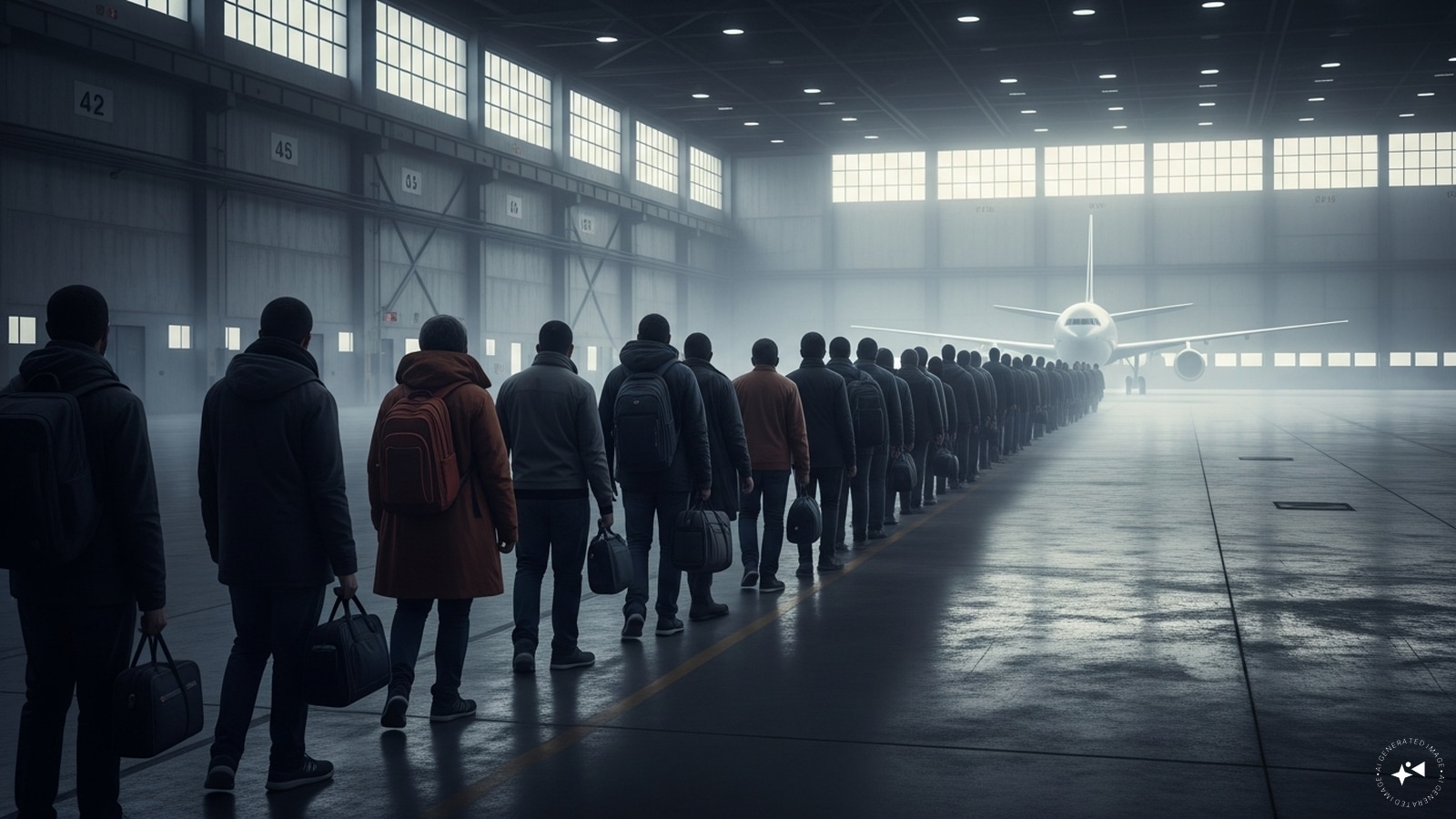
Thousands of people risk everything every single year for a shot at the American dream. But for a growing number of Indian nationals, that dream is ending in a cold, loud military plane ride back home. The US Department of Homeland Security has cracked down hard. Over 1,000 Indians have been deported from the US recently, and the numbers are climbing fast.
This isn't just about people overstaying tourist visas anymore. We're seeing a massive, coordinated effort involving chartered flights, military transport aircraft, and international agreements specifically designed to send undocumented migrants back to India. If you think getting across the border is the hard part, you're looking at the wrong end of the problem. The real crisis happens when the US government catches up with you.
The Truth Behind the Numbers
Why is this happening right now? The US government shifted its strategy. Instead of letting people wait out decade-long court backlogs while living in the country, the Department of Homeland Security is executing swift removals. Between late 2024 and early 2026, the use of large-frame charter flights and even C-17 military transport planes surged.
Historically, over 15,000 Indian nationals were deported over a fifteen-year stretch. But the pace has completely changed. In early 2025 alone, hundreds of Indians were flown directly into Amritsar on military aircraft under strict security measures. Others were sent back via commercial routes through third-party countries like Panama. The pipeline is organized, funded, and moving faster than ever.
The data shows exactly where these deportees are coming from. The vast majority hail from a few specific regions:
- Punjab: Continues to see the highest numbers, with hundreds of youth caught up in the immigration net.
- Haryana: A close second, seeing a massive spike in recent border enforcement actions.
- Gujarat: Long a major source of US migration, now facing a heavy wave of enforcement.
The Exploitation Machine and the "Dunki" Route
Most people don't just wake up and decide to cross a border illegally. They get sold a lie. Human smugglers, locally known as travel agents or "donkey" route operators, charge massive fortunes. We are talking about 25 to 50 lakh rupees per person.
They promise a safe, seamless journey through Central America or Canada. It's never safe. It involves trekking through dangerous jungles, facing cartels, and enduring weeks of physical exhaustion. And for what? To get picked up by the US Border Patrol the moment you cross the line.
According to US Customs and Border Protection data, tens of thousands of Indians have tried entering unlawfully via the northern and southern borders over the last couple of years. The northern border with Canada has seen an especially massive spike. Smugglers told migrants that the Canadian border was unguarded and easy. It wasn't. The US authorities caught on quickly and deployed heavy resources to stop it.
Chained and Handcuffed
The political fallout from these deportations is getting messy. When those military planes started landing in Punjab, the scene was grim. India's Ministry of External Affairs had to officially register concerns with US authorities because of how the deportees were treated.
Imagine spending your life savings, surviving a brutal journey, and then spending a 20-hour flight shackled and handcuffed to a seat. Some Sikh deportees even reported having their turbans removed during the process. The political opposition in India slammed the government for staying silent, while official spokespeople simply reminded the public that international law requires countries to take back their citizens if they're undocumented.
Honestly, the US doesn't care about the politics back home. To them, it's a matter of deterrence. By using military flights and publicizing the removals, the US State Department wants to send a blunt message to anyone still thinking about paying a smuggler: don't bother, you'll just end up right back where you started.
What Happens When You Get Back
The nightmare doesn't end when the plane touches down in Amritsar or Ahmedabad. The financial and legal reality hits hard.
First, you have the debt. Most families fund these journeys by selling agricultural land, taking out high-interest loans from local moneylenders, or mortgaging their homes. When a migrant gets deported, that debt doesn't disappear. The financial ruin can destroy a family for generations.
Second, the local police are waiting. While most deportees are allowed to go home after basic documentation and identity verification, some don't get off that easily. In recent deportation waves, Indian police arrested several deportees right at the airport because they had pending criminal cases back home, ranging from theft to serious violence. The US authorities share biometric data with Indian agencies, meaning there's nowhere to hide if you're fleeing a local crime.
How to Protect Yourself and Your Family
If you or someone you know is considering migrating to the US, you need to completely drop the idea of using unauthorized routes. The loophole is closed. The US immigration system is heavily utilizing automated detention and quick-removal policies.
Instead, look at the legal options that actually work:
- Verify the Legality: The Ministry of External Affairs conducts Pre-Departure Orientation and Training. Use it. Never rely on a local "agent" who operates out of a backroom.
- Check Licensed Portals: If you're looking for work abroad, use the official eMigrate portal provided by the Indian government. It lists verified foreign employers and licensed recruitment agencies.
- Understand Visa Abuse: Overstaying a student or tourist visa is a surefire way to get a permanent ban from entering the US. Once a removal order is stamped on your record, getting back legally becomes almost impossible.
The era of successfully hiding in the shadows of the US economy is fading. With massive policy shifts and aggressive enforcement, staying informed and choosing a legal pathway is the only way to ensure your future isn't cut short on a forced flight back home.