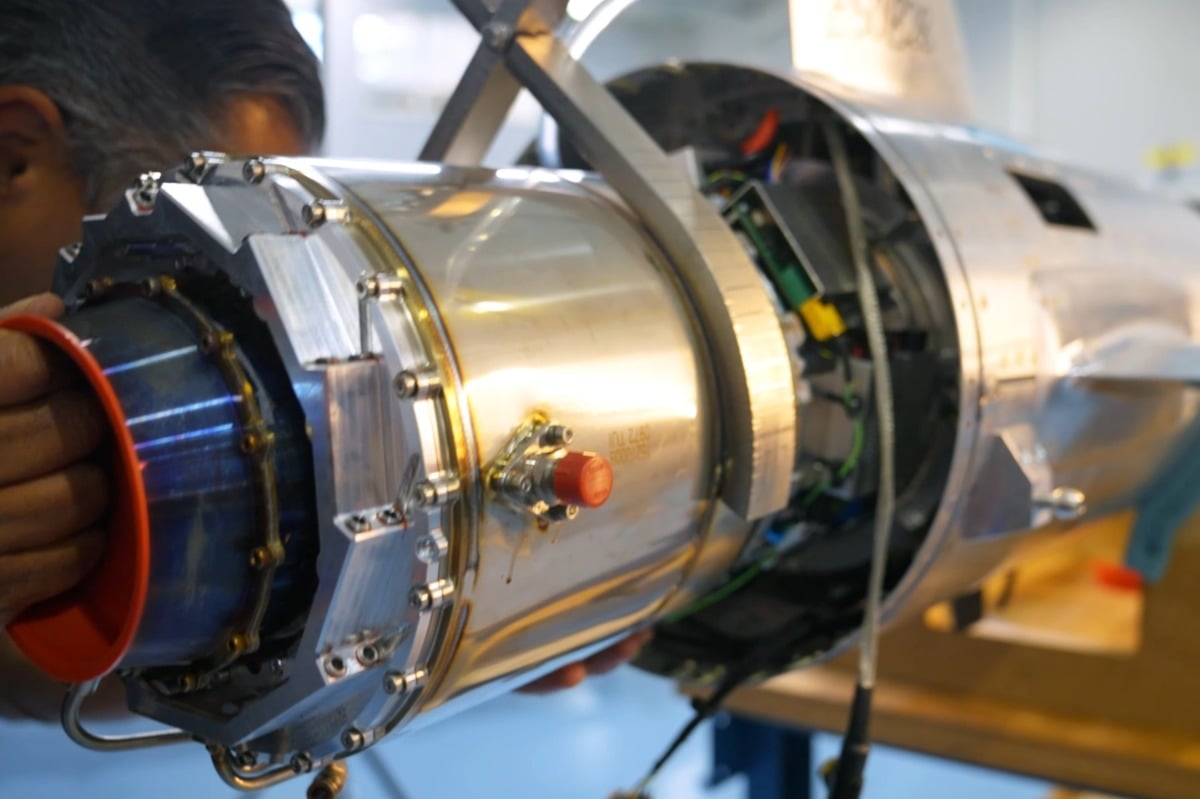
The defense tech press is currently swooning over Destinus. The European startup just announced the assembly of its 1,000th drone engine. Press releases are flying, investors are high-fiving, and the general consensus is clear: Europe has finally cracked the code on sovereign, mass-produced drone propulsion.
It is a comforting narrative. It is also completely wrong.
Counting engines rolling off an assembly line is a vanity metric borrowed from 20th-century automotive manufacturing. In modern attrition warfare and high-speed aerospace, volume without specific, high-end velocity is just a waste of raw materials. While the industry applauds the sheer number of units, they are ignoring the brutal reality of the supply chain, the thermodynamic limitations of cheap turbines, and the actual strategic bottleneck facing Western defense.
We do not need 1,000 generic engines. We need a manufacturing base that can survive a tungsten shortage.
The Scale Fallacy: Volume Is Not Velocity
The lazy consensus in aerospace reporting assumes that manufacturing scale equals military readiness. If Company A builds 1,000 engines, they must be winning.
I have spent years auditing aerospace supply chains and watching defense tech startups burn through seed rounds trying to optimize for the wrong metrics. They build massive facilities to stamp out identical components, believing that assembly-line efficiency solves the strategic problem.
It does not.
When you look closely at the European drone ecosystem, the bottleneck was never the ability to put together a small turbojet or turbofan engine. The bottleneck is the reliance on critical components sourced from countries that do not share Western strategic interests.
The Illusion of Sovereignty
An engine is only European if its supply chain stops at the borders of allied nations.
- Bearings and Ceramics: High-RPM drone engines require specialized ceramic bearings capable of withholding extreme thermal stress. The market for these components is tightly controlled, with deep dependencies on East Asian manufacturing.
- Rare Earth Magnets: If your drone relies on specific alternator components or high-efficiency electric starters, you are likely relying on processed Neodymium from China.
- The Castings: Pouring high-temperature alloys for turbine blades requires specialized foundry capacity. Europe has some, but it is heavily backlogged by legacy prime contractors building legacy systems.
Celebrating the 1,000th engine assembled in a cleanroom ignores the reality that if a trade route closes tomorrow, unit 1,001 cannot be built. True manufacturing velocity is the ability to pivot designs to alternative materials within weeks, not the ability to stockpile parts and assemble them into a static design.
The Thermodynamics They Do Not Want to Talk About
Let us look at the engineering reality. Many tech insiders treat drone propulsion as a solved problem—just scale up a RC airplane engine or scale down a commercial jet engine.
The physics of small-scale turbojets are notoriously unforgiving. As you shrink a turbine engine, the surface-area-to-volume ratio works against you. Heat dissipation becomes a nightmare, and component efficiencies plummet.
Small Turbine Efficiency Loss Factors:
1. Tip Clearance Losses: The gap between the blade tip and casing does not scale down proportionally.
2. Reynolds Number Effects: Low airflow volume creates higher viscous drag relative to inertial forces.
3. Thermal Soakback: Heat from the combustor migrates rapidly to the bearing tunnels.
To counteract these laws of physics, you either need incredibly expensive, exotic single-crystal superalloys, or you accept that your engine will have a short operational life and terrible fuel economy.
If you choose the cheap route to achieve high volume, you are building a product with a severely limited operational radius. A drone with an inefficient engine requires more fuel weight, which means less payload capacity. You end up with a swarm of systems that cannot reach the target or cannot carry enough utility to matter when they get there.
People Also Ask: The Flawed Premises of Drone Warfare
The public discourse around drone tech is filled with fundamentally flawed questions. Let us dismantle the most common ones.
"Can mass-produced cheap drones replace traditional cruise missiles?"
No. This question completely misunderstands the mission profile of a cruise missile. A cruise missile like a Storm Shadow or a Tomahawk is not just an engine with a warhead; it is a hardened, low-observable penetrator designed to fly through GPS-denied environments at high subsonic speeds while carrying a half-ton payload. Cheap, high-volume drone engines usually power slow, loud, non-penetrating platforms. They serve a purpose for exhausting air defenses, but they cannot replace the kinetic effect of a true cruise missile.
"Is Europe catching up to the US and China in defense tech scale?"
Scaling assembly is not the same as scaling the industrial ecosystem. The US has the Defense Production Act and massive capital depth; China has total control over its domestic mineral supply chain. Europe has fractured regulatory frameworks, restrictive venture capital mandates, and zero domestic access to raw rare-earth materials. Counting 1,000 engines is a drop in the ocean compared to the integrated industrial strategy required to compete.
The Downside of My Argument
Let us be completely transparent. If you reject the "mass production of cheap engines" model, you accept a harder path.
Focusing on high-end, highly adaptable propulsion systems means unit costs go up. It means your production numbers look small on a quarterly investor report. It means you cannot claim to be building a "swarm" capability overnight.
If you build 50 highly advanced, hyper-efficient, supply-chain-insulated engines instead of 1,000 cheap ones, you will face intense criticism from bureaucrats who only know how to measure progress by counting widgets. You risk looking like a legacy defense prime that over-engineers everything.
But it is the only approach that survives contact with a real peer adversary.
Stop Funding Assembly Lines. Fund Metallurgical Flexibility.
If Europe wants to actually secure its defense tech base, the investment thesis must shift immediately.
Stop funding companies that boast about their manufacturing footprint or their cleanroom square footage. Start funding the companies that are reinventing the underlying material science.
We need additive manufacturing techniques that can print turbine blisks out of non-standard alloys on demand. We need software-defined combustion chambers that can adjust to varying fuel qualities without melting the nozzle guide vanes. We need companies that treat the engine not as a static product to be stamped out a thousand times, but as a dynamic design that adapts to whatever raw materials show up at the loading dock that morning.
Until we change the metric of success from "units built" to "supply chain resilience," milestones like 1,000 engines are just a distraction. They make for great PR, but they leave us profoundly vulnerable.
Stop counting the engines. Start counting the dependencies.